Rose (Gulab) Benefits in Ayurveda: Skin, Eyes and Cooling
Rose, known as Gulab in Hindi and Urdu, is one of the most loved flowers in Ayurveda. Beyond its beauty and fragrance, it has been used for centuries in skin care, eye care, cooling drinks and calming remedies. Its petals, rose water and rose oil appear in classical Ayurvedic preparations and everyday home remedies across India.
In Ayurveda, rose is described as cooling, soothing and balancing, especially for Pitta dosha, the dosha linked to heat, redness and irritation. This guide explains rose benefits in Ayurveda for skin, eyes and cooling the body, how rose water is traditionally used, and the safety precautions to follow.
What Is Rose (Gulab) in Ayurveda?
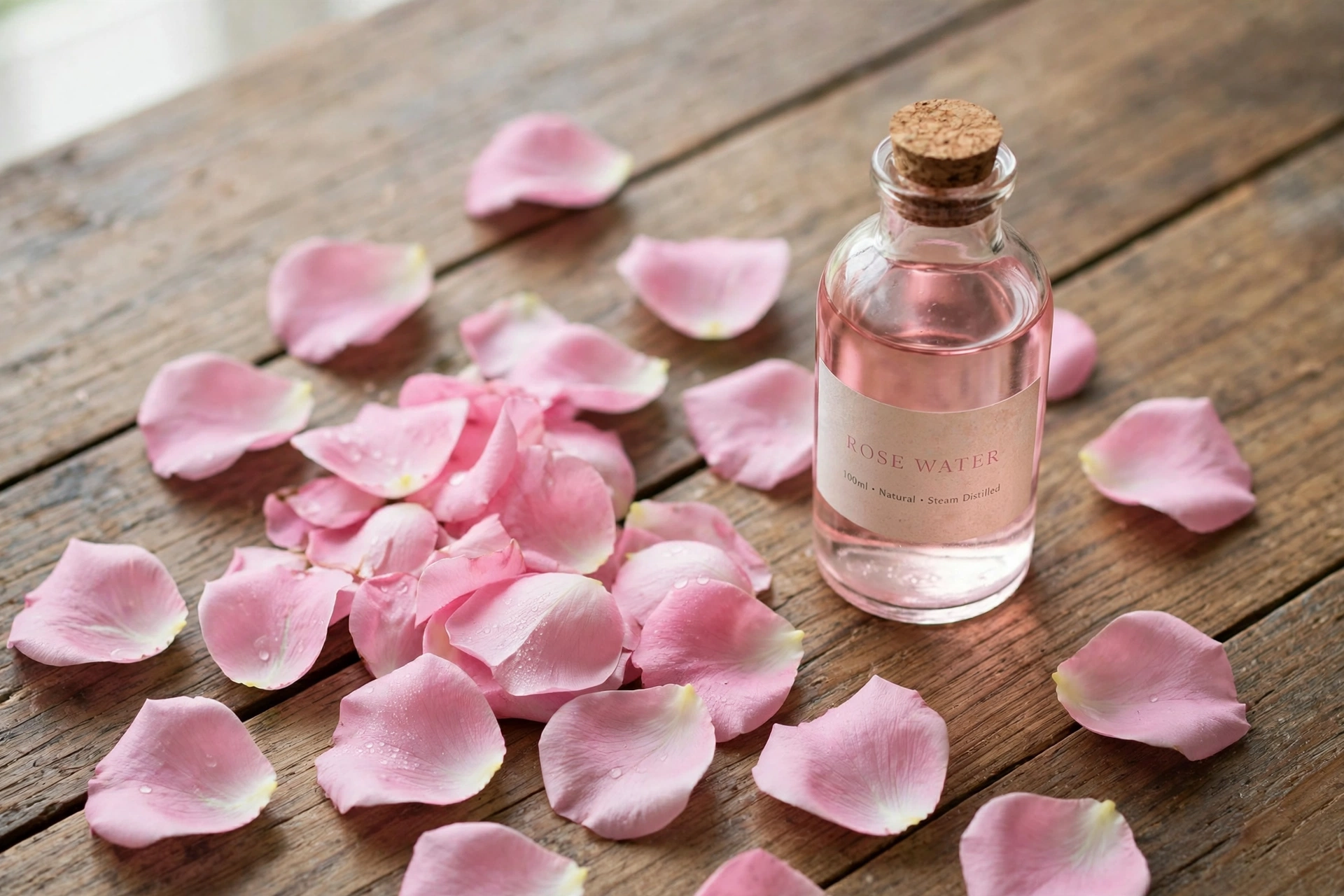
The rose used in Ayurveda is usually the Damask rose, Rosa damascena, valued for its strong fragrance and soft petals. Fresh petals are distilled to make rose water (gulab jal), and the flowers are also dried for powders, teas and face packs. Rose oil, extracted from thousands of petals, is used only in diluted form.
Ayurveda describes rose as sweet, cooling and calming for the mind. It is said to balance Pitta and, in moderate use, to soothe Vata as well. It is traditionally valued for cooling excess heat and refreshing tired eyes.
Rose Benefits for Skin
Rose has a long history in skin care. Its cooling nature makes it popular for sensitive, dry or irritated skin, and rose water is one of the simplest Ayurvedic preparations, used as a toner, cleanser and refreshing mist.
Soothes Irritation and Redness
Rose water is traditionally used to calm redness and mild irritation, including the burning feeling after sun exposure. Its cooling quality is believed to settle excess Pitta in the skin. Many people dab it on the face with cotton wool after cleansing. A patch test is wise for very sensitive skin.
Supports a Clear, Glowing Complexion
In Ayurveda, a clear complexion is linked to balanced digestion, good hydration and calm skin. Rose supports this as a gentle toner and as an ingredient in face packs with sandalwood, multani mitti or chickpea flour. It works best alongside sun protection, sleep and a balanced diet.
- Traditionally used as a gentle toner and cleanser for sensitive skin
- Cooling nature believed to calm redness and heat-related irritation
- Common ingredient in face packs with sandalwood and multani mitti
- Fragrance traditionally valued for calming the mind and lifting mood
Rose Benefits for Eyes
Tired, burning or strained eyes are common after long screen hours, dust and heat. Rose water has a traditional place in Ayurvedic eye care, used to cool and refresh the eyes. Only sterile products made and labelled for eye use should ever go directly into the eyes; cosmetic rose water must not be put in the eyes.
Cooling Compresses for Tired Eyes
A traditional remedy is to soak two clean cotton pads in pure rose water, chill them briefly, and place them over closed eyelids for ten to fifteen minutes. This is traditionally used to ease tiredness, puffiness and mild burning. Use fresh pads each time, keep them on closed eyes only, and stop if any stinging occurs. It is for comfort, not a treatment for eye disease.
Red, painful or discharging eyes, sudden vision changes, or pain after injury need prompt medical attention, and homemade liquids must never go into the eyes.
Rose as a Cooling Remedy for the Body
In hot weather, excess heat is linked to thirst, irritability, rashes and disturbed sleep, and rose is a classic cooling herb used in drinks to help the body feel refreshed.
Rose sherbet, made from rose syrup diluted in cool water, is a traditional summer drink. Gulkand, rose petals layered with sugar and left in sunlight, is traditionally taken in small amounts as a cooling tonic and is believed to soothe heat and support digestion. Both contain sugar, so use them in moderation. Rose tea, made by steeping dried petals in hot water, is caffeine-free and calming.
How to Use Rose: Forms and Traditional Guidance
Choose pure products from a trusted source, and check the label for added fragrance, colour or alcohol, which can irritate sensitive skin. Pure rose water should list rose distillate or rose water as its main ingredient.
- Rose water (gulab jal): Use as a toner or mist on clean skin, once or twice daily. For an eye compress, use only a product suitable for use around the eyes, on closed eyelids.
- Dried rose petals: Steep one to two teaspoons in hot water for five to ten minutes for tea. Petals can also be ground and mixed with milk, curd or honey for a face pack.
- Gulkand: A traditional general amount is one to two teaspoons once daily, usually in summer. Take less if you need to limit sugar, and check with a doctor if you have diabetes.
- Rose oil: Rose essential oil must always be diluted in a carrier oil, such as coconut or almond oil, before skin use. Never apply it undiluted, and never take essential oils internally unless a qualified practitioner directs it.
Safety, Side Effects and Precautions
Rose is generally considered gentle and safe in traditional amounts for most healthy adults, on the skin or as food or tea. Side effects are uncommon, but some people may develop redness, itching or a rash, especially from products with added fragrance or alcohol. Test on a small area, such as the inner forearm, before wider use.
Pregnant and breastfeeding women can usually use rose water on the skin, but should take it internally only if a doctor advises it. People with rose or pollen allergies should be cautious, and anyone with eczema or rosacea should seek advice before using new skin products.
Safety note: Rose is a supportive, traditional remedy, not a replacement for medical treatment. It does not cure skin disease, eye disease or any other medical condition. If symptoms persist, worsen or are severe, consult a doctor or qualified Ayurvedic practitioner.
Frequently Asked Questions
Can I use rose water on my face every day?
Most people can use pure rose water daily, once or twice a day, if their skin tolerates it. Start with a patch test, and stop if you notice dryness or irritation.
Is rose water safe to put in the eyes?
Only sterile products labelled for eye use should go into the eyes. A cooling compress over closed eyelids is the traditional, safer way to refresh tired eyes.
Does rose help with acne?
Rose water is traditionally used as a gentle toner for mild breakouts. It is not a proven acne treatment. Persistent acne should be assessed by a doctor or dermatologist.
Can I drink rose tea daily?
Rose tea from dried petals is caffeine-free and traditionally drunk once or twice a day. If you are pregnant, breastfeeding, taking medication or managing a health condition, check with a doctor first.
Conclusion
Rose, or gulab, earns its place in Ayurveda through gentleness as much as fragrance. As a cooling toner, a refreshing compress and a soothing summer drink, it supports comfort and calm, while persistent problems deserve proper medical advice.