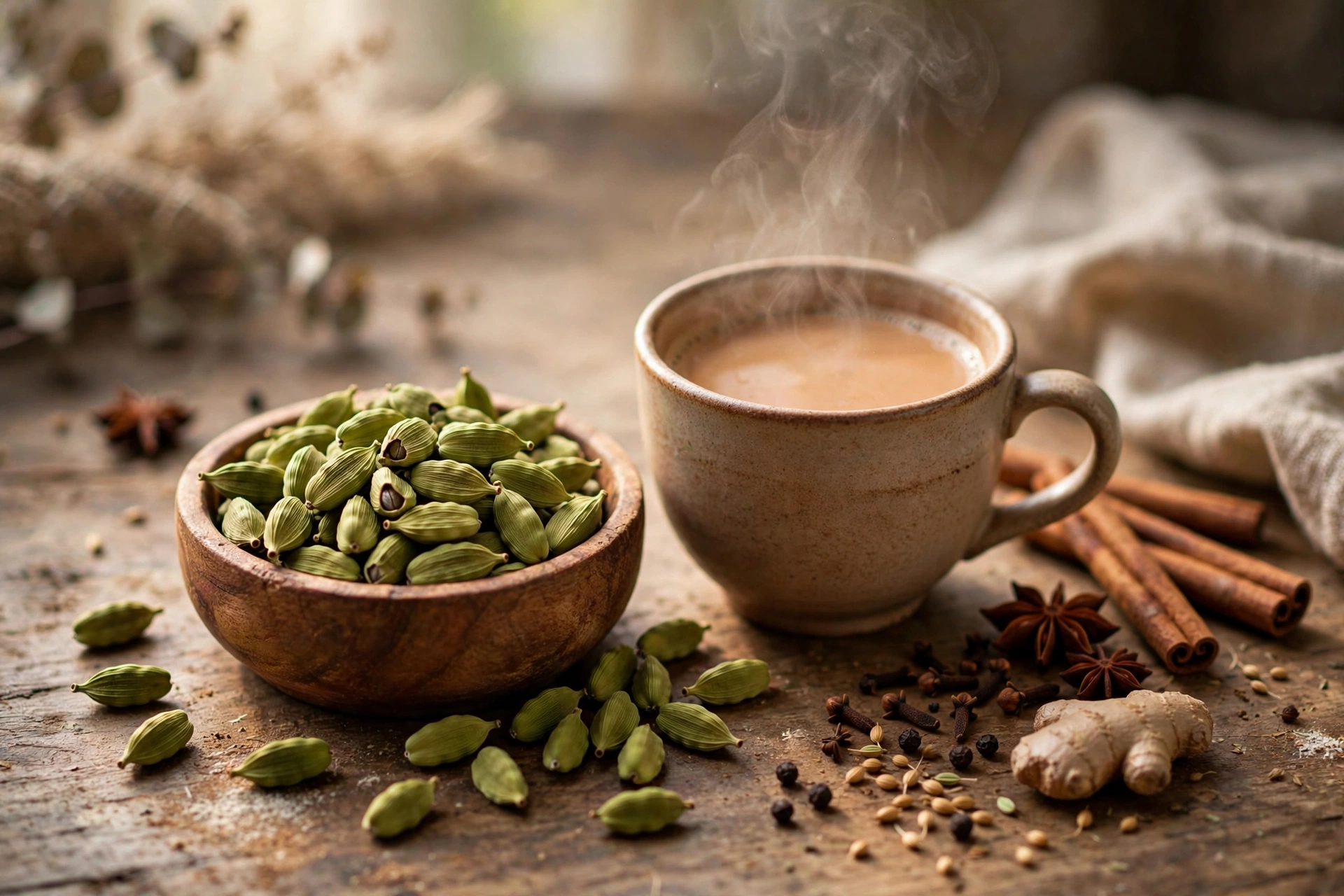
Cardamom (Elaichi) Benefits: Digestion, Breath Freshness and Heart Health
Pop open a green cardamom pod and you are hit with one of the most intoxicating aromas in the spice world — sweet, citrusy, and unmistakably Indian. Known as elaichi, cardamom is often called the “Queen of Spices”: it flavors everything from masala chai to biryani. Beyond its culinary fame, Ayurveda has long valued elaichi as a gentle digestive aid, a natural breath freshener, and a spice with promising antioxidant qualities. Here is what this fragrant pod can do — and how to use it wisely.
What Is Elaichi?
Cardamom is the dried seed pod of Elettaria cardamomum, a perennial plant in the ginger family native to the Western Ghats of southern India. The small green pods contain aromatic black seeds rich in volatile oils — chiefly 1,8-cineole and limonene — which give cardamom its signature scent and much of its studied activity.
Green cardamom is the variety used in Ayurveda and most studied; black cardamom is a larger, smokier relative used mainly in savory cooking.
The Ayurvedic View: Deepana and Pachana
Ayurveda classifies elaichi as both deepana (kindling the digestive fire, or agni) and pachana (supporting the digestion of food). It is considered tridoshic — traditionally thought to balance all three doshas — with a sweet and pungent taste and a gentle heating energy. This makes it one of the mildest digestive spices: warming enough to stir sluggish digestion, but gentle enough for sensitive stomachs in small amounts.
Classical texts traditionally recommend elaichi for heaviness after meals, occasional bloating, and that “stuck” feeling when food sits too long.
1. A Traditional Digestive Aid After Meals
Chewing a cardamom pod after a meal is one of India’s oldest table customs, and there is sense behind it. Ayurvedic practitioners traditionally believe elaichi’s aromatic oils stimulate digestive secretions and help dispel gas, making it a go-to for post-meal heaviness and occasional bloating.
Laboratory studies suggest cardamom’s volatile compounds may relax smooth muscle in the digestive tract, possibly explaining its reputation for easing cramping and flatulence. Persistent digestive problems still deserve a doctor’s evaluation.
For a deeper dive into gut-friendly Ayurveda, see our triphala benefits guide for digestion and detox.
2. Nature’s Mouth Freshener
Before breath mints existed, there was elaichi. Chewing the seeds releases fragrant oils that freshen the mouth — and preliminary laboratory studies indicate cardamom extracts show antibacterial activity against some common oral bacteria linked to cavities and gum issues.
This is why cardamom appears in traditional tooth powders and natural mouthwashes. It will not replace brushing and flossing, but as an after-meal freshener it is both effective and enjoyable: crush a pod between your teeth, chew the seeds for a few minutes, and discard the husk.
3. Antioxidant and Anti-Inflammatory Compounds
Cardamom seeds are rich in plant compounds — flavonoids, terpenoids, and phenolic acids — that act as antioxidants in laboratory settings, helping neutralize free radicals generated by pollution, stress, and normal metabolism.
A few small human studies have explored cardamom and markers of oxidative stress and inflammation, with encouraging but preliminary results. The honest takeaway: cardamom is a flavorful way to add antioxidant plant compounds to your diet — not a standalone anti-inflammatory treatment.
Pair it with other antioxidant herbs like tulsi (holy basil) or amla (Indian gooseberry) for a well-rounded herbal routine.
4. Hints of Heart and Blood Pressure Support
A small human trial found that daily cardamom powder over several weeks was associated with modest reductions in blood pressure among participants with elevated readings, possibly linked to its antioxidant content and a mild diuretic effect seen in animal studies.
Ayurveda has also traditionally included elaichi in heart-friendly formulations. But “associated with” is not “proven”: cardamom is a lovely spice, not a substitute for prescribed medication.
How to Use Elaichi
Elaichi Chai or Warm Milk
Crush 2–3 green pods and simmer with your tea leaves, milk, and sweetener for 5 minutes — the classic masala chai base. For a caffeine-free nightcap, simmer crushed pods in warm milk with turmeric.
Powder in Food
Freshly ground cardamom (grind the seeds, not the husks, for the finest flavor) can be added to oatmeal, smoothies, rice dishes, and desserts. A pinch goes a long way — start with ⅛ to ¼ teaspoon per serving.
Chewing Pods After Meals
The simplest traditional method: chew 1–2 pods after eating for fresh breath and digestive comfort. Keep a small tin in your bag as a natural alternative to mints.
Elaichi with Honey
Mix a pinch of freshly ground cardamom into a teaspoon of honey for a soothing after-dinner spoonful — more on honey’s traditional carrier role in our honey (shahad) benefits guide.
Dosage Guidance
- Whole pods: 2–4 pods per day, chewed or brewed.
- Powder: 0.5–1.5 grams per day in food or warm milk — culinary amounts are the safest zone.
- Supplements: Capsules and extracts vary widely in dose; follow the label and consult a practitioner rather than self-prescribing high doses.
Cardamom is one of the safest spices in culinary amounts. Medicinal-dose extracts are a different story — keep those under professional guidance.
Safety Notes and Cautions
- Gallstones: Cardamom may stimulate bile flow, so people with gallstones or bile-duct obstruction should avoid large amounts and check with a doctor first.
- Allergies: Rare, but possible — especially in people sensitive to other plants in the ginger family. Stop use if you notice itching, swelling, or breathing difficulty.
- Pregnancy and breastfeeding: Normal culinary amounts in food are generally considered fine, but concentrated supplements or large medicinal doses are best avoided unless a doctor approves.
- Medication interactions: If you take anticoagulants or blood-pressure drugs and plan to use cardamom extracts regularly, tell your doctor first.
Disclaimer: This article is for educational purposes only, not medical advice. Cardamom is a traditional spice with promising but preliminary research — not a proven treatment for any condition. Consult a healthcare professional before using it in medicinal amounts, especially if pregnant, nursing, or managing a chronic condition.
Frequently Asked Questions
How many cardamom pods can I eat per day?
For most people, 2–4 pods daily — chewed after meals or brewed in tea — is a comfortable traditional amount. Caution applies to medicinal-dose extracts.
Is green cardamom better than black cardamom?
They are different, not better or worse. Green cardamom is sweeter and more aromatic, preferred for digestive and breath-freshening uses. Black cardamom is smokier and bolder, used mainly in savory cooking. Ayurvedic remedies almost always mean green cardamom.
Can cardamom lower blood pressure?
One small human study found modest blood-pressure reductions with daily cardamom powder, but the evidence is preliminary. Do not use cardamom as a replacement for prescribed blood-pressure medication.
Does cardamom help with bad breath permanently?
It freshens breath effectively and its antibacterial properties may support oral hygiene, but persistent bad breath can signal gum disease or digestive issues — see a dentist or doctor if it does not improve.
Conclusion
Elaichi is proof that the best remedies are often the most pleasurable: a fragrant pod that freshens the breath, settles the stomach after a heavy meal, and adds antioxidant plant compounds to your diet. Its heart-health hints are exciting but early, so enjoy cardamom as a delicious part of a healthy lifestyle rather than a medicine. Brew it, chew it, cook with it — and let the Queen of Spices earn her title in your kitchen.