Turmeric Milk (Haldi Doodh) Benefits: Ayurvedic Uses for Immunity, Sleep and Digestion
Few home remedies are as beloved in Indian households as haldi doodh — warm turmeric milk. Grandmothers have served it at the first sign of a cold, after a tiring day, or simply before bed, and Ayurveda has long classified turmeric (haridra) as one of its most valuable healing herbs. In modern times this drink has gone global as “golden milk,” but its roots are firmly Ayurvedic. Here is what the tradition says about its benefits, and how to prepare it the right way.
What Is Haldi Doodh in Ayurveda?
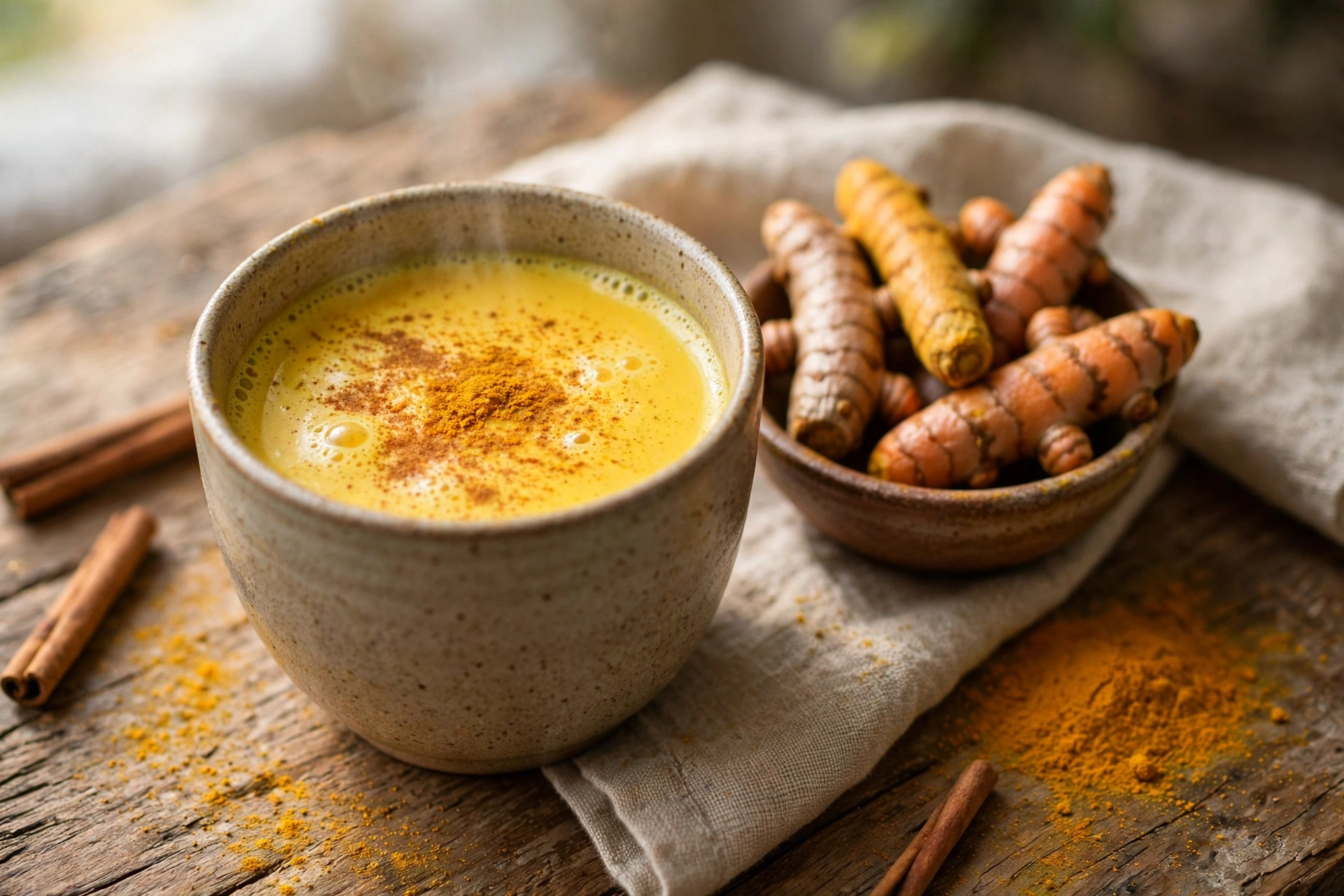
Haldi doodh is warm milk — usually cow’s milk or a plant-based alternative — simmered with turmeric powder and warming spices such as black pepper, cinnamon, cardamom and ginger. In Ayurveda, turmeric is described as tikta-katu (bitter and pungent in taste), heating in potency, and balancing for all three doshas — vata, pitta and kapha.
Ayurveda treats milk as a nourishing, ojas-building food: it calms vata, supports tissues and promotes restful sleep. Turmeric’s heating, cleansing quality pairs perfectly with milk’s soothing nature, making haldi doodh a classic rasayana (rejuvenating) drink for daily wellness.
Benefits of Turmeric Milk
1. Supports Immunity
Turmeric contains curcumin, a compound widely studied for its antioxidant and anti-inflammatory properties. Ayurveda holds that regular use of turmeric milk strengthens the body’s natural defences, which is why it is the go-to drink during seasonal changes and at the first signs of a cold or cough.
2. Promotes Better Sleep
Warm milk has a long-standing reputation as a bedtime drink, and Ayurveda explains why: milk is heavy, sweet and cooling in a grounding way, qualities that pacify vata and calm an overactive mind. Combined with turmeric and nutmeg, haldi doodh is traditionally taken 30–45 minutes before bed to encourage deep, restful sleep.
3. Aids Digestion
The warming spices in haldi doodh — black pepper, ginger and cardamom — stimulate agni (digestive fire). Black pepper also serves a special purpose: piperine in pepper is traditionally believed to help the body absorb curcumin more effectively, which is why no authentic haldi doodh recipe skips the pepper.
4. Soothes Joints and Muscles
Ayurveda uses turmeric externally and internally for joint comfort and muscular soreness. A warm cup after physical exertion or in damp weather is a traditional practice for easing stiffness and supporting mobility.
5. Supports Skin Health
Because turmeric is regarded as blood-purifying (rakta-shodhaka) in Ayurveda, regular intake is traditionally linked to clearer, healthier-looking skin. Many families swear by haldi doodh for a natural glow from within.
How to Make Haldi Doodh: Classic Recipe
This simple recipe serves one person.
Ingredients
- 1 cup (250 ml) milk — cow’s milk is traditional; almond or oat milk works too
- 1/2 teaspoon turmeric powder (organic, if possible)
- A pinch of black pepper powder
- 1/4 teaspoon cinnamon powder
- 2 crushed cardamom pods (optional)
- 1/2 teaspoon grated fresh ginger or a pinch of dry ginger powder
- Honey to taste (add only after the milk has cooled to lukewarm — Ayurveda advises against heating honey)
Method
- Warm the milk in a small pan over low heat — do not boil it hard.
- Add the turmeric, pepper, cinnamon, cardamom and ginger.
- Simmer gently for 3–5 minutes, stirring, until the spices are well blended.
- Strain into a cup, let it cool to drinking temperature, and stir in honey if desired.
- Drink warm, preferably 30–45 minutes before bedtime.
Best Time and Dosage
- Daily wellness: 1 cup in the evening is the classic Ayurvedic routine.
- During a cold or cough: 1–2 cups a day, one in the morning and one at night, is traditional.
- For sleep: one warm cup before bed, about 30–45 minutes earlier.
- Consistency matters more than quantity — a small daily cup beats an occasional large one.
Precautions
- Turmeric is heating; people with high pitta, acid reflux or gallbladder issues should use it moderately and observe how they feel.
- Those on blood-thinning medication, or with gallstones, should consult a doctor before taking turmeric regularly.
- Pregnant and breastfeeding women should keep to culinary amounts unless an Ayurvedic practitioner advises otherwise.
- Never boil honey or add it to very hot milk — Ayurveda considers heated honey difficult to digest.
- Haldi doodh is a supportive wellness drink, not a treatment. For persistent medical conditions, consult a qualified Ayurvedic practitioner or physician.
Frequently Asked Questions
Can I drink turmeric milk every day?
Yes. One cup daily is the traditional Ayurvedic routine and is generally considered safe for healthy adults. If you have a medical condition or take regular medication, check with your doctor or an Ayurvedic practitioner first.
Is haldi doodh good for weight loss?
Turmeric milk is not a weight-loss drink on its own, but its warming spices support digestion and metabolism, which Ayurveda considers important for healthy weight management. Pair it with balanced meals and regular activity for best results.
Can I make haldi doodh with plant-based milk?
Absolutely. Almond, oat and coconut milk all work well. Ayurveda traditionally prefers cow’s milk for its ojas-building quality, but the turmeric and spices carry most of the benefit regardless of the base.
Why is black pepper added to turmeric milk?
Black pepper contains piperine, which is traditionally believed to greatly improve the body’s absorption of curcumin from turmeric. Even a small pinch makes the drink more effective, so it should not be skipped.
Can children drink haldi doodh?
Yes, in small amounts — a half cup with a milder spice blend is the traditional way it is given to children, especially during cold weather or seasonal changes. For very young children, keep the turmeric quantity small.