Gokshura Benefits: Ayurvedic Uses for Energy, Urinary Health and Stamina
Gokshura Benefits: Ayurvedic Uses for Energy, Urinary Health and Stamina
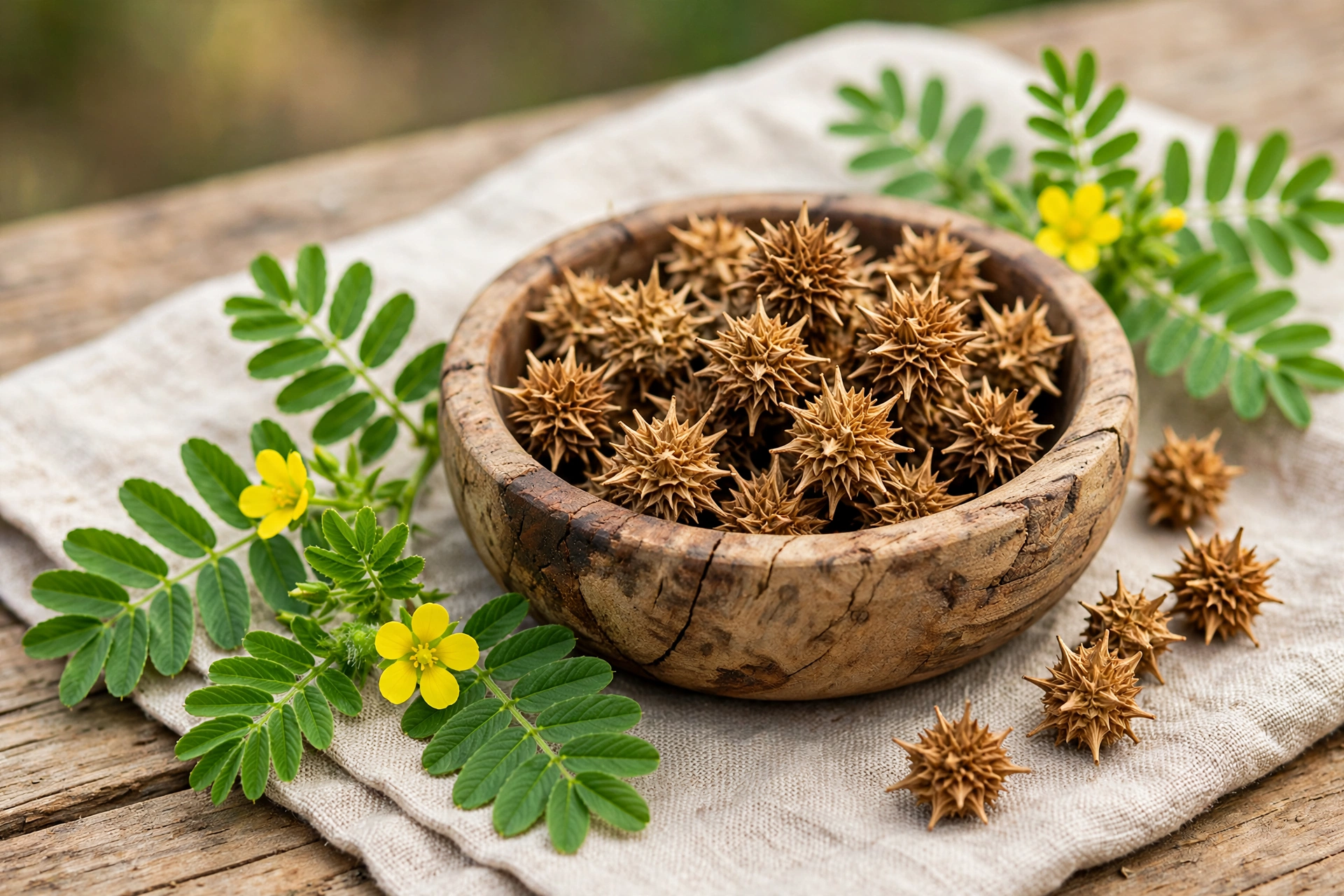
Gokshura (Tribulus terrestris), also spelled Gokhru, is a small spiky-fruited plant that holds a respected place in Ayurveda as a rejuvenating (rasayana) herb. Its Sanskrit name hints at its traditional reputation — “go” (cow) and “kshura” (hoof) — because cattle that grazed on it were observed to stay hardy. Classical Ayurvedic texts classify gokshura as mutrala (supporting healthy urine flow) and vrishya (supporting vitality), making it one of the go-to herbs for the urinary system and for overall strength and stamina.
This guide covers gokshura’s traditional Ayurvedic benefits for energy, urinary and kidney health, and stamina — how to use it as churna or capsules, typical dosage ranges, and who should avoid it.
What Gokshura Is in Ayurveda
Gokshura is described as sweet (madhura) in taste, cooling in potency, and balancing for all three doshas — with a special affinity for Vata and Pitta. It is considered brimhana (nourishing) rather than depleting, which is why Ayurveda uses it not just for cleansing the urinary tract but also for building strength. It appears in classical formulations for urinary comfort, reproductive wellness, and general rejuvenation.
Gokshura Benefits for Urinary Tract and Kidney Health
This is gokshura’s signature traditional use — Ayurveda’s foremost herb for the mutravaha srotas (urinary channels).
1. Supports healthy urine flow
Gokshura is traditionally used to promote smooth, comfortable urination. Its mild diuretic (mutrala) action is valued in cases of scanty or difficult urine flow, helping the body flush the urinary channels naturally.
2. Traditional kidney support
Classical texts include gokshura in formulations traditionally used to support kidney comfort and function. It is often combined with herbs like punarnava in traditional kidney-care blends.
3. Soothes urinary discomfort
Because of its cooling nature, gokshura is traditionally recommended for burning or discomfort during urination associated with excess Pitta (heat) in the urinary tract. A traditional preparation is gokshura decoction (kwath) — the powdered fruit simmered in water, strained, and sipped warm.
4. Helps flush the urinary system
By encouraging urine output, gokshura traditionally helps keep the urinary passages clear — part of why it features in seasonal cleansing routines.
Gokshura for Energy, Vitality, and Stamina
1. Traditional rejuvenative (rasayana)
Gokshura is classed as a vajikarana/rasayana herb — one that traditionally nourishes the body’s deeper tissues (shukra dhatu) and supports overall vitality. In plain terms, Ayurveda uses it as a tonic for strength rather than a stimulant: it builds rather than borrows energy.
2. Physical stamina
Traditional use includes supporting physical endurance and recovery from exertion. It is a common ingredient in Ayurvedic formulations for active people and athletes seeking plant-based stamina support.
3. Reproductive wellness
Classical texts traditionally recommend gokshura for male and female reproductive wellness — supporting healthy reproductive function as part of broader vitality, not as a quick fix. This is traditional wellness framing, not a treatment claim for any disorder.
4. Healthy ageing support
As a nourishing, Vata-balancing herb, gokshura is traditionally included in rejuvenation routines for maintaining strength and comfort in the later years of life.
How to Use Gokshura: Churna and Capsule Dosage
Gokshura is available as dried fruit powder (churna), decoction, tablets, and capsules. Traditional general guidance for the powder:
- Gokshura churna: ½ to 1 teaspoon (3–6 grams) per day, divided into two doses, taken with warm water or warm milk. Milk is the traditional anupana (carrier) when the goal is nourishment and vitality; water is preferred when the goal is urinary cleansing.
- Decoction (kwath): Simmer 1 teaspoon of coarse powder in 2 cups of water until reduced by half, strain, and drink warm — traditionally used for urinary comfort.
- Capsules/tablets: Typically 1–2 capsules twice daily with water, or as directed on the product label.
- Duration: Traditional courses run 4–8 weeks, followed by a break or practitioner review.
Dosage varies with body constitution, the condition being addressed, and product concentration — an Ayurvedic practitioner can personalise it. Consistency matters more than large doses.
Who Should Avoid Gokshura
- Pregnancy and breastfeeding: Avoid unless a qualified practitioner specifically advises it — safety data for pregnancy is insufficient.
- Hormone-sensitive conditions: Because gokshura is traditionally associated with reproductive vitality, people with hormone-sensitive conditions should consult their doctor first.
- Before surgery: Stop use at least two weeks before scheduled surgery, as it may affect blood sugar and blood pressure.
- Blood sugar and blood pressure medication: Gokshura may lower blood sugar and blood pressure — monitor closely and inform your doctor if you take medication for either.
- Kidney disease: Anyone with diagnosed kidney disease should not self-treat with diuretic herbs — use only under medical supervision.
- Children: Not recommended for children except under professional guidance.
Frequently Asked Questions
Is gokshura the same as tribulus?
Yes — gokshura is the Ayurvedic name for Tribulus terrestris, the same plant sold as tribulus in Western supplements. Ayurvedic preparations typically use the whole dried fruit, while some Western extracts isolate specific compounds.
How long does gokshura take to work?
Traditional guidance suggests 2–4 weeks of consistent use for noticeable effects on energy and urinary comfort, with full traditional courses lasting 4–8 weeks. It is a nourishing tonic, not an instant stimulant.
Can women take gokshura?
Yes — classical Ayurveda uses gokshura for both men and women, particularly for urinary health and general vitality. Pregnant or nursing women should avoid it unless professionally advised.
Should I take gokshura with milk or water?
Traditionally, warm milk is the carrier when using gokshura for strength and vitality (brimhana effect), while warm water is preferred for urinary cleansing. Either is acceptable — follow your practitioner’s advice.
Can I take gokshura daily long-term?
Traditional courses are typically 4–8 weeks followed by a break. For ongoing use, check in with an Ayurvedic practitioner rather than continuing indefinitely on your own.
Note: This article describes traditional Ayurvedic uses of gokshura for general wellness information. It is not medical advice. Consult a qualified Ayurvedic practitioner or your doctor before using gokshura, especially if you are pregnant, nursing, managing a health condition (particularly kidney, blood sugar, blood pressure, or hormone-related conditions), or taking medication.