Fenugreek (Methi) Benefits: Ayurvedic Uses for Hair, Digestion and Blood Sugar
Fenugreek, known as methi in India, is one of the most familiar herbs in Ayurvedic home remedies — it lives in almost every Indian kitchen spice box. For centuries, Ayurvedic texts have described methi seeds as warming and bitter-sweet, traditionally used to support digestion, nourish the hair, and help maintain already-healthy blood sugar levels. This guide covers what fenugreek is in Ayurveda, its best-known benefits, safe usage, and common questions.
What Is Fenugreek (Methi) in Ayurveda?
Fenugreek (Trigonella foenum-graecum) is called methika in Sanskrit and appears in classical Ayurvedic texts as an herb that kindles agni — the digestive fire — while being unctuous enough to nourish tissues. Both the seeds and the fresh green leaves (methi saag) are used. The seeds are bitter with a maple-like aroma, and they contain fiber-rich mucilage, saponins and the amino acid 4-hydroxyisoleucine, which researchers are studying for its possible role in glucose metabolism.
Ayurveda describes methi as ushna (warming) and katu-tikta (pungent-bitter), traditionally balancing kapha and vata; people with a strong pitta constitution are usually advised to use it in moderation, since its warming nature may aggravate excess heat.
Fenugreek Benefits for Hair
Fenugreek seeds are a classic Ayurvedic hair remedy, and methi hair packs are still popular home treatments across India.
- May support a healthy scalp: The seeds contain mucilage and saponins that coat hair strands, traditionally used to make hair feel softer and easier to manage.
- Traditionally used for hair fall: Fenugreek seed paste is applied to the scalp in Ayurvedic home care to nourish hair roots. Limited small studies suggest it may support hair density, but larger clinical trials are lacking.
To use it, soak two tablespoons of methi seeds overnight, grind into a paste, apply to the scalp for 30 minutes and wash off with a mild shampoo — once or twice a week.
Fenugreek Benefits for Digestion
Methi has long been chewed after meals or taken as a warm infusion to settle the stomach.
- Traditionally supports agni: Ayurveda uses methi seeds to kindle digestive fire, which is associated with reduced post-meal heaviness and bloating.
- May ease occasional constipation: The mucilage in soaked seeds absorbs water and may add bulk to stool, supporting regularity when combined with enough fluid intake.
- Gentle carminative: Fenugreek tea is a traditional home remedy for gas and abdominal discomfort after heavy meals.
For digestion, pairing methi with other digestive herbs works well — for example, ginger (adrak) is another warming Ayurvedic digestive, and mulethi (licorice) is traditionally used to soothe the stomach lining.
Fenugreek and Blood Sugar: What the Research Says
Modern research on fenugreek is most active here: several small studies suggest seed powder may help support healthy post-meal blood sugar levels, possibly because soluble fiber slows carbohydrate absorption.
- May support healthy glucose metabolism: Trials of 5–25 grams of seed powder daily have shown modest improvements in fasting glucose and HbA1c in some studies, but results vary and sample sizes are small.
- Best viewed as support, not treatment: Fenugreek is not a substitute for diabetes medication. Anyone with diabetes who wants to try it should first discuss it with their doctor, since it may add to the effect of glucose-lowering drugs.
Other Traditional Ayurvedic Uses of Methi
- Lactation support: Methi is traditionally given to new mothers as part of postpartum diets, believed to support milk flow. Evidence is limited, and nursing mothers should check with their healthcare provider first.
- General nourishment: Soaked methi seeds eaten on an empty stomach are a classic morning ritual for those who tolerate bitter tastes.
Women interested in herbs traditionally used for female health may also want to read about shatavari, the classic Ayurvedic women’s herb.
How to Use Fenugreek: Forms, Dosage and Timing
Choose the form that fits your goal:
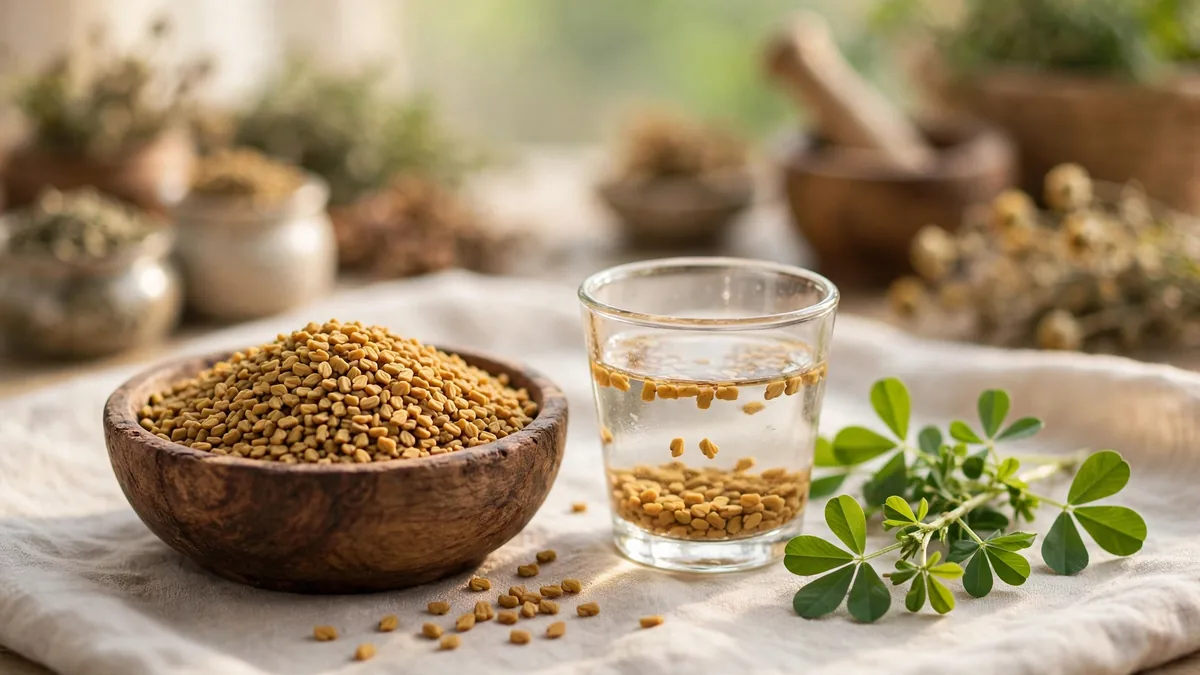
- Methi water: Soak 1 teaspoon of seeds in a glass of water overnight; drink the water and chew the softened seeds on an empty stomach in the morning.
- Seed powder: Typical traditional amounts are 2–5 grams per day with warm water or milk. Start low (1–2 grams) and increase gradually.
- Capsules/extracts: Strengths vary widely. Follow the label and choose standardized products from reputable manufacturers.
- Fresh leaves (methi saag): Used as a green vegetable in cooking — a gentle way to get the herb’s nutritional value.
- Hair pack: Overnight-soaked seed paste applied to the scalp 1–2 times weekly.
Safety, Side Effects and Precautions
Fenugreek is a common food spice and is generally well tolerated, but it is not right for everyone.
- Digestive upset: Large amounts can cause gas or bloating at first — start with a small dose.
- Blood sugar medication: Methi may enhance the effect of diabetes medicines, which could push blood sugar too low. Monitor levels and talk to your doctor before combining.
- Blood-thinning caution: Fenugreek contains coumarin-like compounds, so people on anticoagulants should consult their doctor.
- Pregnancy: Medicinal doses are generally advised against in pregnancy because the herb may stimulate uterine contractions. Pregnant women should avoid medicinal doses.
- Allergies: People allergic to peanuts, chickpeas or other legumes may react to fenugreek.
As with any herb used for a medical condition, consult a qualified Ayurvedic practitioner or doctor before starting — especially if you are pregnant, nursing, on medication, or managing a chronic illness.
Frequently Asked Questions
Can I take fenugreek daily?
Small daily amounts — such as one teaspoon of soaked seeds or a cup of methi water — are a long-standing traditional habit for people who tolerate it well. Keep doses modest, take a break of a week or two every couple of months, and stop if you notice digestive discomfort.
Does fenugreek really help hair growth?
Fenugreek hair packs are a traditional remedy believed to nourish the scalp and reduce hair fall. A few small studies show encouraging signs, but strong clinical proof is missing. Best seen as a supportive, low-cost hair-care practice rather than a guaranteed hair-growth treatment.
Is methi water good for weight loss?
Some people find that methi water before breakfast reduces mid-morning hunger, possibly because of its fiber content. There is no strong evidence that it causes meaningful weight loss on its own. If weight management is your goal, triphala is another Ayurvedic formula traditionally paired with digestion and weight routines.
Can diabetics take fenugreek?
Small studies show modest effects, but it can interact with diabetes medication — only try it under your doctor’s supervision while monitoring blood sugar as usual.
When is the best time to drink methi water?
Traditionally it is taken first thing in the morning on an empty stomach. For blood-sugar support, some practitioners suggest taking the powder with or just before meals.
Does fenugreek have side effects on hormones?
There is no solid evidence that culinary or moderate supplemental doses meaningfully change human hormone levels. People with hormone-sensitive conditions should still check with their doctor first.
Conclusion
In modest amounts with sensible precautions, methi water or seed powder can be a simple addition to a balanced routine — with your doctor’s okay if you take medication.