Bhringraj Benefits: Ayurvedic Herb for Hair Growth and Scalp Health
Bhringraj Benefits: Ayurvedic Herb for Hair Growth and Scalp Health
Bhringraj (Eclipta prostrata, also known as Eclipta alba or “false daisy”) has been called the “king of herbs for hair” in Ayurveda for centuries. Traditional Ayurvedic texts describe it as a keshya herb — one that nourishes and strengthens the hair — and it remains one of the most widely used ingredients in Indian hair oils today. In this guide, we look at what Bhringraj is, the traditional benefits Ayurveda attributes to it, how it is commonly used, and the safety notes you should know before trying it.
What Is Bhringraj?
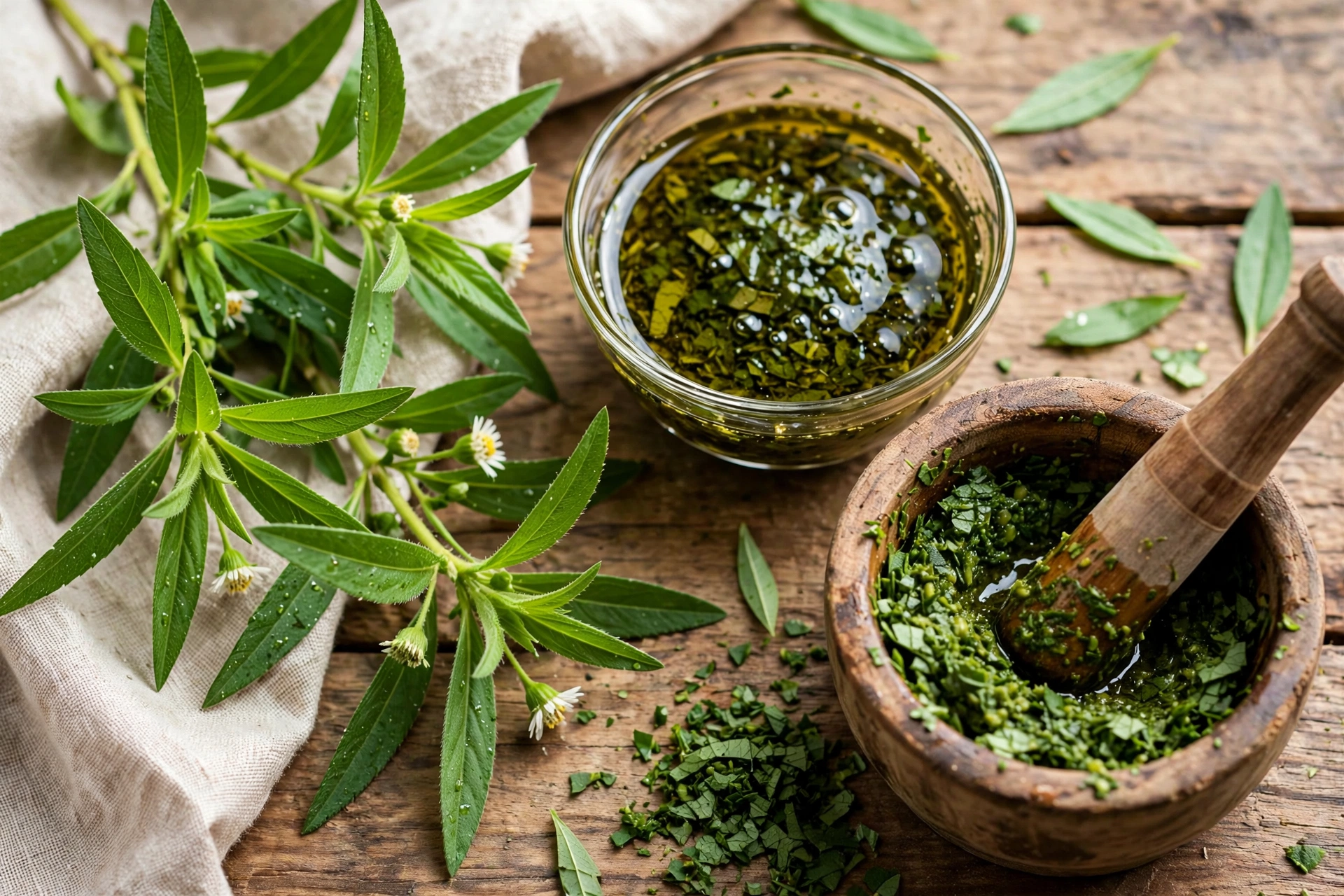
Bhringraj is a small leafy plant with tiny white, daisy-like flowers that grows in moist areas across India. In Ayurveda, it is classified as a tridoshic herb, meaning it is traditionally believed to balance all three doshas (Vata, Pitta, and Kapha), with a particular reputation for cooling excess Pitta — which Ayurveda links to hair fall, premature greying, and scalp irritation.
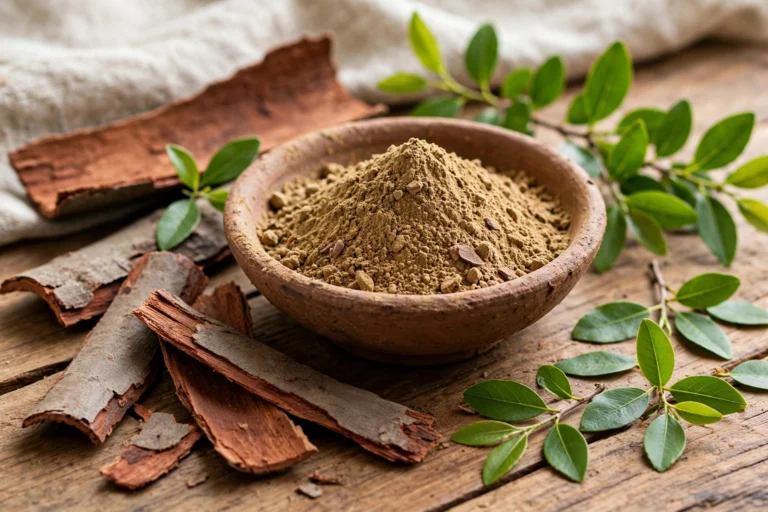
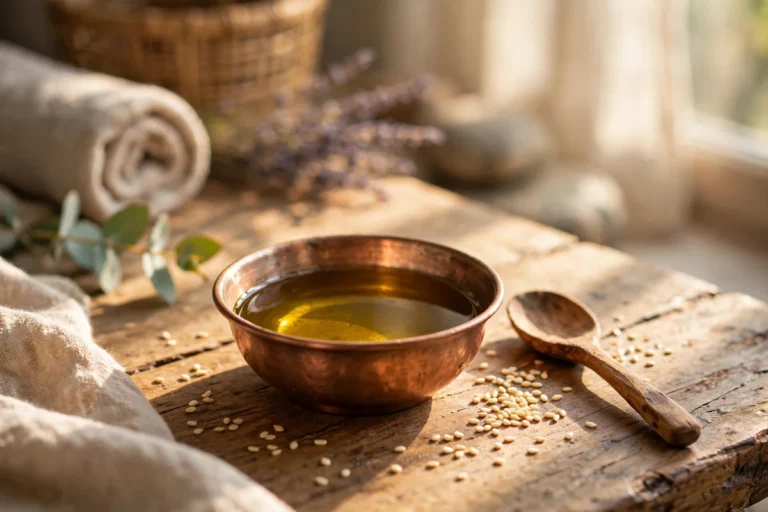
The whole plant is used: the leaves, stems, and flowers are dried and powdered, or the fresh juice is extracted and cooked into a base oil (usually coconut or sesame oil) to make Bhringraj oil. Both forms are available in most Indian grocery stores and Ayurvedic pharmacies.
Traditional Ayurvedic Benefits of Bhringraj
1. Supports Hair Growth
The primary traditional use of Bhringraj is as a hair-growth tonic. Ayurvedic practice holds that massaging Bhringraj oil into the scalp nourishes the hair follicles and strengthens the roots. A few small animal studies have found that Bhringraj extracts promoted faster hair regrowth in shaved rats compared with controls — but these are preliminary findings in animals, not proof that it regrows hair in humans. Treat the hair-growth claim as traditional and promising, not as a guaranteed medical result.
2. Helps Maintain Scalp Health
Traditionally, Bhringraj oil is used to calm an itchy, flaky, or irritated scalp. Its cooling nature is believed to soothe the scalp, while the oil massage itself improves local blood circulation. Many people find that regular oiling reduces dryness and makes dandruff easier to manage, though dandruff with a medical cause (such as seborrheic dermatitis) needs proper diagnosis and treatment.
3. Traditionally Used for Premature Greying
Ayurvedic texts list Bhringraj among herbs for akal palita (premature greying), claiming that long-term use helps hair keep its natural colour. This is a traditional belief; there is no strong modern evidence that Bhringraj reverses grey hair, so view it as a nourishing hair practice rather than a colour-restoring cure.
4. Stress Relief and Better Sleep
In Ayurveda, the head is a seat of the nervous system, and the ritual of warm oil massage (shiro abhyanga) is itself calming. Bhringraj oil is traditionally applied before bed to promote relaxation and restful sleep. This relaxing effect is the one benefit most people notice immediately.
How to Use Bhringraj: Traditional Methods
Bhringraj Oil Massage (Most Common)
- Take 2–3 tablespoons of Bhringraj oil (store-bought or homemade).
- Warm it gently — it should be comfortably warm, never hot.
- Apply to the scalp in sections, massaging with your fingertips in slow circles for 10–15 minutes.
- Leave it on for at least 1–2 hours, or overnight for deeper conditioning.
- Wash with a mild shampoo. Repeat 2–3 times per week.
Other Traditional Forms
- Bhringraj powder (churna): A fresh paste of the powder with water or coconut oil can be applied as a scalp mask for 30 minutes before washing. Orally, classical texts mention small doses of the powder with honey — but only under the guidance of a qualified Ayurvedic practitioner.
- Bhringraj juice: Fresh leaf juice is sometimes mixed into hair packs. It is very concentrated, so patch-test on a small skin area first.
How Long Before You See Results?
Ayurvedic practitioners usually recommend consistent use for at least 8–12 weeks before judging results, since hair grows in slow cycles. Be cautious of products promising visible regrowth in a few days.
Safety and Side Effects
- Generally safe for external use. Bhringraj oil is well tolerated by most people when applied to the scalp.
- Patch test first. Apply a small amount on your inner forearm and wait 24 hours to rule out an allergy or contact irritation before full use.
- Pregnancy and breastfeeding: Internal (oral) use of Bhringraj is traditionally cautioned against in pregnancy. External oil use is generally considered mild, but check with your doctor first.
- Stains: Bhringraj oil and paste can stain pillowcases and light fabrics — use an old pillow cover on oiling nights.
- Oral use: Do not swallow Bhringraj powder or juice on your own. Oral Ayurvedic doses should come from a qualified practitioner, and Bhringraj is not a substitute for medical treatment of hair loss conditions like alopecia, thyroid disorders, or iron deficiency.
Frequently Asked Questions
Does Bhringraj really grow hair?
Traditionally, yes — Ayurveda has used it as a hair-growth herb for centuries, and early animal studies look encouraging. However, there is no high-quality human clinical evidence yet, so treat it as a supportive traditional practice rather than a proven cure for hair loss.
Can I use Bhringraj oil daily?
Most practitioners suggest 2–3 times a week. Daily oiling is fine for short periods but can attract dust and clog pores in some people; if your scalp feels oily or develops pimples, reduce the frequency.
Is Bhringraj oil good for dandruff?
It is traditionally used to soothe a dry, flaky scalp, and the moisturising effect helps mild dandruff. Persistent or severe dandruff should be checked by a dermatologist.
Can Bhringraj reverse grey hair?
No reliable evidence supports this. Ayurveda claims long-term use helps delay greying, but grey hair caused by genetics or age cannot be reversed by any herb.
Is Bhringraj safe during pregnancy?
External oil application is generally considered low-risk, but oral use is cautioned against in pregnancy. When in doubt, consult your doctor before using any herbal product.
Conclusion
Bhringraj earns its title as Ayurveda’s “king of hair herbs” through centuries of traditional use for hair growth, scalp comfort, and lustrous hair. Used consistently as a warm oil massage, it is a safe, affordable addition to your hair-care routine — just keep expectations honest, patch-test first, and see a doctor for sudden or severe hair loss, which always deserves a medical check-up.