
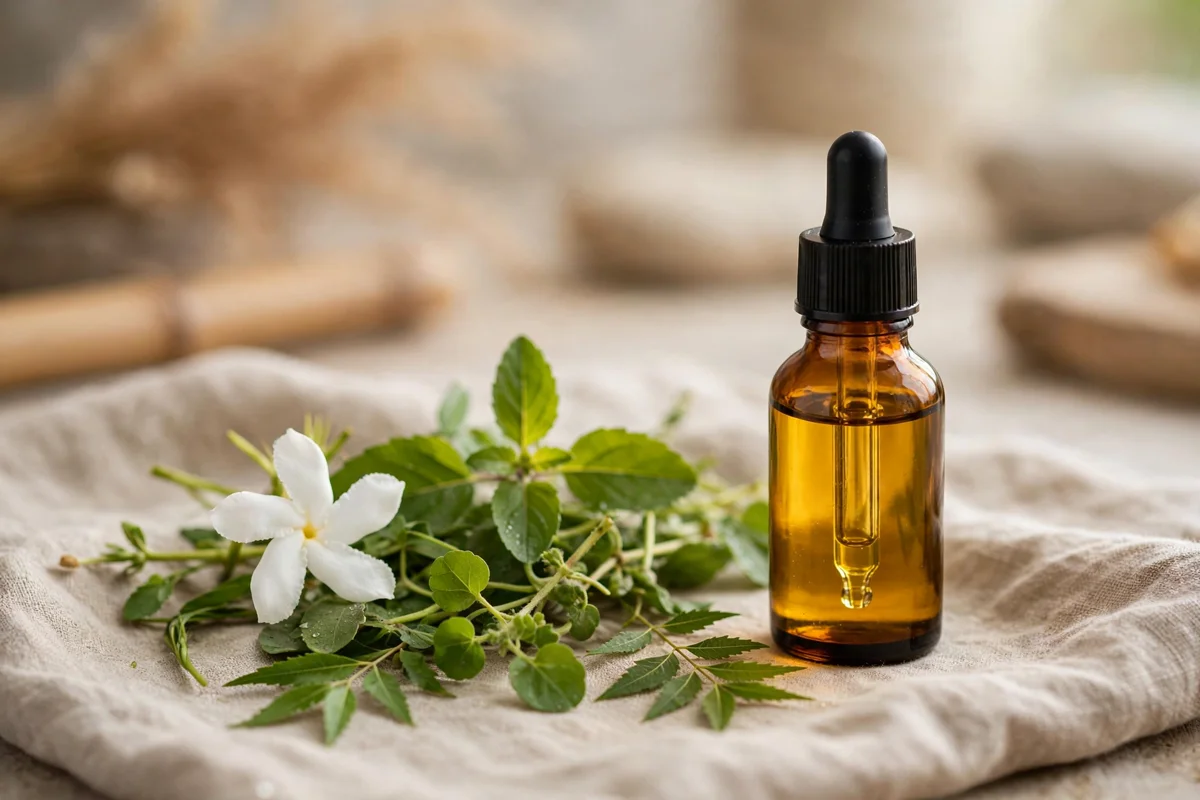
Nasya Therapy: Ayurvedic Nasal Oil Benefits for Sinuses and Mental Clarity
Of all Ayurvedic therapies, few sound as surprising as Nasya: the careful application of a few drops of warm medicated oil into the nostrils. In Ayurveda, the nose is described as the “doorway to the head” (nasa hi shiraso dwaram), which is why this therapy is traditionally used to support the sinuses, the head region, and even mental clarity. Here is what Nasya is, how it is done, and what to know before trying it.
What Is Nasya Therapy?
Nasya is one of the five classical Ayurvedic cleansing therapies (Panchakarma). It involves administering herbal oils, herbal juices, or powders through the nasal passage. In clinical settings it can be a multi-step procedure, but there is also a gentle daily version — Pratimarsha Nasya — which uses just one or two drops of warm oil in each nostril as part of the morning routine.
The traditional reasoning is straightforward: the nasal passages connect directly to the sinus cavities and the head region, so applying warm, herbalized oil there is believed to lubricate, soothe, and clear that entire area.
Traditional Uses and Claimed Benefits
As with all classical Ayurvedic practices, these are traditional claims, not proven medical outcomes. Nasya is traditionally used for:
- Sinus comfort and nasal clarity: Classical texts describe Nasya as supporting clear, comfortable nasal passages, especially in dry or dusty conditions.
- Head and neck comfort: Traditionally associated with a feeling of lightness in the head, face, and neck region.
- Mental calm and clarity: Practitioners often describe a sense of groundedness and focus after the therapy.
- Seasonal dryness: Warm oil is traditionally used to counter dry, irritated-feeling nasal passages during cold or dry seasons.
- Voice and throat support: The head-region effects are traditionally linked with comfortable throat and voice function.
Common Oils Used for Nasya
- Anu Taila: The classical medicated oil most associated with Nasya — a sesame-oil-based preparation infused with many herbs according to ancient formulas.
- Plain sesame oil: The simplest traditional option, especially for the gentle daily practice.
- Ghee (clarified butter): Sometimes used in traditional practice for its soothing quality, particularly for dryness-related discomfort.
Never use essential oils, menthol drops, or random cooking oils in the nose — Nasya oils are specifically prepared for nasal use. Medicated formulas like Anu Taila should ideally be chosen with guidance from a qualified Ayurvedic practitioner.
Simple At-Home Steps (Pratimarsha Nasya)
The gentle daily version is easy to do at home. Here is a safe, basic method:
- Choose the right time. Morning, after brushing your teeth and on an empty or light stomach, is the traditional window. Avoid Nasya right after a heavy meal, a bath, or strenuous exercise.
- Warm the oil slightly. Place the bottle in a cup of warm water for a minute or two. The oil should feel comfortably warm on your inner wrist — never hot.
- Lie back comfortably with your head tilted slightly back, or sit with your head tilted back over a chair rest.
- Apply 1–2 drops in each nostril using a clean dropper or a clean fingertip.
- Breathe gently through the nose for a minute or two, and lightly massage the sides of the nose, the forehead, and the area around the eyes.
- Rest briefly before going out into cold air or wind.
Professional Nasya vs. At-Home Practice
At-home Pratimarsha uses 1–2 drops per nostril with no preparation, daily or a few times a week, suited to general seasonal care and dryness. Professional clinical Nasya uses higher, practitioner-determined doses, often includes facial massage and steam (snehana/svedana), and is done as a supervised course for specific head/sinus concerns. If you are dealing with persistent sinus problems, chronic congestion, nosebleeds, or any diagnosed condition, the professional route with a qualified Ayurvedic practitioner is the right one — the at-home version is a maintenance ritual, not a treatment.
Safety Cautions
- Use only suitable oils. Plain warm sesame oil or a reputable Nasya preparation such as Anu Taila. Never essential oils or unfiltered homemade infusions.
- Keep everything clean. Use a clean dropper and a fresh, properly stored oil bottle. Discard oil that smells rancid.
- Skip it when unwell. Traditional guidance advises against Nasya during acute colds with heavy congestion, fever, or immediately after eating, drinking alcohol, or during pregnancy — consult a practitioner in these cases.
- Children and the elderly should only practice with professional guidance and adjusted doses.
- Breathe normally during application; do not sniff the oil forcefully deep into the passages.
- Not a substitute for medical care. Nasya does not replace diagnosis or treatment for sinus infections, allergies, or breathing disorders. See a doctor for persistent symptoms.
Frequently Asked Questions
Does Nasya oil go into the sinuses or lungs?
No — the drops coat the nasal passages. Applied gently in small amounts, the oil stays in the nasal lining and is not inhaled into the lungs.
Can I do Nasya every day?
The gentle Pratimarsha form (1–2 drops) is traditionally used daily. Stronger clinical forms are done as supervised courses, not daily self-practice.
What does Anu Taila smell like?
It has a distinctive herbal, slightly pungent aroma from its many herbal ingredients. Plain warm sesame oil is a milder-smelling alternative.
Is there scientific evidence for Nasya?
Research is still limited — a few small studies exist, but nothing conclusive. Its use rests mainly on centuries of traditional practice. Approach it as a traditional wellness ritual, not as proven therapy.
Conclusion
Nasya therapy offers a uniquely Ayurvedic perspective: caring for the nose as the gateway to the head. A couple of drops of warm oil each morning is a small ritual, traditionally valued for sinus comfort, seasonal dryness, and a calm, clear start to the day. Keep the practice gentle, the oil clean and appropriate, and your expectations realistic. For anything beyond simple seasonal care — or if you are pregnant, unwell, or managing a diagnosed condition — talk to a qualified Ayurvedic practitioner or doctor first.


One Comment
Comments are closed.