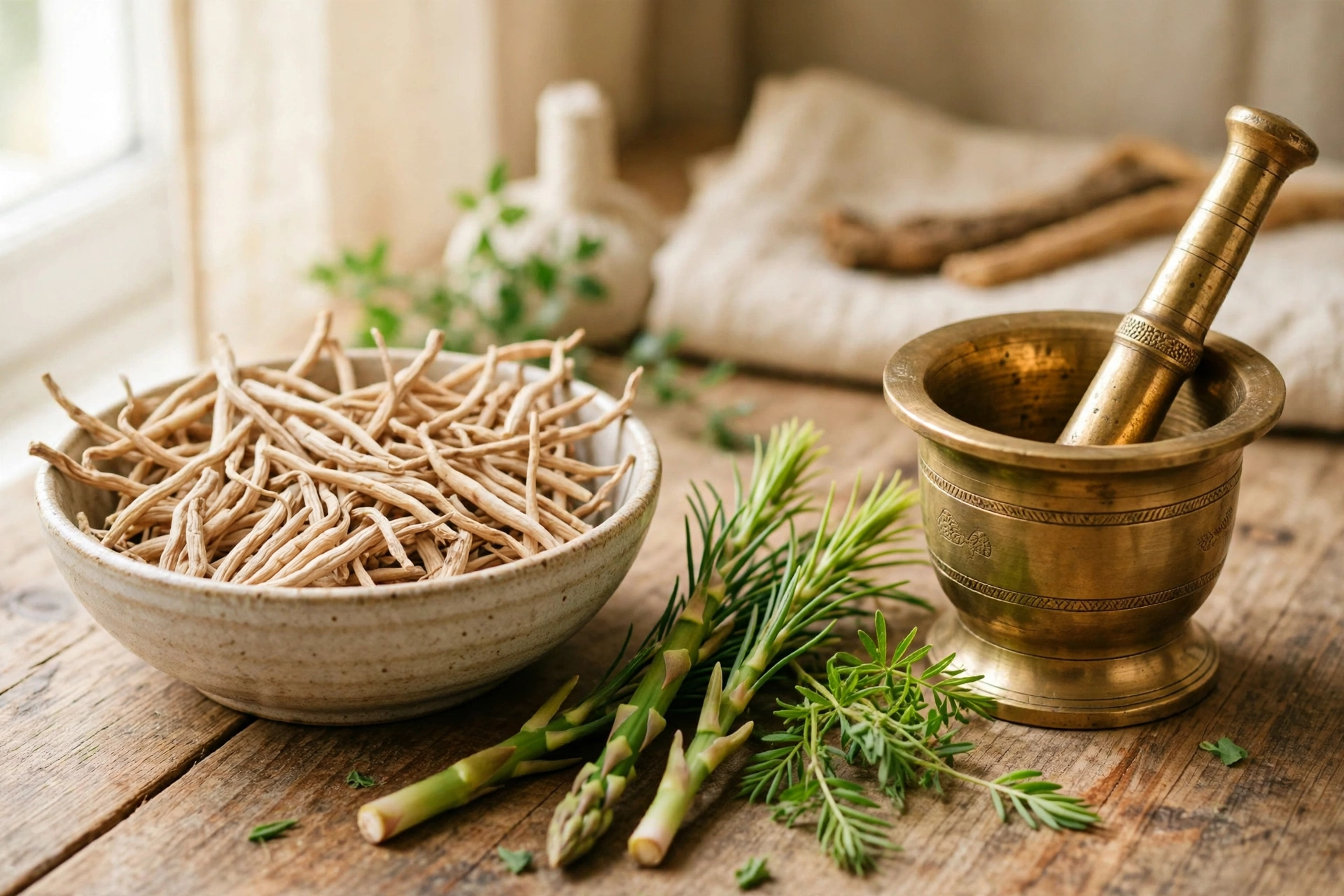
Shatavari for Women’s Health: Benefits, Dosage and Safety
In Ayurveda, a few herbs carry royal titles — and shatavari is known as the “queen of herbs.” Its very name means “she who possesses a hundred husbands,” a poetic reference to its traditional reputation for supporting female reproductive vitality. For centuries, Ayurvedic practitioners have turned to shatavari root for women’s health through every life stage: from menstrual comfort to lactation support to the menopause transition.
Beyond women’s health, shatavari is a valued rasayana (rejuvenative tonic) for digestion, immunity, and resilience to stress. Here’s a clear look at what it is, what it may help with, and how to use it safely.
What Shatavari Is
Shatavari (Asparagus racemosus) is a climbing plant native to India, and the medicine comes from its tuberous roots. In Ayurveda it is classified as a rasayana — a rejuvenating herb that nourishes the tissues (dhatus) and supports ojas, the essence of immunity and vitality.
Its taste is sweet and bitter, with a cooling energy (shita virya), which makes it especially balancing for pitta and vata doshas. The roots contain steroidal saponins called shatavarins, along with flavonoids and antioxidants, which are thought to underlie many of its traditional effects.
Traditional Uses for Women’s Health
1. Hormonal Balance
Shatavari is traditionally used to support the female reproductive system and ease the discomforts associated with hormonal fluctuations. Ayurvedic texts describe it as nourishing for the reproductive tissues, and it is one of the first herbs practitioners consider for menstrual irregularity and premenstrual discomfort.
2. Reproductive Health
Classically, shatavari is considered a tonic for the uterus and ovaries, used to support fertility and healthy reproductive function. It is often combined with ashwagandha in traditional formulations aimed at overall reproductive wellness.
3. Lactation Support
One of shatavari’s best-known traditional roles is as a galactagogue — a herb believed to support healthy breast milk production in nursing mothers. It is commonly given as shatavari powder with warm milk, a preparation considered both nourishing and gentle. Nursing mothers should still check with their doctor before starting any herbal supplement.
4. Menopause Comfort
During perimenopause and menopause, shatavari is traditionally used to ease common discomforts such as hot flashes, mood changes, and dryness, thanks to its cooling, nourishing nature. Some small studies suggest its phytoestrogen-like compounds may help, though larger clinical trials are still needed.
Other Health Benefits
Digestive Support
Shatavari’s cooling, soothing quality makes it useful for acidity, heartburn, and occasional stomach irritation. It is traditionally believed to support the stomach lining and ease pitta-related digestive discomfort.
Immune Support
As a rasayana, shatavari is considered an immune-supporting tonic. Laboratory studies suggest its saponins and antioxidants may support immune function, though human evidence is still emerging.
Stress and Adaptogenic Effects
Shatavari is sometimes described as an adaptogen — a herb that helps the body cope with physical and mental stress. Traditional use and early research suggest it may support a calm, balanced stress response, and it pairs well with ashwagandha for this purpose.
Respiratory Comfort
Its soothing, moistening nature has also made shatavari a traditional remedy for dry coughs and throat irritation.
Forms and How to Take Shatavari
Shatavari Powder (Churna)
The most traditional form. Mix 1-2 teaspoons (about 3-6 grams) in warm milk or warm water, once or twice daily. Warm milk with a little honey is the classic preparation, especially for women’s health and lactation support.
Capsules or Tablets
Convenient and taste-free. Typical label dosages are 500-1000 mg per day, taken with food or warm milk.
Shatavari Kalpa / Granules
Sweetened granule formulations (shatavari kalpa) are popular in India, especially for nursing mothers — usually 1-2 teaspoons with warm milk twice daily.
As Part of Formulations
Shatavari appears in classical Ayurvedic preparations such as Shatavari Ghrita (medicated ghee) and various women’s-health formulations. These are best taken under a practitioner’s guidance.
Dosage Guidance
- Powder: 3-6 grams per day, divided into one or two doses with warm milk or water.
- Capsules: 500-1000 mg per day, or as directed on the product label.
- Duration: As a rasayana tonic, shatavari is traditionally taken for several weeks to a few months. For specific concerns, follow an Ayurvedic practitioner’s advice.
Because it is cooling and mildly heavy to digest, people with very sluggish digestion or excess kapha may do better taking it with ginger or warm spices.
Who Should Avoid Shatavari or Use It with a Doctor’s Guidance
- Estrogen-sensitive conditions: Because shatavari may have mild phytoestrogen-like activity, women with estrogen-sensitive conditions (such as certain breast or uterine conditions) should use it only under medical supervision.
- Pregnancy: While traditionally used in women’s health, concentrated shatavari supplements during pregnancy should only be taken with a doctor’s approval.
- Allergy to asparagus: Shatavari is in the asparagus family — avoid it if you are allergic to asparagus or related plants.
- Kidney or diuretic medication: Shatavari has a mild diuretic effect, so check with your doctor if you take diuretics or have kidney issues.
- Blood sugar medication: Some evidence suggests shatavari may influence blood sugar; monitor levels and consult your doctor.
Frequently Asked Questions
Is shatavari only for women?
No — while it is most famous for women’s health, shatavari is a general rasayana tonic. Men also use it for digestive comfort, immune support, and stress resilience.
How long does shatavari take to work?
As a nourishing tonic, its effects build gradually. Most traditional sources suggest allowing 4-8 weeks of consistent use before judging results.
Can I take shatavari with ashwagandha?
Yes — this is a classic Ayurvedic pairing. Ashwagandha is warming and energizing while shatavari is cooling and nourishing, and together they are traditionally used for stress, strength, and reproductive wellness.
Is shatavari safe during breastfeeding?
Shatavari has a long traditional history of use by nursing mothers, and it is generally considered one of the gentler galactagogue herbs. Even so, check with your doctor before starting it while breastfeeding.
Does shatavari help with PCOS or irregular periods?
Ayurvedic practitioners commonly include shatavari in regimens for menstrual irregularity, and early research is exploring its hormonal effects. However, conditions like PCOS need proper medical diagnosis and management — use shatavari as a complement to, not a replacement for, medical care.
Shatavari’s title as the “queen of herbs” reflects centuries of trusted use for women’s health — from menstrual comfort and lactation to the menopause years — along with genuine value as a soothing digestive and stress-supporting tonic. Taken in traditional forms with warm milk, in moderate doses, and with realistic expectations, it is one of Ayurveda’s most approachable herbs. And as with any herb that touches hormones, the wise path is to involve your doctor, especially if you are pregnant, nursing, managing a medical condition, or taking medication.