Punarnava Benefits: Ayurvedic Remedy for Water Retention and Kidney Health
Punarnava (Boerhavia diffusa) is one of Ayurveda’s most respected herbs for managing excess fluid in the body. Its Sanskrit name means “that which renews” — a reference to the plant’s ability to regenerate each monsoon. Classical texts prize it as a gentle diuretic (mutrala) that supports the kidneys and urinary system, and it is the lead herb in famous formulations like Punarnavadi Kwath and Punarnavasava. This guide explains its traditional uses, what modern research says, how it is taken, and the safety rules to know.
What Is Punarnava in Ayurveda?
Punarnava is a spreading perennial herb found across India. Ayurvedic texts describe it as tikta-kashaya (bitter-astringent), with a rejuvenating (rasayana) quality for the urinary system, traditionally said to balance kapha and vata.
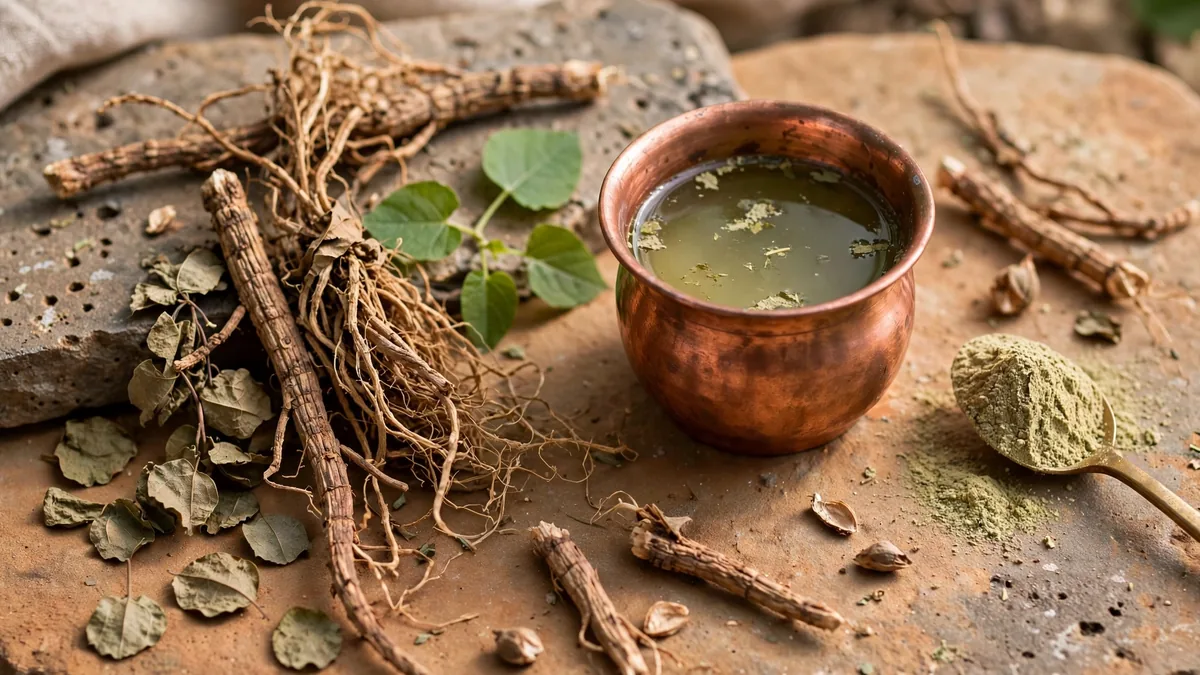
The root is considered the most potent part, though the whole plant is used in classical preparations. Its key studied compounds include punarnavine and boeravinones, which researchers are investigating for diuretic and kidney-protective effects — though most studies so far are in animals or small human samples.
Punarnava for Water Retention and Swelling
The signature traditional use of punarnava is for shotha — swelling caused by fluid accumulation. This is where the herb has its longest history and most practical reputation.
- Traditionally used as a gentle diuretic: Punarnava is believed to support healthy urine flow, helping the body release excess water. Ayurvedic practitioners commonly include it in protocols for puffy eyes, swollen ankles and generalized heaviness from fluid retention.
- Supports comfortable joints: Because excess fluid can make joints feel stiff and heavy, punarnava’s traditional fluid-balancing action is also used in formulations aimed at joint comfort.
- Part of classic formulations: Punarnavadi Mandura and Punarnavadi Kwath combine punarnava with herbs like ginger and gokshura for fluid balance and vitality.
Important perspective: occasional mild puffiness (for example, after salty food or long travel) is very different from persistent swelling, which can signal heart, kidney or liver problems. Punarnava is a traditional support for mild, lifestyle-related fluid retention — persistent or unexplained swelling always needs medical evaluation first.
Punarnava for Kidney and Urinary Health
In Ayurveda, punarnava is closely associated with the mutravaha srotas (urinary channels) and is considered a rasayana — a rejuvenating tonic — for the kidneys.
- Traditionally supports kidney function: Classical texts recommend punarnava to maintain healthy kidney function and comfortable urination. Animal studies suggest possible kidney-protective effects, but human clinical evidence is still limited.
- May support healthy urinary flow: Its mild diuretic action is traditionally used for scanty or uncomfortable urination.
- Used in detox routines: Because it encourages fluid elimination, punarnava often appears in Ayurvedic cleansing protocols alongside formulas like triphala, the classic gentle detox blend.
People with diagnosed kidney disease should be especially careful: a diuretic herb can shift fluid and electrolyte balance in ways that may not be safe with impaired kidneys. Never self-prescribe punarnava for kidney disease — work with both your nephrologist and a qualified Ayurvedic practitioner.
Other Traditional Benefits of Punarnava
- Liver support: Punarnava is traditionally used to support healthy liver function; some animal studies suggest protective effects, but human data is thin.
- Respiratory comfort: Classical texts include punarnava in some formulations for kapha-related respiratory heaviness.
- General rejuvenation: As a rasayana herb, it is traditionally taken in small, steady doses to support overall vitality — often paired with heart-supportive herbs like arjuna bark in traditional practice.
How to Use Punarnava: Forms, Dosage and Timing
Punarnava is available in several forms. Traditional Ayurvedic guidance for the powdered root (churna) is typically 1–3 grams twice daily with warm water, but dosing should be individualized by a practitioner.
- Powder (churna): 1–3 grams, twice daily with warm water. Start at the lower end.
- Decoction (kwath): Simmer coarse powder in water, reduce to one-quarter, strain and drink warm — traditionally 30–50 ml twice daily.
- Capsules/tablets: Usually 500 mg–1 g per day in divided doses; follow the product label.
- Classical formulations: Punarnavasava and Punarnavadi Mandura are traditional compound formulas — best taken under practitioner guidance.
Because it is a diuretic, punarnava is usually taken in the morning and early afternoon rather than at night, to avoid disturbing sleep with nighttime urination. Drink adequate water through the day while using it.
Safety, Side Effects and Precautions
Punarnava is generally considered gentle in traditional use, but its diuretic action demands respect.
- Dehydration and electrolytes: Increased urination can lower potassium and fluid levels. Avoid combining with prescription diuretics unless your doctor approves, and stay hydrated.
- Low blood pressure: Punarnava may modestly lower blood pressure. Those on antihypertensive medication should monitor readings and consult their doctor.
- Kidney disease: Anyone with diagnosed kidney problems should only use punarnava under direct medical supervision.
- Pregnancy and breastfeeding: Safety data is insufficient, so medicinal doses are best avoided during pregnancy and lactation.
- Before surgery: Stop use at least two weeks before scheduled surgery because of its effects on fluids and blood pressure.
A practical rule: if swelling is new, worsening, one-sided, or comes with breathlessness, chest discomfort or very dark urine, skip the herb and see a doctor promptly — those are not “try an herb first” situations.
Frequently Asked Questions
Is punarnava good for kidney patients?
Punarnava is traditionally considered a kidney-supportive herb, but “supportive” is not the same as treatment. People with diagnosed kidney disease should not self-prescribe it — a diuretic herb can disturb fluid and electrolyte balance when kidneys are impaired. Any use must be coordinated between your nephrologist and a qualified Ayurvedic practitioner.
How long does punarnava take to reduce swelling?
Traditional practice suggests mild, lifestyle-related puffiness may respond within days to a couple of weeks of consistent use. Persistent swelling that does not improve, or that worsens, needs medical evaluation rather than a longer herbal trial.
Can I take punarnava daily?
Traditional regimens do use punarnava daily for defined courses — often 4–8 weeks — followed by a break and reassessment. Long-term daily use without supervision is not advisable, because of its diuretic effect on hydration and minerals.
Does punarnava help with weight loss?
Punarnava may reduce water weight through its diuretic action, which can show up quickly on the scale — but that is fluid, not fat. It is not a fat-burning weight-loss herb. Sustainable weight management still comes down to diet, movement and sleep.
Can punarnava be taken with blood pressure medicine?
Only with your doctor’s knowledge. Punarnava may add to the blood-pressure-lowering effect of medication and can alter fluid balance, so combining them without supervision could cause dizziness or low blood pressure.
What does punarnava taste like?
The powder is distinctly bitter and slightly astringent — typical of kapha-balancing Ayurvedic herbs. Most people take it quickly with warm water or in capsule form. The traditional decoction is also bitter, and a little mulethi (licorice) is sometimes added to formulations to make bitter herbs more palatable.
Conclusion
Punarnava has earned its place in Ayurveda as the go-to herb for excess fluid — mild water retention, puffiness and urinary sluggishness — with a long traditional reputation for supporting the kidneys. Treat it as a traditional support herb used in defined courses under guidance, not as a cure for swelling or kidney disease. If fluid retention is persistent or comes with warning signs, medical evaluation comes first.