Vacha (Sweet Flag) Benefits in Ayurveda: Uses for Memory, Speech and Digestion
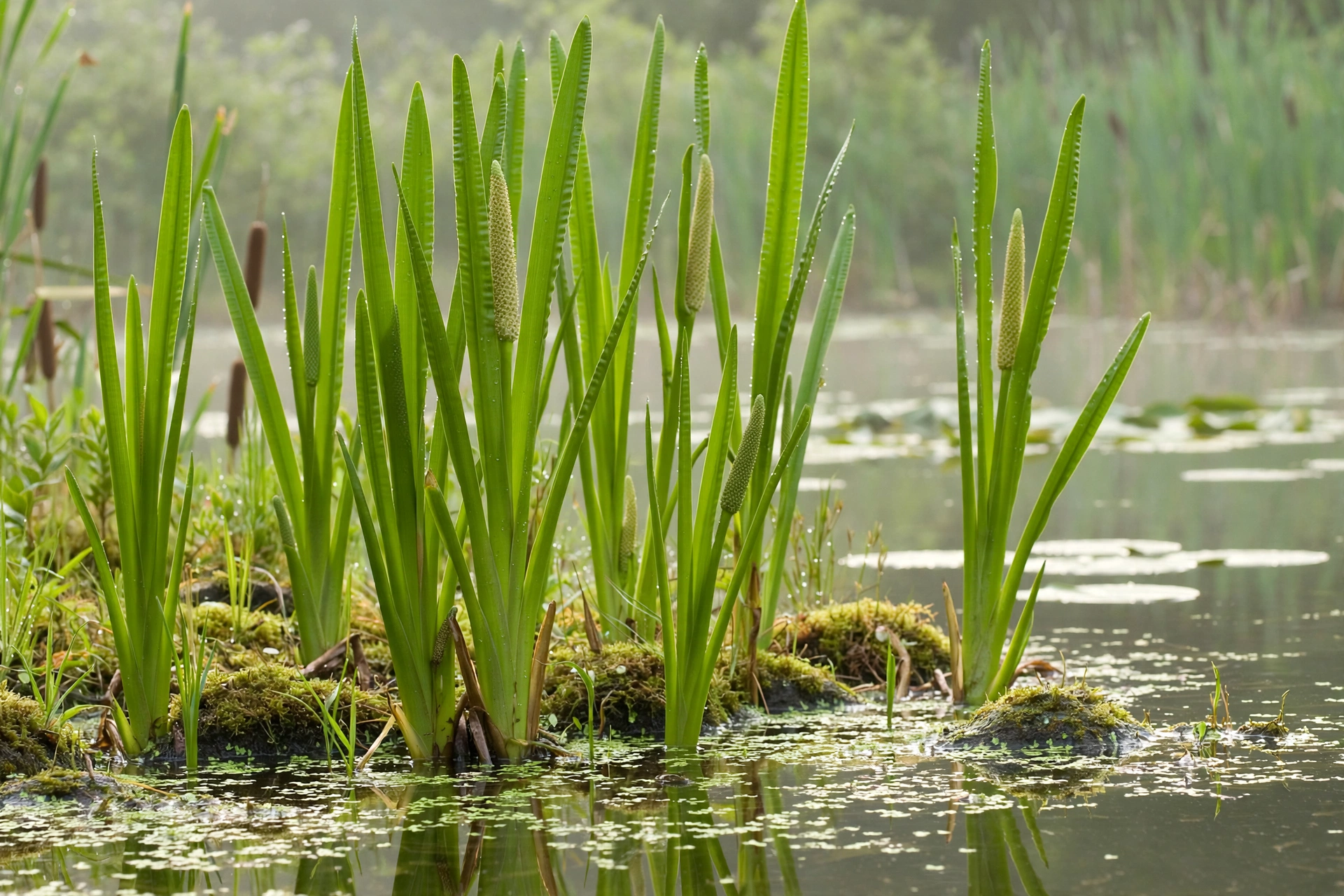
Vacha, known in English as sweet flag and in Sanskrit as Acorus calamus, is one of Ayurveda’s most distinctive herbs for the mind. It grows beside ponds, marshes and slow-moving streams, its long, sword-shaped leaves rising from shallow water and its thick, aromatic rhizome carrying the medicine. Classical texts praise vacha as a medhya rasayana, a rejuvenating herb for the intellect, traditionally used to support memory, speech, learning and digestion. This guide explores its properties, traditional uses, and the important safety precautions that must be understood before anyone considers it.
Vacha in Ayurveda: Properties and Dosha Effects
In Ayurveda, vacha rhizome has a pungent and bitter taste, a heating potency, and a light, sharp quality. It is considered balancing for vata and kapha doshas, while it can increase pitta in excess. It is classified as a medhya herb, traditionally believed to sharpen the mind, and as a deepana herb, meaning it kindles digestion.
Vacha’s rhizome is strongly aromatic, and its essential oil contains beta-asarone, the reason for its most important safety concern, discussed below. In traditional practice, vacha was always used in small doses, for limited periods, and usually combined with other herbs — never casually or in large amounts.
Vacha for Memory and Mental Clarity
Memory and learning are vacha’s best-known traditional uses. In Ayurveda, clear thinking depends on balanced vata and kapha in the mind, healthy digestion and clear channels carrying nourishment to the brain. Vacha is traditionally believed to clear heaviness and dullness from the mind and support memory, concentration and learning.
It has traditionally been given to students and to older people experiencing forgetfulness linked to excess kapha or weak digestion, often combined with brahmi, shankhpushpi and ashwagandha. Modern research on vacha for memory is very limited, so these uses should be understood as traditional, not proven by large clinical trials.
Vacha for Speech and Voice
One of vacha’s most unusual traditional uses is for speech. Classical texts describe vacha as vak-shodhana, a purifier and strengthener of speech, traditionally used to support clear, fluent speech in people with stammering or hesitation linked to vata or kapha imbalance. The rhizome was traditionally chewed in a tiny piece, or its powder applied with honey to the tongue, under expert guidance — practices that should not be copied without a practitioner.
Parents sometimes ask about vacha for children with delayed or unclear speech. Professional assessment comes first: speech delay can have many causes, and a paediatrician and speech therapist should always be involved. Vacha is not a substitute for speech therapy, and its safety in children is a concern.
Vacha for Digestion
Vacha is also a traditional digestive remedy. Its pungent, heating nature is believed to kindle agni, the digestive fire, helping with loss of appetite, heaviness after meals, gas and bloating linked to vata and kapha imbalance. It has traditionally been used for colic and as a carminative herb that helps move gas and ease cramping.
In traditional practice, a very small amount of vacha powder was taken with warm water or honey before meals to stimulate appetite. Because vacha is heating and sharp, it does not suit everyone: people with acidity, gastritis or ulcers should avoid it.
How Vacha Has Traditionally Been Used
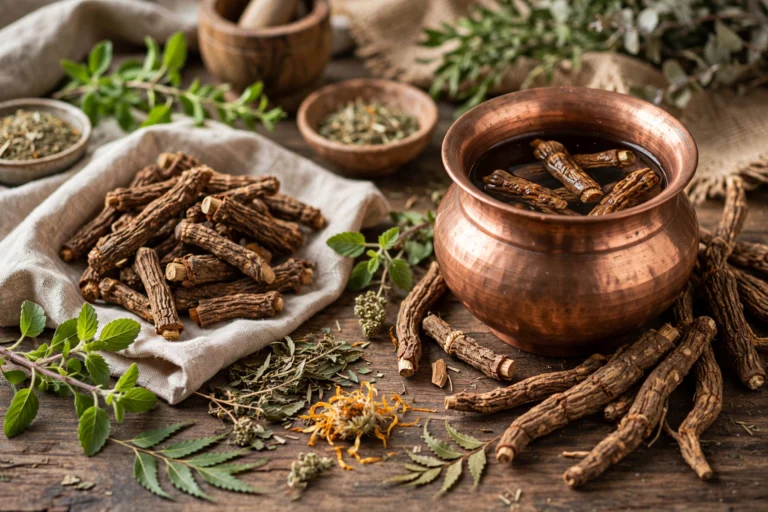
The rhizome is the part used. It is cleaned, dried and ground into a fine powder, or used in decoctions and medicated oils and ghee. The powder has traditionally been taken in very small doses — commonly 125 to 500 milligrams per day in classical texts, mixed with honey or ghee — for short periods only, under a practitioner’s direction.
State plainly: this article does not recommend self-medicating with vacha. The doses above are reported traditional ranges, not a recommendation. Anyone considering vacha should discuss it with a qualified practitioner or doctor first, and buy only standardised, reputable preparations.
Dosage and Safety Precautions: Read This Carefully
Vacha requires more caution than most Ayurvedic herbs. Its rhizome contains beta-asarone, which has shown carcinogenic effects in animal studies at high doses. Calamus use in food and medicine is restricted or banned in several countries, including the United States, where the Food and Drug Administration prohibits its use as a food additive. Some vacha varieties contain much higher levels of beta-asarone than others, making sourcing and dose especially important.
Traditional practice limited vacha to small doses and short courses, which reduces exposure, but it does not remove the modern safety concern. Vacha should be treated as a practitioner-only herb: not for casual, daily or long-term self-use.
- Do not self-medicate: Use vacha only if a qualified Ayurvedic practitioner or doctor advises it, at a dose and duration they set, and only from a reputable, tested source.
- Pregnancy and breastfeeding: Avoid vacha during pregnancy and breastfeeding. It is traditionally considered stimulating to the uterus, and its safety in these periods has not been established.
- Children: Do not give vacha to children without explicit professional advice. Traditional speech uses for children were always practitioner-directed.
- Acidity and ulcers: Vacha is heating and sharp, and may worsen acidity, gastritis and ulcers.
- Liver and kidney disease: People with liver or kidney conditions should not take vacha without medical advice, because of the beta-asarone concern.
- Medication interactions: Vacha may interact with sedative medicines and medicines affecting the nervous system. Tell your doctor about any vacha preparation you are considering.
- Long-term use: Vacha is not suitable for continuous, long-term use. Traditional courses were short, and modern guidance is even more cautious.
This article shares traditional Ayurvedic knowledge for general information only. It is not medical advice, and it is not a recommendation to take vacha. Consult a doctor or qualified Ayurvedic practitioner before considering vacha in any form, especially if you are pregnant, taking medication, or living with a serious health condition.
Frequently Asked Questions
What is vacha used for in Ayurveda?
Vacha is traditionally used as a medhya, or mind-supporting, herb for memory, learning and clarity, as a speech-supporting herb, and as a digestive remedy for sluggish digestion, gas and loss of appetite. It is a practitioner-only herb that should not be self-prescribed.
Is vacha safe to take daily?
No. Vacha is not suitable for casual daily or long-term use. Its rhizome contains beta-asarone, which has shown carcinogenic effects in animal studies, and its use is restricted in several countries. Traditional use was limited to small doses and short courses under guidance.
Can vacha help children with speech delay?
Vacha has a traditional reputation for supporting speech, but speech delay needs assessment by a paediatrician and speech therapist first, and vacha should never be given to children without explicit professional advice.
What is the traditional dose of vacha?
Classical texts report very small doses, commonly 125 to 500 milligrams of rhizome powder per day, taken with honey or ghee for a short period. This is a reported traditional range, not a recommendation — dose and duration must be set by a qualified practitioner.
Conclusion
Vacha is one of Ayurveda’s mind herbs — traditionally valued for memory, speech, clarity and digestion, yet demanding more caution than almost any other herb in the classical pharmacy. Anyone drawn to vacha’s reputation should take that interest to a qualified practitioner, and never to a home remedy tried alone.