Rock Salt (Sendha Namak) Benefits in Ayurveda: Uses for Digestion and Fasting
Rock salt, known as sendha namak in Hindi and saindhava lavana in Sanskrit, is the salt most closely associated with Ayurveda and fasting in India. Unlike fine table salt, it is mined from ancient deposits and ground into pinkish or off-white crystals, without heavy refining. During fasts such as Navratri and Ekadashi, when ordinary salt is avoided, sendha namak is allowed. This guide explains what rock salt is, how it supports digestion and fasting, and how to use it safely.
This is general traditional information, not medical advice for any specific person. Salt affects blood pressure, kidneys and fluid balance, so anyone with high blood pressure, kidney or heart disease, diabetes, or who is pregnant or takes regular medicine, should consult a physician about salt intake. Amounts here are general traditional guidance only.
What Is Rock Salt?
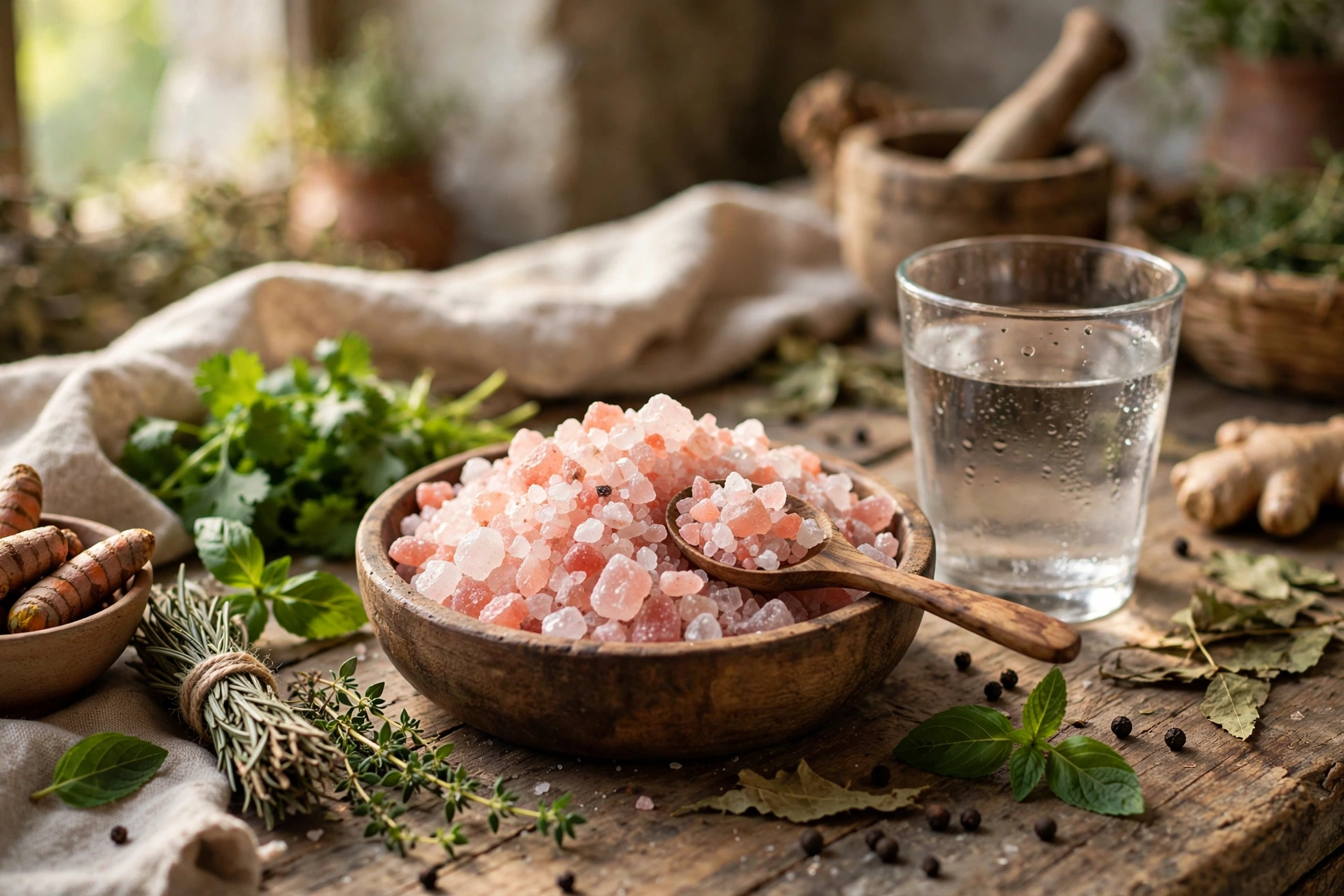
Rock salt formed when ancient seas evaporated, leaving salt deposits underground. Himalayan pink salt is coloured by trace minerals such as iron. Indian sendha namak is usually paler — white, light pink or grey — and sold as crystals or powder.
Chemically, rock salt is mainly sodium chloride, like table salt. The difference is processing: rock salt is minimally processed and retains small amounts of potassium, magnesium and calcium, while table salt is refined and often iodised. Ayurvedic texts describe saindhava as the mildest salt, cooling compared with other salts, light, easy to digest, and balancing for all three doshas in moderation.
Rock Salt and the Doshas
Sendha namak has a salty taste that stimulates appetite, a slightly cooling potency, and a softening action that helps dryness and constipation in small amounts. For Vata, prone to dryness and irregular digestion, a little rock salt with warm food is grounding. For Kapha, prone to heaviness, it kindles appetite. For Pitta, prone to heat, it is the least aggravating salt, but excess salt of any kind can increase heat, thirst and blood pressure.
Rock Salt Benefits for Digestion
Salt stimulates appetite, encourages digestive juices and helps food move through the gut. Rock salt is most often used for digestion in Ayurvedic home care.
Stimulates Appetite
A pinch of rock salt on food, or in warm water before a meal, wakes a sluggish appetite. Lemon water with sendha namak, or buttermilk with rock salt and roasted cumin, is often offered when appetite is low. A pinch is enough; more salt does not improve digestion.
Relieves Gas and Bloating
Rock salt is a classic ingredient for gas and bloating. Mixed with roasted cumin, black pepper, asafoetida (hing) or ginger in warm water, it eases fullness and encourages gas to move. These remedies suit occasional mild discomfort. Frequent or severe bloating or pain needs medical assessment.
Supports Hydration
Salt helps the body retain water. Small amounts in water have traditionally been used after sweating, vomiting or loose motions to replace fluids and salts, the same principle as oral rehydration salts. A homemade pinch of salt with a little sugar in clean water can help mild dehydration, but it does not replace proper rehydration salts or medical care for severe dehydration.
Rock Salt and Fasting
During Navratri, Ekadashi and other vrats, ordinary salt is avoided and only rock salt is used, in foods such as fruit, potatoes, buckwheat (kuttu), water chestnut flour (singhara), dairy and nuts.
Why Is It Allowed in Fasts?
Common salt was associated with processing and additives, while rock salt, simply mined and ground, was accepted as pure (shuddha). Its milder, cooling nature was also thought to suit light eating. Fasting rules vary by family and region, but the practice is deeply established.
Using It Wisely While Fasting
Fasting does not allow unlimited salt. Salty fasting snacks all day can still mean too much sodium. Use a pinch at a time, drink enough water, and include fruit and curd where allowed. People with blood pressure, kidney or heart conditions, diabetes, or who are pregnant, elderly or unwell, should not fast strictly without medical advice. Children should not be put on strict fasts.
How to Use Rock Salt at Home
Buy crystals from a trusted source and grind small amounts as needed, or buy ground sendha namak. Store in a dry, airtight container. Coarse crystals taste less salty spoon-for-spoon than fine salt, so taste food before adding more.
Daily Cooking
Use rock salt in dals, vegetables, rice and salads if you prefer it. Keep the total amount the same, as switching salts does not make extra salt healthy. The World Health Organization recommends under 5 grams of salt a day for adults, from all sources.
Digestive Drinks
Stir a pinch of rock salt and roasted cumin into warm water after a heavy meal, or make chaas by whisking thin curd with water, rock salt, cumin and coriander. Ayurveda regards chaas as an excellent everyday digestive drink. Use occasionally, and avoid if advised to restrict salt.
Salt-Water Gargle
Dissolve half a teaspoon in warm water, gargle for 20 to 30 seconds and spit out, two or three times a day for a mild sore throat. Do not swallow large amounts, and seek care if the sore throat is severe or accompanied by fever.
Precautions and Safety
- Blood pressure: rock salt raises blood pressure just like table salt. It is not safe in unlimited amounts because it is natural.
- Iodine: rock salt is not reliably iodised. If it replaces iodised salt, get iodine from dairy, eggs or seafood, or ask a physician.
- Kidneys: excess salt strains the kidneys and causes fluid retention. Discuss all salt use with a doctor if you have kidney disease.
- Quality: buy from reputable sellers. Very cheap, brightly coloured salt may be adulterated.
- Children and pregnancy: food amounts are fine, but salt flushes and strict fasting need medical advice.
Avoid salt flushes or drinking large quantities of salt water to cleanse the body. They can cause nausea, dehydration and electrolyte disturbance, and are not safe Ayurvedic home care.
Frequently Asked Questions
Is rock salt healthier than table salt?
It is less processed and Ayurveda considers it gentler, but both are mainly sodium chloride and raise blood pressure in excess. Using less salt overall matters most.
Can people with high blood pressure use it?
Yes, only within their doctor’s salt limit. Rock salt is not low-sodium and does not lower blood pressure. Treat it like table salt for quantity.
Why is only rock salt allowed in Navratri?
Tradition regards it as pure and unrefined, and therefore suitable for a fast, while processed table salt is avoided. Ayurveda also calls it the mildest salt.
How much should I use daily?
Total salt should stay under about 5 grams a day for healthy adults. Most comes from cooked food and snacks, so cook with a light hand and taste before adding more.
Conclusion
Sendha namak is the mildest of salts, valued for appetite, easing gas and heaviness, supporting hydration, and suiting fasting days. Its natural processing is appealing, but it does not change the rule of salt: a little supports health, a lot harms it. Use modest amounts, keep an iodine source in your diet, and consult a physician if you have blood pressure, kidney or heart disease, are pregnant, or take regular medicine.