Wheatgrass Benefits in Ayurveda: Detox, Energy and Digestion
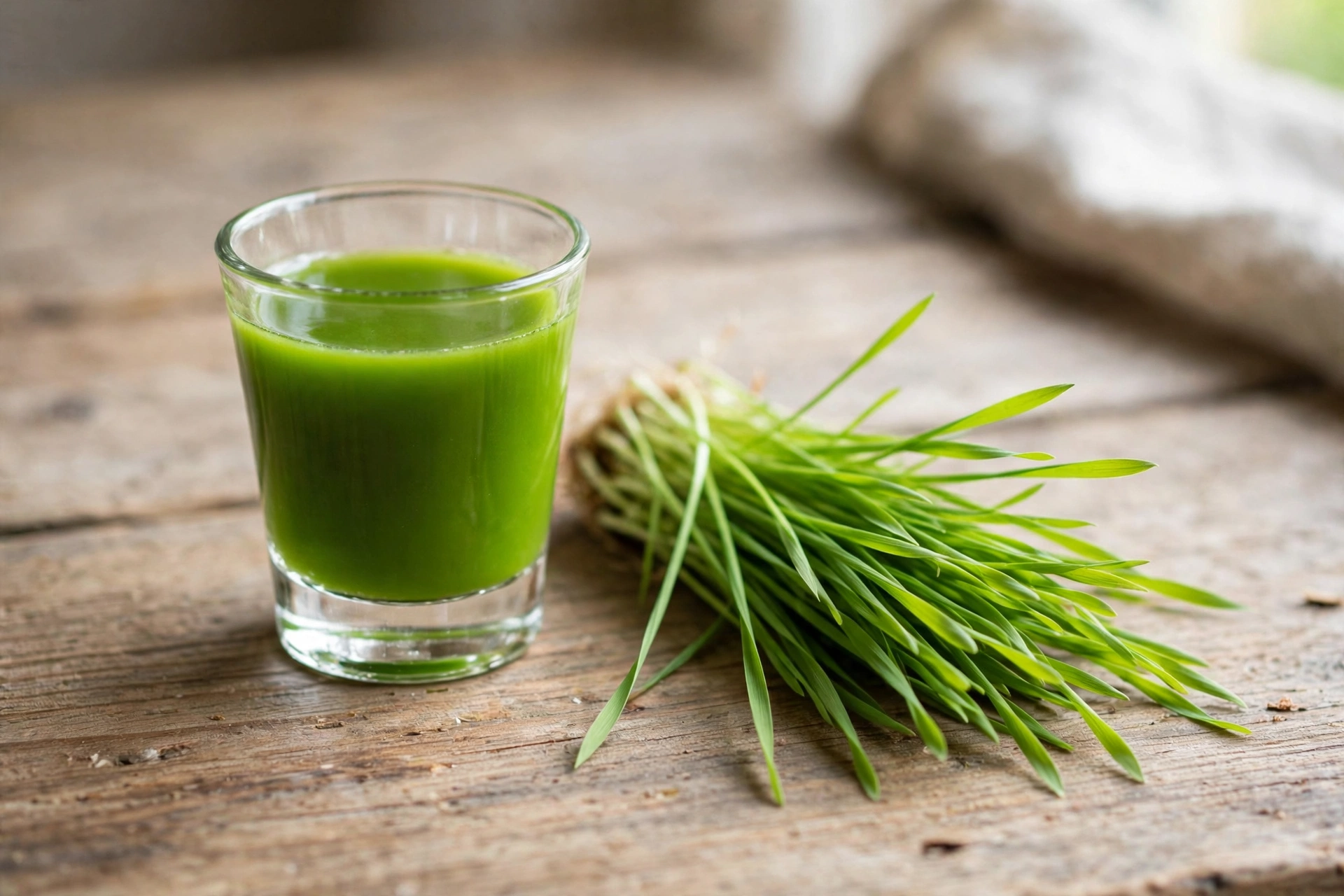
Wheatgrass is the young, green shoot of the common wheat plant, harvested a week or two after sprouting, long before it forms grain. Bright green and intensely grassy in flavour, it is pressed into juice or dried into powder and has become familiar in juice bars and health stores. In modern Ayurvedic practice, it is often described as a cooling, nourishing tonic.
This guide explains how wheatgrass is viewed in Ayurveda, its traditional benefits for detox, energy and digestion, how wheatgrass juice and powder are usually taken, and the precautions that matter most. Wheatgrass is a supportive food supplement, not a medicine, and it cannot replace medical treatment or a balanced diet.
What Is Wheatgrass?
Wheatgrass is grown from wheat berries, the whole wheat grain, sprouted until the shoots reach about fifteen to twenty centimetres tall. At this young stage, the grass is rich in chlorophyll, the green pigment in plants, and contains vitamins, minerals, amino acids and enzymes in small amounts. Juice is pressed from fresh grass, while powder is made by drying and grinding the grass.
Because wheatgrass is harvested before grain develops, pure fresh juice is generally considered free of gluten, but contamination is possible. People with coeliac disease or wheat allergy should choose certified gluten-free products and seek medical advice before use.
Wheatgrass in Ayurveda
Classical Ayurvedic texts do not name wheatgrass separately, since it is a modern preparation of a familiar grain. Modern Ayurvedic practitioners often describe it in Ayurvedic terms: cooling, light and cleansing, with a sweet taste after digestion. It is said to balance Pitta dosha, linked to heat, and to help clear ama, the heavy residue Ayurveda links to sluggish digestion and poor diet.
In this view, wheatgrass is a rejuvenating food rather than a strong medicine. It is thought to suit people with excess heat or heaviness best, while those with weak digestion may find large amounts too cooling.
Wheatgrass Benefits for Detox
Detox is the most common reason people try wheatgrass. In Ayurveda, detox does not mean a harsh fast. It means supporting the liver, kidneys, intestines and skin, the organs that naturally remove waste, so they can work efficiently. Wheatgrass is used as a gentle support for this process, alongside water, fibre-rich food and regular movement.
Wheatgrass is rich in chlorophyll and plant compounds believed to support liver function and antioxidant defences. Evidence for a specific detox effect in humans is limited, and no food can quickly flush toxins from the body alone.
Wheatgrass Benefits for Energy
Many people take wheatgrass hoping for more energy. Unlike caffeine, it does not jolt the nervous system. Instead, it supplies small amounts of iron, magnesium and B vitamins involved in normal energy metabolism.
Low energy has many causes, including poor sleep, low iron, dehydration and stress. Wheatgrass may help someone low in green foods feel fresher, but it will not correct anaemia or chronic fatigue alone. Persistent tiredness should be checked by a doctor.
Wheatgrass Benefits for Digestion
Digestion, or agni, is central in Ayurveda. Wheatgrass is traditionally used in small amounts to support digestion, as green foods encourage regular bowel movement and a healthier gut.
Some people find a small amount before a meal helps them feel lighter, while others find it too strong on an empty stomach and prefer it with food. Start small, observe how your stomach responds, and adjust. Wheatgrass is not a treatment for digestive disease.
- Traditionally used as a cooling, cleansing green tonic in modern Ayurvedic practice
- Rich in chlorophyll, with small amounts of vitamins, minerals and amino acids
- Often taken as a small juice shot to support energy and digestion
- Works best alongside hydration, fibre-rich food, sleep and movement
How to Take Wheatgrass: Juice, Powder and Traditional Guidance
Wheatgrass has a powerful taste, so most people start small. Follow the product label, and buy from a trusted source, since fresh juice spoils quickly.
- Fresh wheatgrass juice: A common starting amount is 30 ml once daily, before breakfast. Some people build up gradually to 60 ml daily over a week or two. Drink it fresh, or refrigerate and use the same day.
- Wheatgrass powder: A common general amount is one teaspoon (about 3 to 5 grams) mixed in water, juice or a smoothie, once daily. Follow the label, as concentrations vary between brands.
- Wheatgrass tablets: Take as directed on the label, usually with water and food. Tablets are convenient for travel but are the least fresh form.
- Blending for taste: Blend a small shot with apple, pineapple, lemon or coconut water. Drinking a small amount regularly matters more than a large amount once in a while.
- Course length: Wheatgrass is often taken daily for a few weeks, then paused or reduced to a few times a week.
Safety, Side Effects and Precautions
Wheatgrass is generally considered safe in small amounts for most healthy adults, but it can cause nausea, headache and loose stools, especially when too much is taken too quickly. Starting small and diluting the juice often helps.
People with wheat allergy or coeliac disease should use wheatgrass only if a doctor advises it and the product is certified gluten-free. Pregnant and breastfeeding women should seek medical advice before taking it regularly. People taking blood-thinning medication should also check with a doctor, because wheatgrass contains vitamin K, which can affect blood clotting.
Safety note: Wheatgrass is a supportive food supplement, not a replacement for medical treatment. It does not cure disease or detox the body on its own, and no specific dose has been proven to treat any condition. If you have a medical condition or take regular medication, consult a doctor or qualified Ayurvedic practitioner before regular use.
Frequently Asked Questions
How much wheatgrass juice should I drink daily?
Most people start with about 30 ml once a day and, if they tolerate it well, may increase gradually to 60 ml. There is no single proven dose, and more is not necessarily better. Follow the product label and keep the amount moderate.
Is wheatgrass gluten-free?
Fresh juice harvested before grain forms is generally considered gluten-free, but contamination is possible during growing or processing. People with coeliac disease or wheat allergy should choose certified gluten-free products and check with a doctor.
Can I take wheatgrass on an empty stomach?
Many people take it first thing in the morning, but some find it causes nausea that way. If so, try diluting it, taking a smaller amount, or having it with a light breakfast. Follow what your digestion tolerates.
Does wheatgrass really detox the body?
Wheatgrass can support natural cleansing as part of a healthy diet, but it does not detox the body in the dramatic sense often claimed in advertising. The liver and kidneys do that work, helped by hydration, fibre, sleep and movement.
Conclusion
Wheatgrass is a simple green food with a modern place in Ayurvedic-style wellness: a cooling tonic used to support natural detox, steady energy and comfortable digestion. Taken in small amounts, it can refresh a healthy routine, alongside medical care, never instead of it.