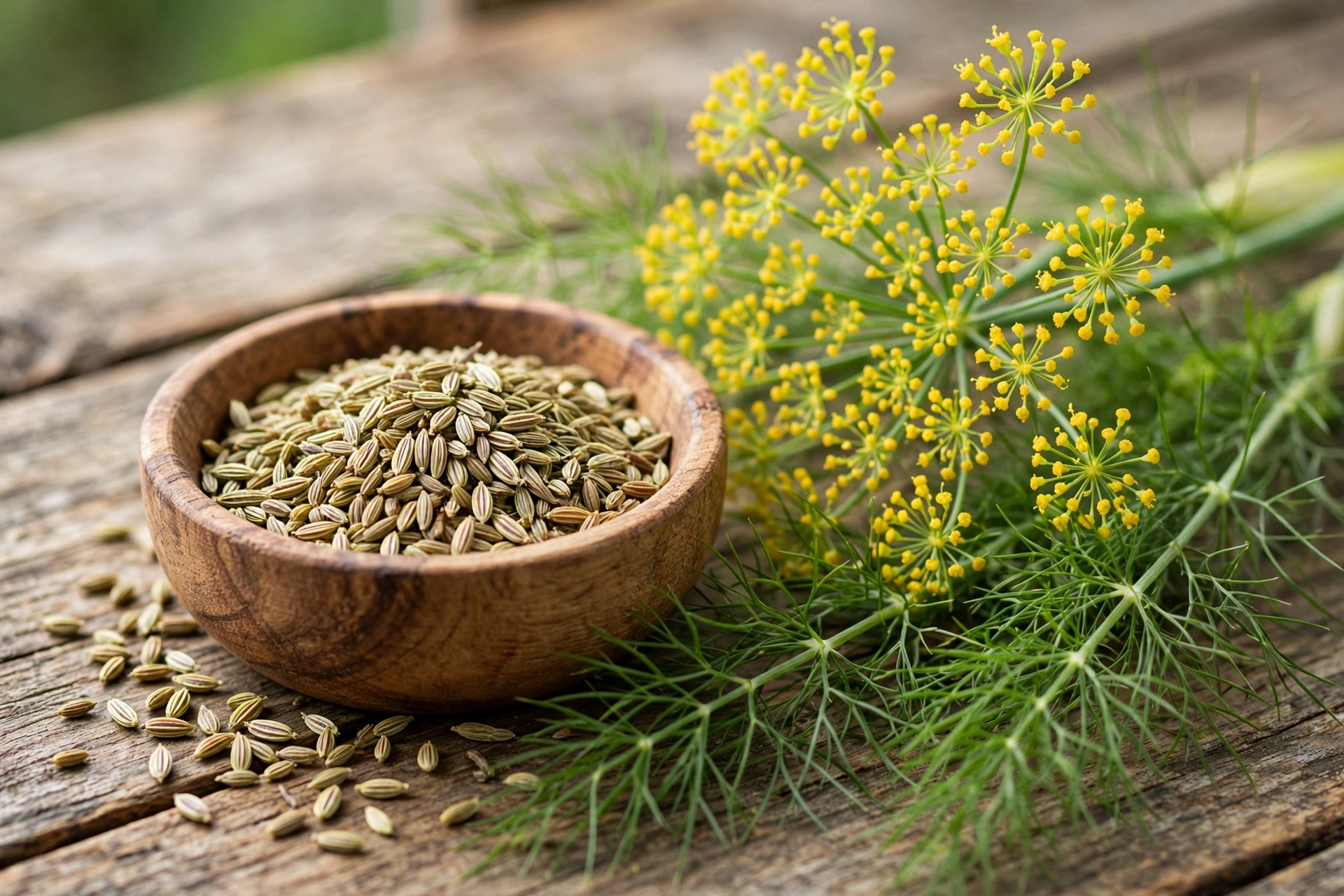
Fennel (Saunf) Benefits: Ayurvedic Uses for Digestion, Bloating and Fresh Breath
In India, a meal rarely ends without a small mouthful of saunf — those tiny, aromatic fennel seeds that arrive on a little plate at restaurants, or sit in a glass jar at home. This is far more than a post-meal ritual: in Ayurveda, fennel seed (Foeniculum vulgare) has been prized for thousands of years as a gentle digestive tonic, a coolant for excess heat, and a natural breath freshener.
Sweet, cooling, and aromatic, fennel is considered safe enough for children, the elderly, and even nursing mothers in traditional practice. Here’s a complete look at its benefits, how to use it, and what to know before adding it to your daily routine.
What Fennel (Saunf) Is
Fennel seeds are the dried fruit of the fennel plant, a member of the carrot family native to the Mediterranean and widely cultivated in India. In Ayurveda, fennel is described as having a sweet taste (madhura rasa), a cooling energy (shita virya), and a sweet post-digestive effect — a profile that soothes vata and pitta doshas.
Its characteristic aroma comes from volatile oils such as anethole, estragole, and fenchone — the same compounds behind its carminative (gas-relieving) reputation in both traditional and modern herbal medicine.
Digestive Benefits of Fennel
1. Relieves Gas and Bloating
Fennel’s best-known benefit is its ability to ease gas, bloating, and abdominal heaviness after meals. Its volatile oils help relax the smooth muscles of the digestive tract and support the movement of gas through the intestines. This is why saunf is chewed after heavy meals — it is effectively a gentle, natural carminative.
2. Stimulates Healthy Digestion
In Ayurvedic terms, fennel kindles agni (digestive fire) without aggravating pitta — a rare quality, since most digestive stimulants are heating. Modern herbalists similarly value fennel for supporting regular digestion, healthy appetite, and comfortable post-meal digestion.
3. Eases Stomach Cramps and Colic
Fennel’s antispasmodic action makes it a traditional remedy for intestinal cramps and infant colic. Fennel seed tea (very weak, and only with a pediatrician’s approval) is a folk remedy for colicky babies in many cultures — and many adults rely on fennel tea to settle mild stomach cramps.
4. Supports Lactation
Fennel is traditionally used in India as a galactagogue — a herb believed to support healthy breast milk production. Lactating mothers often sip fennel tea. Nursing mothers should consult their doctor before taking it regularly in medicinal amounts.
Fennel for Fresh Breath and Oral Health
Chewing fennel seeds after meals is India’s original mouth freshener. The seeds’ aromatic oils mask food odors while stimulating saliva, which itself helps cleanse the mouth. A teaspoon of saunf with a pinch of rock sugar (mishri) remains the classic combination.
Other Traditional Benefits
Cooling Effect for Acidity
Thanks to its cooling energy, fennel is traditionally recommended for acidity, heartburn, and pitta-related digestive heat. Fennel seed water or tea after meals is a common home remedy for a burning stomach.
Eye and Vision Support
Classical Ayurvedic texts include fennel among the herbs considered supportive for the eyes. A traditional eye wash made from cooled fennel seed decoction is still used in folk practice — but never put anything in your eyes without professional guidance.
Respiratory Comfort
Fennel’s expectorant quality has made it a traditional addition to remedies for mild coughs and congestion, often combined with tulsi or ginger tea.
Antioxidant Richness
Fennel seeds contain flavonoids and phenolic compounds with antioxidant activity in laboratory studies. Fennel is a food, not a medicine — its real value lies in consistent, moderate use.
How to Use Fennel (Saunf)
Chewing Seeds After Meals
The simplest method: chew 1/2 to 1 teaspoon of fennel seeds after meals. Plain or sugar-coated (meethi saunf) — though plain is healthier if you are watching sugar intake.
Fennel Seed Tea
Crush 1 teaspoon of fennel seeds and steep in a cup of hot water for 10 minutes. Strain and sip after meals for digestion, or drink warm through the day for bloating.
Fennel Seed Water (Saunf Ark)
Soak 1 tablespoon of fennel seeds overnight in a glass of water. Strain and drink the water on an empty stomach in the morning — a popular remedy for acidity and bloating.
In Cooking
Fennel seeds are a staple of the Indian five-spice blend panch phoron and appear in many curries, breads, and desserts. Using them as a regular spice is the easiest way to get their benefits daily.
Powder and Capsules
Fennel seed powder (churna) is taken in doses of about 1-3 grams with warm water. Medicinal doses beyond culinary use are best taken under a qualified Ayurvedic practitioner’s guidance.
Safety and Precautions
- Culinary amounts are generally safe for most people, including during pregnancy and breastfeeding, according to traditional use.
- Concentrated fennel oil should not be taken internally without professional supervision.
- Hormone-sensitive conditions: fennel contains phytoestrogen-like compounds; those with estrogen-sensitive conditions or on hormone-related medication should check with a doctor.
- Allergies: people allergic to carrots, celery, or other umbelliferous plants may react to fennel — stop use if you notice itching or swelling.
- Medications: large amounts may interact with certain drugs, including antibiotics and birth-control pills. Consult a qualified practitioner if you take regular medication.
Frequently Asked Questions
Does fennel seed help with bloating?
Yes — relieving bloating and gas is fennel’s most established traditional use. Chewing seeds or drinking fennel tea after meals is the classic method.
Can I eat fennel seeds every day?
A teaspoon or two daily after meals is a long-standing traditional practice and is generally considered safe as a food. For medicinal doses long-term, get guidance from a qualified practitioner.
Is fennel safe during pregnancy?
Fennel seeds in normal food amounts are traditionally used during pregnancy, but concentrated forms (oil, strong decoctions, high-dose supplements) should be avoided unless a doctor or qualified practitioner approves.
Does fennel reduce bad breath?
Chewing fennel seeds is a traditional natural breath freshener — the aromatic oils mask odors and increased saliva flow helps cleanse the mouth. It complements, but does not replace, brushing and flossing.
What is the difference between plain and sweet saunf?
Plain saunf is just dried fennel seeds. Sweet (meethi) saunf is coated with sugar — tasty, but the added sugar makes plain saunf the healthier daily choice.