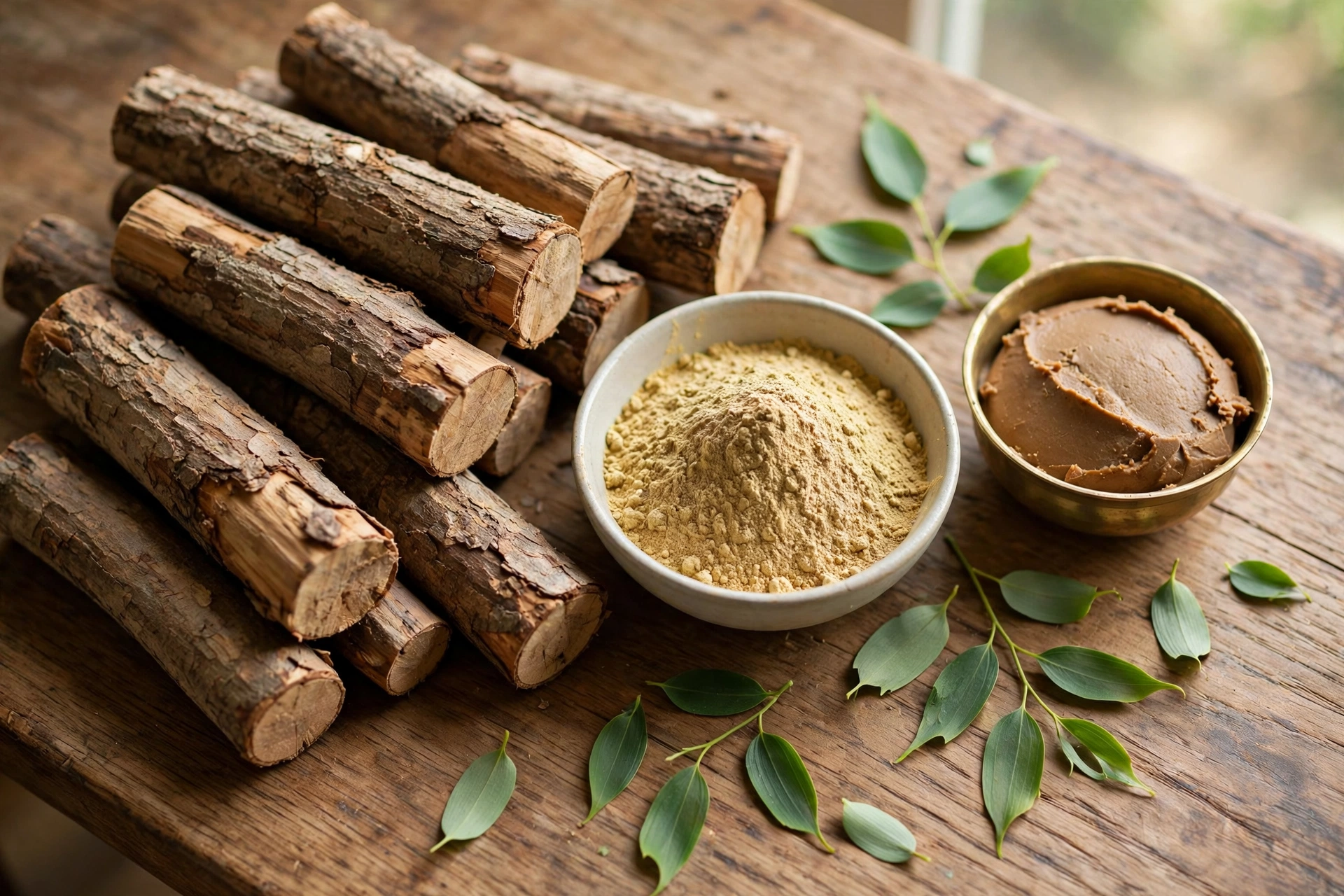
Sandalwood (Chandan) Benefits: Ayurvedic Uses for Skin, Cooling and Calm
Walk into a South Indian temple and the first thing that greets you is its fragrance — the sweet, woody perfume of chandan, sandalwood paste, pressed onto foreheads in a cooling blessing. Sandalwood (Santalum album) is one of Ayurveda’s most revered substances: precious enough to be called a sacred wood, yet practical enough to be ground into daily face packs, incense, and calming oils.
True Indian sandalwood has become rare and expensive, but its traditional uses — for skin, for cooling overheated bodies, and for settling restless minds — are well worth understanding. Here is what Ayurveda says about chandan, and how it is safely used.
What Sandalwood (Chandan) Is
Sandalwood is the aromatic heartwood of Santalum album, a slow-growing tree native to southern India. It takes 15-30 years for the heartwood to develop its fragrance, which is why genuine Mysore sandalwood oil is among the world’s priciest essential oils.
In Ayurveda, sandalwood is described as sweet and bitter in taste, with a deeply cooling energy (shita virya) and a calming effect on pitta and vata. Its active compounds — chiefly the sesquiterpenes alpha- and beta-santalol — give it antimicrobial, anti-inflammatory, and sedative properties noted in both classical texts and modern studies.
Benefits for Skin
1. Cooling Soothing for Irritated Skin
Sandalwood paste is Ayurveda’s classic remedy for heat-related skin complaints: sunburn, rashes, prickly heat, and redness. Applied fresh, it cools the skin on contact while its anti-inflammatory compounds help calm irritation. This is why chandan is the hero ingredient in so many Indian summer face packs.
2. Natural Glow and Even Tone
Traditional beauty texts credit sandalwood with improving complexion and reducing the appearance of dark spots, blemishes, and tanning. A sandalwood-and-rosewater face pack is the oldest “glow mask” in the Indian beauty tradition — used weekly, it gently exfoliates and tones without harsh chemicals.
3. Support for Acne-Prone Skin
Sandalwood’s antimicrobial and anti-inflammatory qualities make it a traditional choice for acne-prone skin. Combined with turmeric or neem, sandalwood paste is applied to pimples and blemishes. Patch-test first — even natural pastes can irritate sensitive skin.
4. Astringent and Toning
Chandan is mildly astringent, helping to tighten pores and tone the skin. Sandalwood water (hydrosol) is used as a cooling natural toner, especially for oily or heat-prone skin.
Cooling and Body-Heat Benefits
Calming Excess Pitta
Sandalwood is a premier Ayurvedic coolant. Traditionally, sandalwood paste is applied to the forehead, chest, or navel to draw out excess heat — used for feverish feelings, hot flashes, and the “burning” sensations of aggravated pitta.
Refreshing in Summer
Sandalwood sherbet and sandalwood-scented coolers are traditional summer drinks in parts of India, believed to cool the body from within. Note: only food-grade sandalwood preparations are ever ingested — never the essential oil — and even then, only traditional formulations under guidance.
Calm for the Mind
Meditation and Mental Clarity
Sandalwood’s fragrance has been burned as temple incense for millennia because it is believed to calm mental agitation and deepen focus. Modern aromatherapy research supports sandalwood oil’s sedative, anxiety-reducing effects.
Better Sleep
The calming scent of sandalwood is traditionally used to ease restlessness and support restful sleep. Diffusing sandalwood oil is a gentle, non-habit-forming sleep aid.
Stress Relief
In Ayurvedic aromatherapy, sandalwood is considered medhya — supportive of the mind. Its grounding, sweet-woody aroma is used to settle nervous energy and emotional heat such as irritability and anger.
How to Use Sandalwood Safely
Sandalwood Paste for Skin
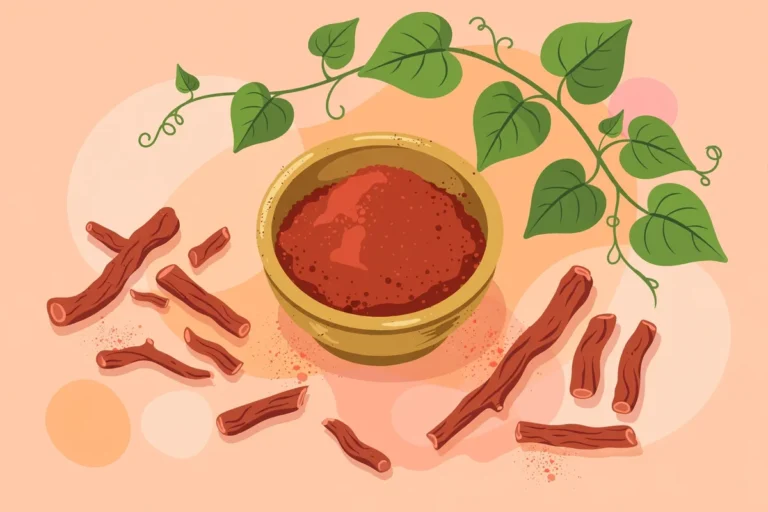
Rub a small piece of genuine sandalwood on a wet stone (chandan ghisna) to make fresh paste, or mix pure sandalwood powder with rosewater. Apply as a face pack for 15-20 minutes, then rinse. Use 1-2 times weekly.
Sandalwood Oil
Always dilute the essential oil (2-3 drops per teaspoon of carrier oil such as coconut or almond) before skin application. Genuine oil is expensive — suspiciously cheap “sandalwood oil” is almost always synthetic fragrance.
Sandalwood Powder
Pure powder can be mixed into face packs, bath soaks, or homemade soaps. Verify purity: adulteration with cheaper wood powders is common, so buy from reputable Ayurvedic suppliers.
Safety and Precautions
- Skin test first: even natural sandalwood paste can irritate sensitive or allergy-prone skin — patch-test on the inner arm before facial use.
- Never ingest the essential oil: internal use of sandalwood oil is unsafe without expert supervision.
- Pregnancy: avoid medicinal use of sandalwood oil during pregnancy unless a qualified practitioner advises it.
- Authenticity matters: the market is full of synthetic sandalwood fragrance sold as the real thing. Synthetic perfumes lack the therapeutic compounds and may irritate skin.
- Sustainability: true Indian sandalwood is a protected, slow-growing species — choose certified sustainable sources.
Frequently Asked Questions
Is sandalwood good for the face?
Yes — sandalwood paste is one of Ayurveda’s classic skin remedies, valued for cooling, calming irritation, improving glow, and toning the skin. Always patch-test first and use genuine, pure chandan.
Can sandalwood reduce dark spots?
Traditional texts credit sandalwood with improving complexion and reducing the appearance of blemishes and tanning. Results are gradual — it is a gentle botanical, not a bleaching agent — and sun protection remains essential.
How do I know if sandalwood powder is pure?
Genuine sandalwood powder has a sweet, creamy, long-lasting woody aroma and a fine, pale texture. If it smells harsh, chemical, or fades within minutes, it is likely adulterated.
Is sandalwood oil safe to apply directly on skin?
No — like all essential oils, sandalwood oil should be diluted in a carrier oil before skin application to avoid irritation. A 2% dilution (about 2-3 drops per teaspoon of carrier oil) is standard.
Why is real sandalwood so expensive?
The tree needs 15-30 years to develop fragrant heartwood, and Indian sandalwood is a protected species with strictly controlled harvesting — scarcity plus slow growth equals high prices.