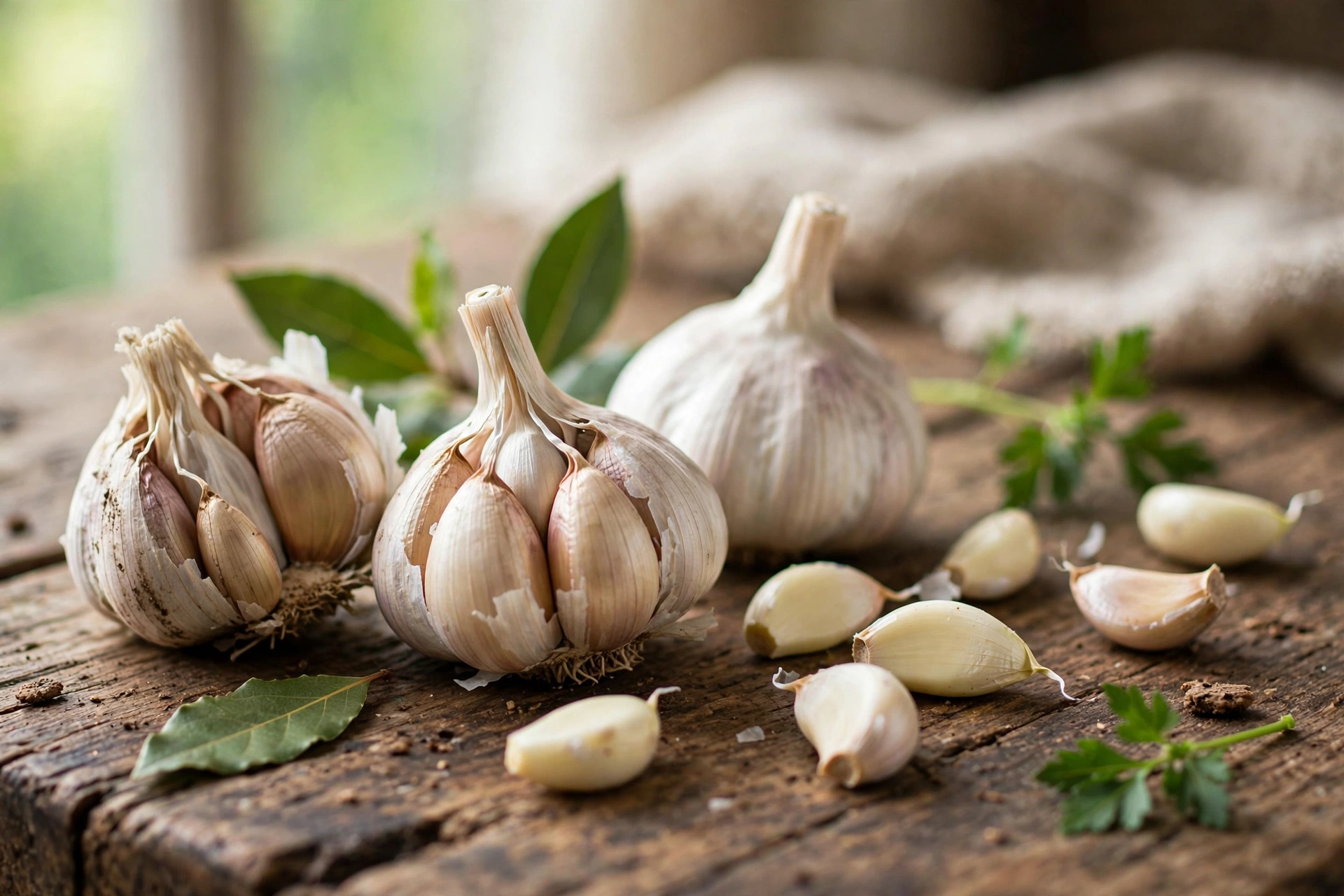
Garlic (Lehsun) Benefits in Ayurveda: Uses for Heart, Immunity and Digestion
Garlic, known as lehsun in Hindi and lasuna in Sanskrit, is one of the most widely used ingredients in Indian kitchens — and one of the most valued medicines in Ayurveda. For thousands of years, Ayurvedic texts have described garlic as a warming, strengthening herb that supports the heart, kindles digestion and helps the body fight illness. Modern research has begun to catch up, studying garlic’s effects on cholesterol, blood pressure and immune function. This guide explores garlic benefits in Ayurveda, its traditional uses, simple home remedies, and the safety precautions to keep in mind.
Garlic in Ayurveda: Properties and Dosha Effects
In Ayurveda, garlic has a pungent taste, a hot potency and a heavy, oily quality. It is considered to balance vata and kapha doshas, while it can increase pitta if taken in excess because of its heating nature. Garlic is classified as a rasayana, or rejuvenating herb, when used in the right amount for the individual.
Garlic contains sulphur compounds, most famously allicin, which forms when a clove is crushed or chopped. These compounds give garlic its strong smell and much of its activity. Ayurveda always pairs garlic with moderation: a little, used regularly, is medicine, while too much can irritate the stomach and overheat the body.
Garlic Benefits for Heart Health
Heart health is one of the best-known areas of garlic use. In Ayurvedic terms, garlic helps clear excess kapha and fat tissue from the channels, supporting healthy circulation. Traditionally, it was recommended for people with heaviness, sluggish circulation and high cholesterol linked to a kapha imbalance.
Modern research suggests regular garlic intake may help support healthy cholesterol and blood pressure levels. Garlic is thought to help relax blood vessels and reduce the stickiness of blood platelets, supporting smooth circulation. While garlic is not a replacement for prescribed heart medicine, adding it to a balanced diet is a simple, food-based way to support cardiovascular health.
How Garlic Supports the Heart
- Cholesterol support: Garlic may help maintain healthy total and LDL cholesterol levels when eaten regularly.
- Blood pressure support: Its sulphur compounds are believed to help blood vessels relax.
- Circulation: By supporting blood flow, garlic helps nourish the tissues and reduce coldness in the limbs.
- Antioxidant protection: Garlic’s antioxidants help protect blood vessels from oxidative damage.
Garlic Benefits for Immunity
In Ayurveda, strong immunity depends on strong digestion and healthy ojas, the essence that governs vitality and resistance to disease. Garlic supports both: it kindles agni (digestive fire) and is traditionally used during seasonal changes, colds and coughs to help the body respond to infection.
Garlic has natural antimicrobial properties in laboratory studies, and it is a traditional home remedy for colds, sore throats and chest congestion. Regular use through food is generally more sustainable than large, occasional doses.
Garlic Benefits for Digestion
Garlic is a classic deepana herb — it kindles the digestive fire. It helps stimulate appetite, supports digestive juices and helps reduce gas and bloating. People with sluggish digestion, heaviness after meals or constipation linked to vata or kapha imbalance often benefit from garlic in cooked food.
Garlic also has traditional use for maintaining a healthy balance of gut bacteria. However, raw garlic can be too sharp for sensitive stomachs. Ayurveda generally recommends cooking garlic lightly — sautéed in ghee or oil — for daily use, which softens its intensity while keeping its benefits. People prone to acidity should use garlic cautiously, well-cooked and in small amounts.
How to Use Garlic: Simple Home Remedies
The simplest way to benefit from garlic is to cook with it daily. Use two to three cloves in dals, vegetables, soups and curries. Crush or chop garlic and let it rest for about ten minutes before cooking — this allows allicin to form fully. Light cooking preserves more of garlic’s active compounds than prolonged high-heat frying.
Garlic, Honey and Warm Water
For immune support during seasonal changes, a traditional remedy is to crush one small clove of garlic, mix it with half a teaspoon of honey, and take it with warm water in the morning. This suits people without acidity problems. Start with a small amount and observe how your stomach responds.
Dosage and Safety Precautions
As a food, garlic is safe for most people in culinary amounts — commonly one to three cloves per day in cooked food. Raw garlic is stronger: one small clove per day is a commonly used traditional amount, and more can irritate the stomach. Garlic supplements are much stronger than food amounts and should only be taken after consulting a qualified practitioner.
- Pregnancy and breastfeeding: Culinary amounts are generally considered safe, but large medicinal doses and supplements should be avoided unless a doctor advises them.
- Blood-thinning medicine: Garlic can slow blood clotting. People taking blood thinners, or preparing for surgery, should discuss large raw-garlic intake and supplements with their doctor.
- Acidity and gastritis: Raw garlic may worsen heartburn and stomach irritation. Use cooked garlic in small amounts, or avoid it during flare-ups.
- Low blood pressure: Garlic may lower blood pressure, so people with already low blood pressure should use it in moderation.
- Skin application: Never apply raw garlic directly to the skin — it can cause burns. Use only properly diluted, traditionally prepared oils.
This article shares traditional Ayurvedic knowledge for general information only. It is not medical advice. Consult a doctor or qualified Ayurvedic practitioner before using garlic medicinally, especially if you are pregnant, taking medication, or living with a serious health condition.
Frequently Asked Questions
Is it better to eat garlic raw or cooked?
Raw garlic contains more allicin, but it is harsher on the stomach. Lightly cooked garlic is gentler and still beneficial, and it is the better daily choice for most people. Crushing garlic and resting it for ten minutes before light cooking gives a good balance of potency and digestibility.
How many garlic cloves should I eat per day?
One to three cloves per day in cooked food is a commonly used culinary amount. One small raw clove per day is a traditional medicinal amount. Larger amounts do not necessarily give greater benefit and increase the risk of stomach irritation.
Can garlic help lower cholesterol?
Studies suggest garlic may help support healthy cholesterol levels as part of a healthy diet and lifestyle. It is not a substitute for prescribed cholesterol medicine, and anyone with high cholesterol should work with their doctor on a full treatment plan.
Who should avoid raw garlic?
People with acidity, gastritis or ulcers, those on blood-thinning medication, and pregnant women taking medicinal doses should be cautious with raw garlic. Cooked garlic in small amounts is usually better tolerated.
Conclusion
Garlic (lehsun) is a humble kitchen ingredient with an impressive Ayurvedic reputation — supporting heart health, immunity and digestion when used wisely and regularly. Its strength lies in daily, moderate use through food: crushed, rested, lightly cooked, and balanced with other nourishing ingredients. Respect its heating nature, follow the safety precautions, and consult a practitioner for medicinal use.