Triphala Benefits for Digestion, Detox & Weight Management
If Ayurveda had a “greatest hits” list, Triphala would be near the top. For over 3,000 years, this simple blend of three dried fruits has been one of the most widely used herbal formulas in Ayurvedic medicine — prescribed for digestion, detoxification, and rejuvenation alike. Ancient texts call it a Rasayana, a rejuvenative tonic meant to nourish the whole body.
But what exactly is Triphala, what does modern research say about it, and how do you use it safely? This guide covers everything.
What Is Triphala?
The name says it all: in Sanskrit, tri means “three” and phala means “fruits.” Triphala is a traditional polyherbal formula made from the dried fruits of three plants native to India:
- Amalaki (Emblica officinalis) — Indian gooseberry, or Amla
- Bibhitaki (Terminalia bellirica)
- Haritaki (Terminalia chebula)
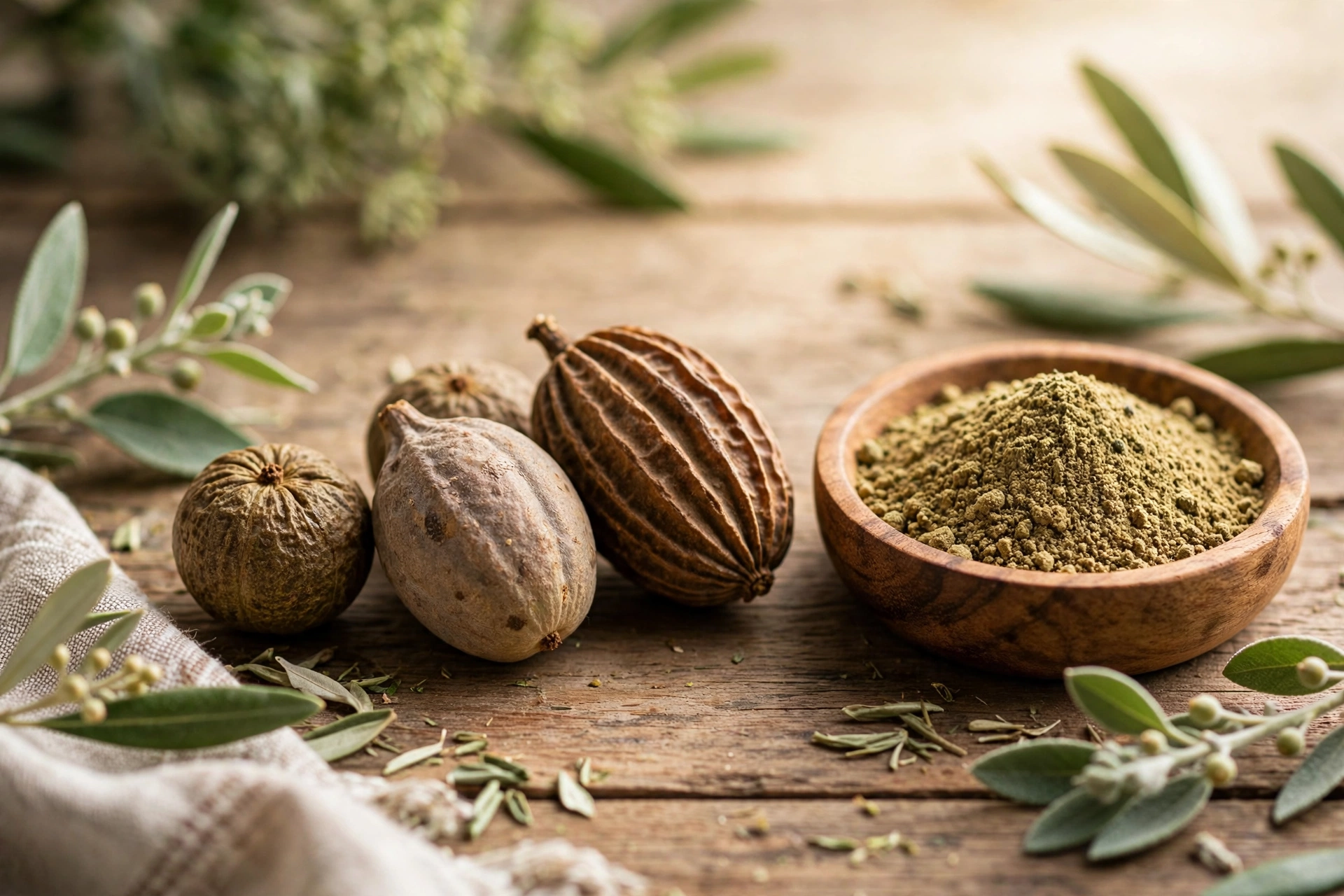
The fruits are dried, powdered, and blended — traditionally in a 1:2:3 ratio — to form Triphala churna (powder). It also comes in tablets, capsules, and teas today.
Triphala is described in the Charaka Samhita, one of Ayurveda’s foundational texts, and holds a rare distinction: it is considered tridoshic, meaning it helps balance all three doshas — Vata, Pitta, and Kapha — making it suitable for nearly every body type.
The Three Fruits of Triphala
What makes Triphala special isn’t any single fruit — it’s the synergy. Ayurveda holds that the three fruits combined are more effective than any one taken alone. Here’s what each brings:
1. Amalaki (Amla / Indian Gooseberry)
Amalaki is one of the richest natural sources of vitamin C and is packed with antioxidants. In Ayurveda it is prized as a rejuvenative (Rasayana) that nourishes tissues, supports immunity, and cools excess Pitta. We’ve covered it in detail in our guide to Amla benefits for hair, skin & immunity.
2. Bibhitaki (Terminalia bellirica)
Bibhitaki is valued for its astringent and purifying qualities. Traditionally it is used to clear excess mucus and Kapha from the body, tone the digestive tract, and support respiratory health. Its tannins give Triphala much of its detoxifying character.
3. Haritaki (Terminalia chebula)
Often called the “king of medicines” in Ayurvedic and Tibetan traditions, Haritaki is known for its gentle cleansing action on the colon and its ability to calm aggravated Vata. It is also considered adaptogenic — helping the body adapt to stress.
Top 7 Health Benefits of Triphala
1. Improves Digestion and Relieves Constipation
This is Triphala’s most famous use — and its best supported one. Haritaki has a mild, natural laxative effect, while the formula as a whole is said to kindle agni (digestive fire) and support regular bowel movements. Unlike harsh stimulant laxatives, Triphala is traditionally considered non-habit-forming and gentle enough for extended use. Small clinical studies have found Triphala effective for occasional constipation, though larger trials are still needed.
2. Natural Full-Body Detox
In Ayurveda, poor digestion creates ama — toxic residue that accumulates in the body’s channels. Triphala is the classic formula for clearing ama: it supports the liver and the body’s elimination pathways, helping flush waste through the colon. Think of it less as an aggressive “cleanse” and more as daily maintenance for your detox organs.
3. Supports Weight Management
Triphala won’t melt fat on its own — no herb does — but it supports the foundations of healthy weight: better digestion, efficient elimination, and balanced metabolism. Animal studies suggest Triphala may help reduce body fat accumulation, and human research is ongoing. Paired with diet and exercise, it’s a sensible Ayurvedic ally.
4. Powerful Antioxidant Protection and Immunity
All three fruits are rich in polyphenols, tannins, and vitamin C. Laboratory studies show Triphala has strong antioxidant activity, helping neutralize free radicals that drive aging and chronic disease. Amalaki’s vitamin C content additionally supports everyday immune function.
5. Promotes Healthy Skin and Hair
Ayurveda connects clear skin to a clean digestive system — and Triphala works on both ends. Its antioxidants combat oxidative stress linked to premature aging, while its detoxifying action is traditionally believed to reduce the internal “heat” behind breakouts. Amla’s role in collagen support adds to the skin-and-hair story.
6. May Support Healthy Blood Sugar and Cholesterol
Preliminary research — mostly in animals and small human trials — suggests Triphala may help maintain healthy blood sugar and lipid levels already in the normal range. The evidence is early, so treat this as promising rather than proven, and never replace prescribed medication with Triphala.
7. Balances All Three Doshas
Few formulas can claim this. Amalaki cools Pitta, Bibhitaki reduces Kapha, and Haritaki calms Vata — together, Triphala harmonizes the three energies Ayurveda says govern health. That’s why Ayurvedic practitioners often recommend it as a general daily tonic regardless of constitution.
How to Take Triphala: Powder vs Tablets, Dosage & Best Time
Forms:
- Churna (powder): the traditional form; 1 teaspoon (about 3 g) stirred into warm water.
- Tablets/capsules: convenient and tasteless; typically 500–1000 mg.
- Tea: Triphala powder steeped as an herbal tea.
Best time: Traditionally, Triphala is taken at bedtime with warm water to support overnight digestion and morning elimination. Some practitioners recommend it in the morning for rejuvenation. Avoid taking it with milk — warm water is the classic vehicle (anupana).
Dosage: Common traditional doses are 1 teaspoon of powder or 1–2 tablets (500 mg each) daily. Start with a smaller dose for a few days to see how your digestion responds, then build up. For long-term use, consult an Ayurvedic practitioner.
Triphala Side Effects & Who Should Avoid It
Triphala is considered very safe for most people — it’s been used daily by millions for centuries. Still, keep these cautions in mind:
- Digestive upset: high doses can cause loose stools, cramping, or gas. Reduce the dose if this happens.
- Pregnancy and breastfeeding: not recommended without a doctor’s guidance.
- Diarrhea or loose stools: skip Triphala until digestion stabilizes.
- Before surgery: stop use at least 2 weeks prior, as it may affect blood sugar.
- Medication interactions: it may interact with diabetes, blood pressure, or blood-thinning drugs — talk to your doctor first.
Disclaimer: This article is for educational purposes only and is not medical advice. Consult a qualified healthcare professional before starting any herbal supplement.
Frequently Asked Questions
How long does Triphala take to work?
For digestion and regularity, many people notice effects within a few days to 2 weeks. Deeper benefits like improved skin or metabolism build over 4–8 weeks of consistent use.
Can I take Triphala every day?
Yes — unlike stimulant laxatives, Triphala is traditionally considered safe for daily, long-term use because its action is gentle and nourishing rather than forceful. Many Ayurvedic practitioners recommend it as a nightly ritual.
Will Triphala make me dependent like laxatives?
No. Triphala tones and nourishes the digestive tract rather than forcing contractions, so it is not considered habit-forming. If you need ever-increasing doses to get results, see a doctor.
Triphala powder vs tablets — which is better?
The powder (churna) is the traditional form and acts slightly faster; tablets are more convenient and mask Triphala’s famously bitter taste. The benefits are comparable — choose whichever you’ll take consistently.
Can Triphala help with weight loss?
It can support weight management by improving digestion and metabolism, but it is not a weight-loss drug. Realistic expectations + diet + exercise is the formula that works.
The Bottom Line
Triphala endures for a reason: it’s simple, time-tested, gentle, and remarkably versatile — supporting digestion, detox, immunity, and balance in a single nightly spoonful. Whether you choose the traditional powder or modern tablets, consistency is what unlocks its benefits. Start small, take it nightly with warm water, and give it a few weeks.
Want to go deeper into one of Triphala’s star ingredients? Read our guide to Amla (Indian Gooseberry) benefits.