Oil Pulling (Gandusha): Ayurvedic Benefits and How to Do It
Swishing a spoonful of oil around your mouth first thing in the morning might sound unusual, but in Ayurveda this simple practice — known as Gandusha (and its lighter cousin, Kavala) — has been part of the daily routine, or Dinacharya, for thousands of years. Modern wellness culture calls it “oil pulling,” and it has quietly moved from ancient Sanskrit texts into mainstream self-care. This guide explains what oil pulling is, what Ayurveda traditionally claims for it, how to do it correctly, and where to be careful.
What Is Oil Pulling (Gandusha and Kavala)?
In Ayurveda, Gandusha means holding a comfortably full mouthful of liquid — usually warm oil — in the mouth for several minutes without swallowing, and then spitting it out. Kavala is a gentler variation where a smaller quantity is swished and gargled around the mouth and then expelled. Both are classified as mukha dushyasya shodhana — purification of the mouth and throat region.
Classical texts describe these practices as part of the morning regimen to keep the mouth, teeth, gums, throat, and even the head region feeling fresh and balanced. The underlying Ayurvedic idea is that the mouth is one of the body’s main entry points, and clearing accumulated “waste” from it each morning supports overall well-being.
Traditional Benefits Claimed in Ayurveda
It is important to be honest here: oil pulling is a traditional practice, and its claimed benefits come from classical Ayurvedic literature and generations of practitioner experience rather than large modern clinical trials. Evidence so far is limited and mostly small-scale, so treat the list below as what the tradition claims, not as proven medical facts.
- Oral freshness: Traditionally used to keep the breath feeling fresh and the mouth clean in the morning.
- Gum and teeth support: Classical texts associate Gandusha with firm gums and comfortable teeth; oil is believed to coat and soothe oral tissues.
- Throat and voice: The practice is traditionally said to support throat comfort and voice clarity.
- Jaw and facial relaxation: The slow, deliberate swishing motion may gently exercise the jaw muscles and relax facial tension.
- Overall morning freshness: Many practitioners describe a sense of lightness and cleanliness that sets a calm tone for the day.
Which Oil Should You Use?
The choice of oil matters in Ayurveda, and it is usually matched to your body type (prakriti) or to the season. If you are unsure, the two safest and most widely used options are:
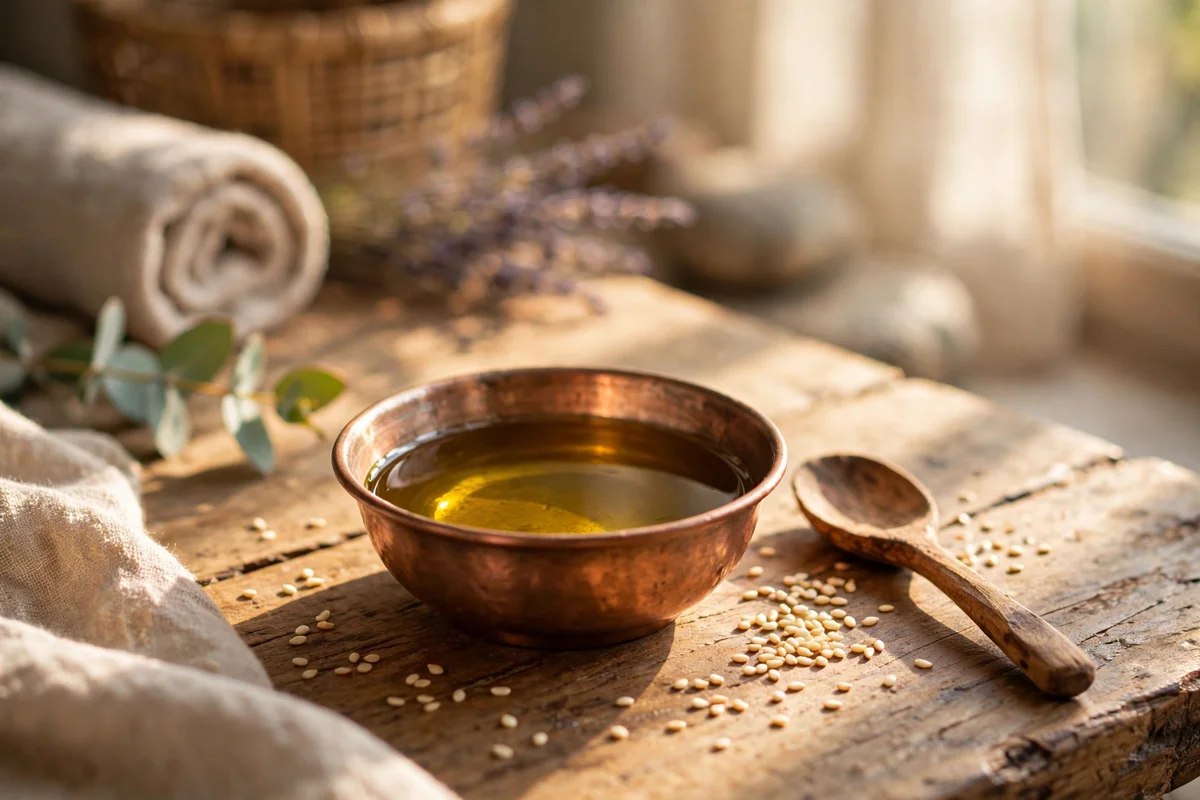
- Sesame oil — the classical favorite. Ayurveda considers it warming and deeply nourishing. Use plain, food-grade sesame oil (not roasted/toasted cooking oil, which has a strong flavor).
- Coconut oil — popular in warm climates and for people who find sesame too warming. It has a mild taste and is easy to swish.
Other options mentioned in traditional practice include sunflower oil and, for specific situations, medicated Ayurvedic oils — but those are best chosen with a qualified practitioner’s guidance. Whichever you pick, use a clean, edible-quality oil.
How to Do Oil Pulling: Step-by-Step Morning Routine
- First thing in the morning, before eating or drinking, rinse your mouth lightly with lukewarm water.
- Warm the oil slightly. Place a tablespoon of sesame or coconut oil in a small cup and warm it gently — it should feel comfortably warm, never hot.
- Take one tablespoon into your mouth. For Kavala, use a teaspoon to a tablespoon and swish gently; for a full Gandusha hold, keep the mouth full and still.
- Swish slowly for 5 to 10 minutes. Move the oil between your teeth and around the gums with calm, gentle motions. Start with 2–3 minutes if you are new and build up gradually.
- Do not swallow. Spit the oil out when the time is up — into a bin or tissue, not the sink, since oil can clog drains over time.
- Rinse well. Wash your mouth with warm water, optionally with a pinch of salt, and then brush your teeth as usual.
Do’s and Don’ts
Do
- Do practice on an empty stomach, first thing in the morning.
- Do start with a short session (2–3 minutes) and increase gradually.
- Do spit into the bin and rinse your mouth afterward.
- Do continue your regular brushing, flossing, and dental checkups — oil pulling is a complement, never a replacement.
Don’t
- Don’t swallow the oil — spit it out fully.
- Don’t use very hot oil or large quantities that strain your jaw.
- Don’t expect it to fix cavities, gum disease, or tooth infections on its own.
- Don’t skip professional dental care because of this practice.
Who Should Be Cautious
- Children and elderly people should only practice with supervision and smaller amounts.
- Anyone with a jaw disorder, TMJ pain, or recent dental surgery should check with a dentist first.
- People with coconut or sesame allergies must choose a different oil — or skip the practice.
- Anyone with active oral infections, bleeding gums, or loose teeth should talk to a dentist before starting.
Frequently Asked Questions
How long should I oil pull each day?
Beginners can start with 2–3 minutes and work up to 5–10 minutes. Consistency matters more than duration.
Can I use any cooking oil?
Stick to edible-quality, plain sesame or coconut oil. Avoid flavored, roasted, or heavily processed oils, and avoid essential oils for full-mouth swishing.
Does oil pulling whiten teeth?
Some people report their teeth feel cleaner and look slightly brighter, but there is no strong scientific evidence that oil pulling whitens teeth. Consider it a freshness ritual, not a whitening treatment.
Can oil pulling replace brushing?
No. Treat it as an addition to daily oral care, not a substitute for brushing, flossing, and professional dental visits.
Conclusion
Oil pulling (Gandusha and Kavala) is one of Ayurveda’s simplest and most accessible morning rituals: a few minutes of slow swishing with warm oil, traditionally valued for oral freshness and a calm, clean start to the day. It costs almost nothing, takes only minutes, and fits easily into any routine — but keep expectations grounded. It is a traditional wellness practice with limited modern evidence, not a medical treatment. If you have any dental or jaw concerns, talk to a qualified dentist or Ayurvedic practitioner before you begin.