Ghee Benefits in Ayurveda: Uses for Digestion, Immunity and Brain Health
Ghee — clarified butter — holds a place of honour in Ayurveda that few foods can match. It is called the best among fats (sneha), a carrier of herbs’ medicinal properties, fuel for the digestive fire, and nourishment for the brain. While modern nutrition debates fats endlessly, Ayurveda has recommended ghee for thousands of years. Here is what the tradition teaches about its benefits and how to use it wisely.
Ghee in Ayurveda: A Sacred Fat
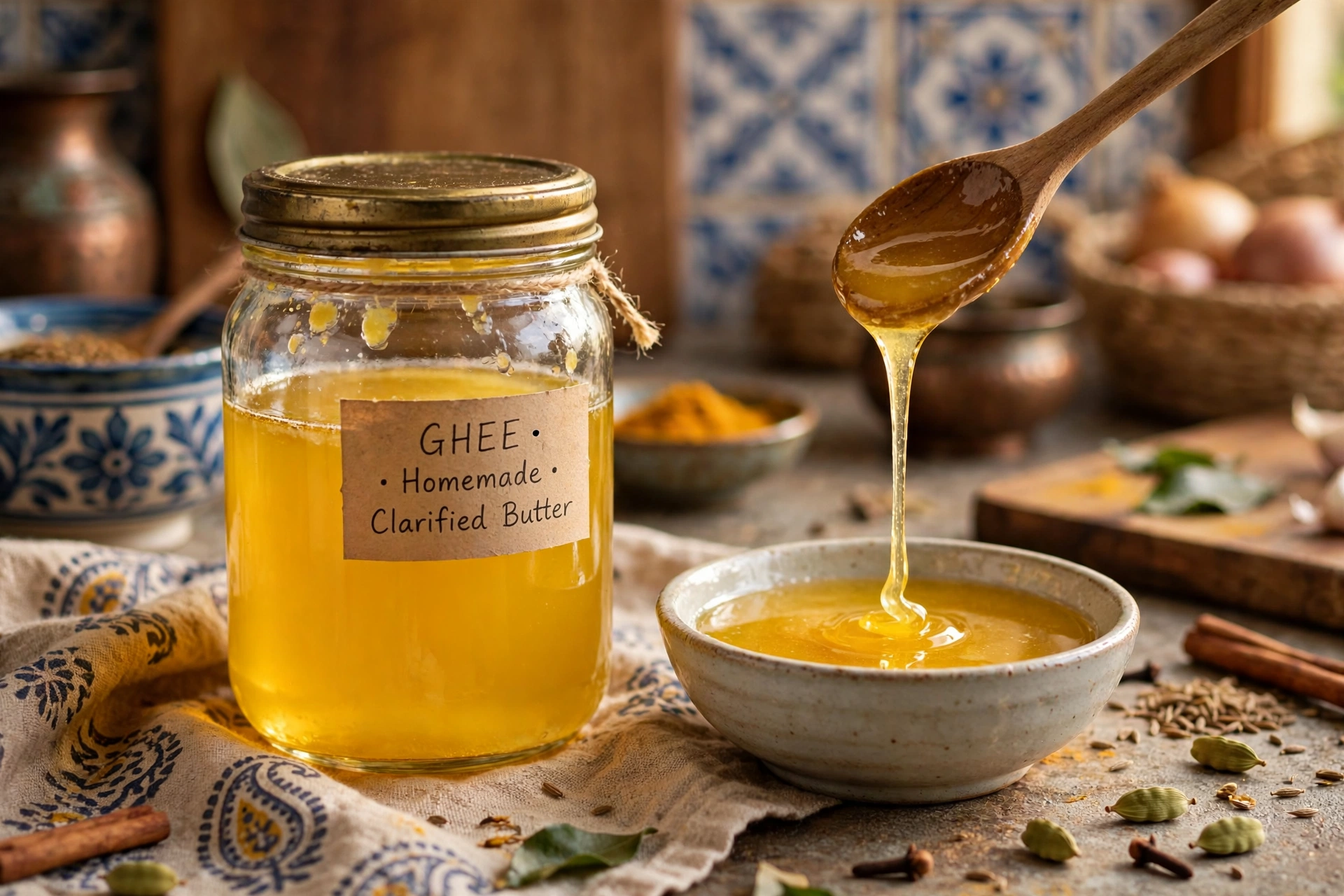
Ayurvedic texts praise ghee as medhya (beneficial for the intellect), rasayana (rejuvenating), and snehana (oleating — it lubricates tissues from within). Made by slowly simmering butter to remove water and milk solids, pure ghee has a high smoke point and a rich, nutty flavour.
In Ayurvedic practice, ghee is also the preferred base for medicated ghees (ghrita) — such as Brahmi Ghrita for the mind — because fat carries herbs’ active properties deep into tissues. This carrier role is central to Ayurvedic pharmacy.
Benefits of Ghee
1. Strengthens Digestion
Ghee is said to kindle agni, the digestive fire, without aggravating pitta — a rare combination. Ayurveda recommends a spoon of warm ghee before or with meals to lubricate the digestive tract, ease the passage of food, and support the absorption of fat-soluble nutrients. It is traditionally used to relieve dryness-related constipation.
2. Supports Immunity and Ojas
Ayurveda links strong immunity with healthy ojas, the subtle essence of vitality. Ghee is considered one of the finest ojas-building foods: it nourishes all seven tissue layers (dhatus) and is traditionally given during recovery from illness, in postpartum care, and in seasonal routines to maintain resilience.
3. Nourishes the Brain and Nervous System
The brain is largely composed of fat, and Ayurveda intuited this long ago — ghee is classified as medhya rasayana, a rejuvenator of the mind. It is traditionally used to support memory, clarity and calm, and features in routines for students, scholars and the elderly. Medicated ghee preparations are a cornerstone of Ayurvedic care for the nervous system.
4. Lubricates Joints and Tissues
Dryness — of joints, skin and the colon — is a classic sign of aggravated vata. Ghee’s unctuous quality counteracts dryness from within: supple joints, softer skin and comfortable movement are the traditional markers of adequate healthy fats in the diet.
5. Supports Healthy Skin
Taken internally, ghee nourishes the skin’s deeper layers; applied externally, it is a traditional moisturiser and base for Ayurvedic skin preparations. Clear, lustrous skin is regarded in Ayurveda as a sign of well-nourished tissues — and ghee is one of its building blocks.
How Much Ghee Should You Eat?
- General daily use: 1–2 teaspoons per meal (roughly 1–2 tablespoons a day) is the traditional amount for a healthy adult with normal digestion.
- For vata imbalance (dryness, constipation, anxiety): slightly more may be recommended by a practitioner.
- Best time: with warm meals, especially lunch — the main meal when digestive fire is strongest. A teaspoon of warm ghee in the morning on an empty stomach is a traditional practice some follow, but it suits strong digestion better.
- Quality matters: choose pure, preferably A2 cow ghee from grass-fed sources; avoid heavily processed or adulterated products.
Ways to Include Ghee in Your Diet
- Drizzle a teaspoon over hot dal, rice or khichdi.
- Use it for tempering (tadka) — its high smoke point suits Indian cooking.
- Stir a teaspoon into warm milk or herbal tea in the evening.
- Spread it on warm rotis instead of butter.
- Use it as the cooking fat for lightly sautéed vegetables.
Who Should Be Cautious
- People with high cholesterol, heart disease or obesity should consult their doctor about quantity — Ayurveda itself advises moderation and individualisation.
- Those with weak digestion, heaviness after meals, or excess kapha (congestion, sluggishness) should use ghee sparingly.
- During acute fever, cold with heavy congestion, or indigestion, Ayurveda traditionally advises pausing heavy fats until digestion recovers.
- Ghee is calorie-dense: about 120 calories per tablespoon. Enjoy it as part of a balanced diet, not in unlimited quantities.
- For any medical condition, consult a qualified Ayurvedic practitioner or physician rather than self-prescribing therapeutic doses.
Frequently Asked Questions
Is ghee better than butter or oil?
Ayurveda ranks ghee above butter and most oils because the clarification process removes milk solids, making it lighter to digest and suitable even for many with lactose sensitivity. Its high smoke point also makes it more stable for cooking than butter.
Does ghee increase cholesterol?
Ghee contains saturated fat and cholesterol, so people with lipid disorders should be cautious and seek medical advice. Ayurveda emphasises that dose and individual constitution decide whether a food is medicine or burden — moderation is the rule.
Can lactose-intolerant people eat ghee?
Properly clarified ghee contains only trace amounts of lactose and casein, so many lactose-sensitive people tolerate it well. However, sensitivity varies, so start with a small amount and observe.
What is the difference between regular ghee and A2 ghee?
A2 ghee is made from the milk of desi (indigenous) cow breeds whose milk contains predominantly A2 beta-casein protein. Ayurveda traditionally prefers milk from native cows, and many people find A2 ghee easier to digest, though scientific evidence is still developing.
Can ghee be applied to skin and hair?
Yes. Warm ghee is a traditional moisturiser for dry skin, chapped lips and cracked heels, and a small amount massaged into the scalp is an old home remedy for dryness. Use pure, unsalted ghee for external application.