Bitter Gourd (Karela) Benefits in Ayurveda: Uses for Liver, Skin and Blood Sugar
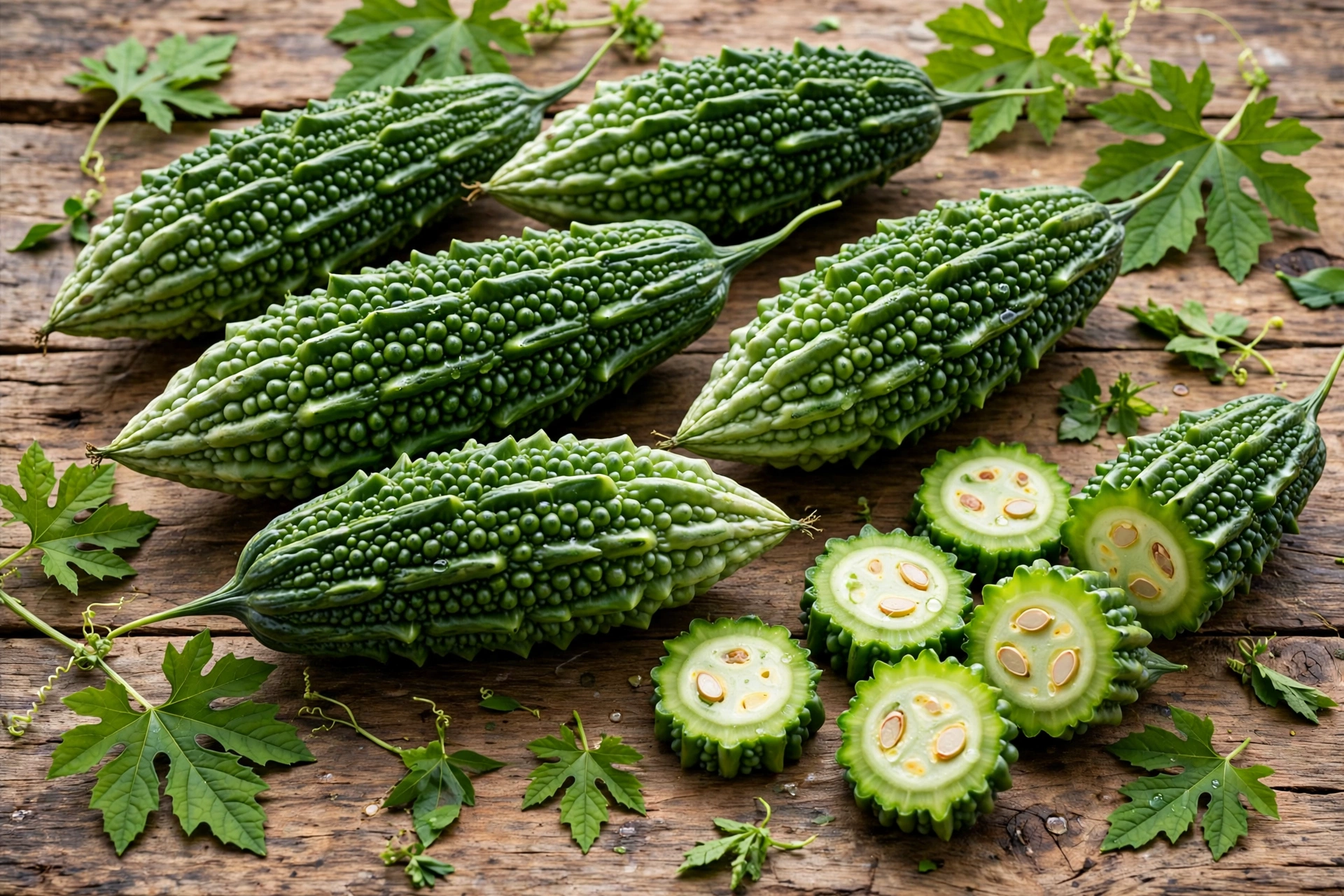
Karela — bitter gourd (Momordica charantia) — is the vegetable Ayurveda loves to prescribe and most people love to avoid. Its intense bitterness is exactly the point: in Ayurvedic pharmacology, bitter taste (tikta rasa) is one of the most cleansing and balancing tastes. This guide explains the traditional Ayurvedic uses of karela for liver support, skin health, and blood sugar balance, plus juice recipes and important precautions.
Karela in Ayurveda: Why Bitterness Matters
Karela is classified as tikta rasa (bitter) with a cooling potency (sheeta virya) and pungent post-digestive effect (katu vipaka). In Ayurveda, bitter taste is traditionally believed to cleanse the liver, purify the blood (rakta shodhana), reduce excess kapha, and calm aggravated pitta. Classical texts describe karela (karavellaka) as light, dry, and deeply cleansing — a vegetable that functions almost like a medicine.
The golden rule of Ayurvedic taste wisdom applies here: the tastes we crave least are often the ones we need most. Bitterness, largely missing from modern diets, is karela’s gift.
Traditional Liver Support
The liver (yakrit) is considered the seat of pitta and the root of blood tissue in Ayurveda. Bitter herbs are the traditional choice for supporting liver function, and karela is among the most accessible of them.
A Classic Bitter for the Liver
Fresh karela juice — taken in small amounts on an empty stomach — is one of the oldest traditional practices for supporting liver comfort and healthy bile flow. Ayurvedic practitioners traditionally recommend it during seasonal cleansing routines and for people whose lifestyle (rich food, alcohol, late nights) burdens the liver. The bitterness is believed to stimulate digestive secretions and support the liver’s natural detoxifying role.
Karela in Liver Formulations
Karela appears in classical compound formulations traditionally used for liver and metabolic support, often alongside bhumyamalaki (Phyllanthus niruri), kutki (Picrorhiza kurroa), and kalmegh (Andrographis paniculata) — the great bitter herbs of the Ayurvedic pharmacy.
Karela for Skin Health
Ayurveda links skin clarity to the purity of the blood and the health of the liver. Because karela is traditionally regarded as a blood purifier (rakta shodhaka), it is a long-standing internal remedy for skin concerns.
- Internal use: Fresh karela juice or cooked karela in the diet is traditionally taken to support clear skin, particularly for heat-related breakouts and itchiness.
- External use: A paste of karela leaves is a traditional topical application for itchy or irritated skin patches. The juice can also be dabbed on blemishes, though it should be patch-tested first.
- Dietary habit: Simply including bitter vegetables like karela in the weekly diet is considered a skin-friendly practice in the Ayurvedic tradition.
Traditional Blood Sugar Support
Karela is perhaps best known today for its traditional role in supporting healthy blood sugar levels already within the normal range. It contains plant compounds — including charantin and polypeptide-p — that traditional practice has valued for generations, and which modern researchers continue to study.
Karela Juice: The Classic Preparation
Fresh karela juice is the traditional preparation most associated with metabolic support. A typical traditional serving is 30–50 ml of fresh juice (about 2–4 tablespoons), taken on an empty stomach in the morning, sometimes mixed with a little amla juice or water to soften the bitterness. Anyone taking blood-sugar medication must speak to their doctor first — combining karela with medication can drive blood sugar too low.
Cooked Karela Counts Too
You don’t have to drink the juice. Traditional Indian cooking — stuffed karela (bharwan karela), karela sabzi with onions and spices, or karela chips — delivers the bitter principle in a far more enjoyable form. Cooking with a little jaggery or tamarind, as many regional recipes do, balances the bitterness without removing its traditional benefits.
Simple Karela Juice Recipes
Basic Morning Karela Juice
- Wash 1–2 medium karelas, cut lengthwise, and scoop out the seeds.
- Chop roughly and blend with half a cup of water.
- Strain through a muslin cloth. Drink 30–50 ml fresh, on an empty stomach.
Karela-Amla Cooler (Milder)
- Blend 1 small karela (deseeded) with 1 amla (Indian gooseberry, deseeded) and a cup of water.
- Strain, add a pinch of black salt and a squeeze of lemon.
- Drink fresh. The amla’s vitamin C and milder flavor make the bitterness much more bearable.
Tip: soaking chopped karela in salted water for 20–30 minutes before juicing or cooking draws out some of the harshest bitterness.
Precautions: Who Should Be Careful
- Pregnancy: Traditional texts advise against karela — especially the seeds and concentrated juice — during pregnancy, as bitter gourd has a traditional reputation for stimulating the uterus. Avoid medicinal amounts when pregnant or trying to conceive.
- Hypoglycemia risk: Karela can lower blood sugar. People on diabetes medication, and anyone prone to low blood sugar, should use it only with medical supervision and monitor levels closely.
- Before surgery: Stop concentrated karela preparations at least two weeks before scheduled surgery due to its effect on blood sugar.
- Digestive sensitivity: Large amounts of raw karela juice can cause stomach cramps or loose motions in some people. Start with a small serving.
- Children: Cooked karela as food is fine; concentrated juice should only be given on a practitioner’s advice.
- G6PD deficiency: People with this enzyme deficiency should avoid karela seeds in particular, as they have been associated with favism-like reactions.
FAQs About Karela
How much karela juice should I drink daily?
Traditional practice uses small amounts — typically 30–50 ml of fresh juice once daily on an empty stomach. More is not better; large quantities can cause digestive upset. Cooked karela as part of meals is the gentlest way to get its traditional benefits regularly.
Is karela safe during pregnancy?
Ayurvedic tradition advises caution: karela, especially its seeds and concentrated juice, is traditionally avoided during pregnancy. Small amounts of cooked karela as food are generally considered acceptable, but medicinal use should be discussed with a practitioner.
Can karela cure diabetes?
No. Karela is traditionally used to support healthy blood sugar as part of diet and lifestyle — it is not a cure for diabetes and never a replacement for prescribed medication. Work with your doctor on any blood sugar condition.
What’s the best time to drink karela juice?
Traditionally, first thing in the morning on an empty stomach is considered the most effective time, as the bitter principles are believed to act best on an empty digestive system. Follow with breakfast after 20–30 minutes.
Disclaimer: This article is for general wellness information only and is not medical advice. Karela is a potent traditional remedy — consult a qualified Ayurvedic practitioner or doctor before using concentrated preparations, especially if you are pregnant, diabetic, or taking medication.