Healthy Lifestyle Tips for Indian Diet: #1 Complete Guide
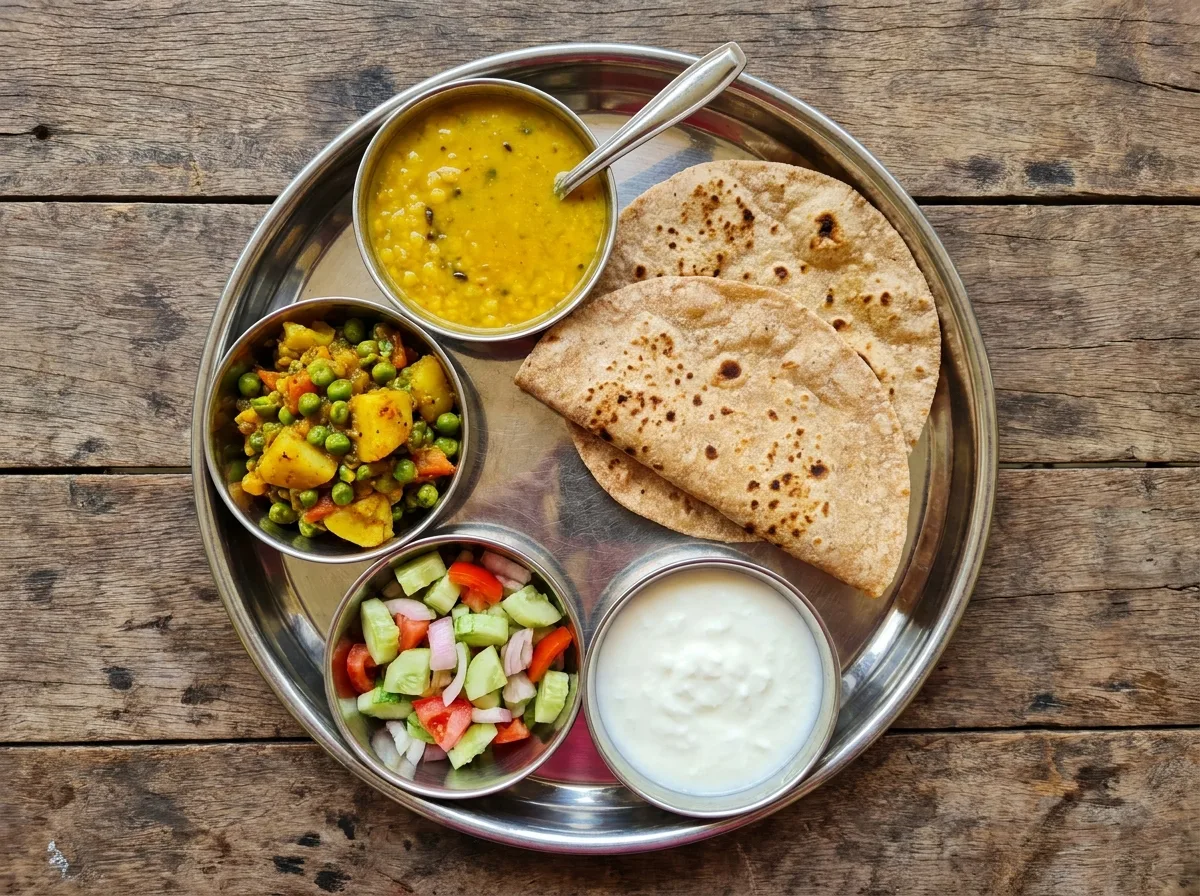
Living a healthy life doesn’t mean giving up your favorite dal-chawal or roti-sabzi. The Indian diet, when balanced correctly, is actually one of the most nutritious diets in the world — rich in lentils, whole grains, spices, and vegetables. The problem isn’t the food itself; it’s how we eat it, how much we eat, and what we pair it with.
In this guide, you’ll find practical, easy-to-follow healthy lifestyle tips for Indian diet that fit real Indian kitchens, budgets, and routines — no fad diets, no imported superfoods.
Why the Traditional Indian Diet Is Already Healthy
Before jumping into changes, it helps to understand what we’re working with:
- Lentils (dal) are packed with plant protein and fiber
- Whole wheat roti offers complex carbs and sustained energy
- Turmeric, cumin, coriander have anti-inflammatory properties
- Curd (dahi) supports gut health with natural probiotics
- Seasonal vegetables (sabzi) provide vitamins and minerals
The issue arises with modern additions — excess oil, refined flour (maida), sugary snacks, and oversized portions of rice or roti. Small corrections can make a big difference.
1. Fix Your Plate Ratio, Not Your Food
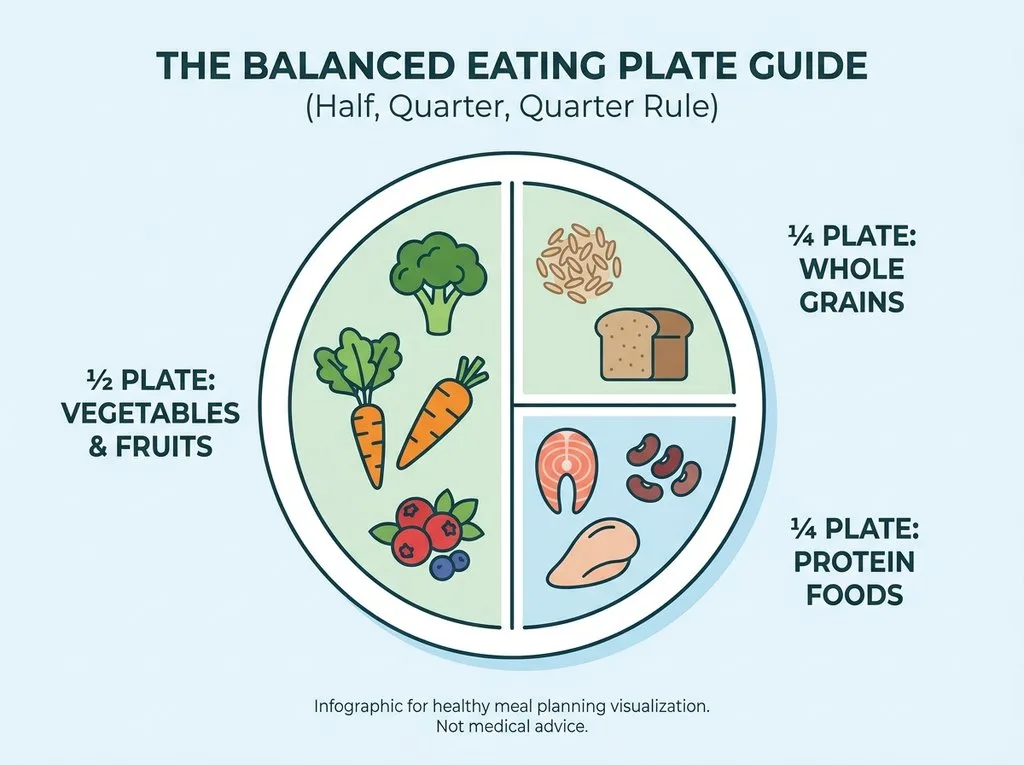
You don’t need to eliminate rice or roti. Instead, rebalance your plate:
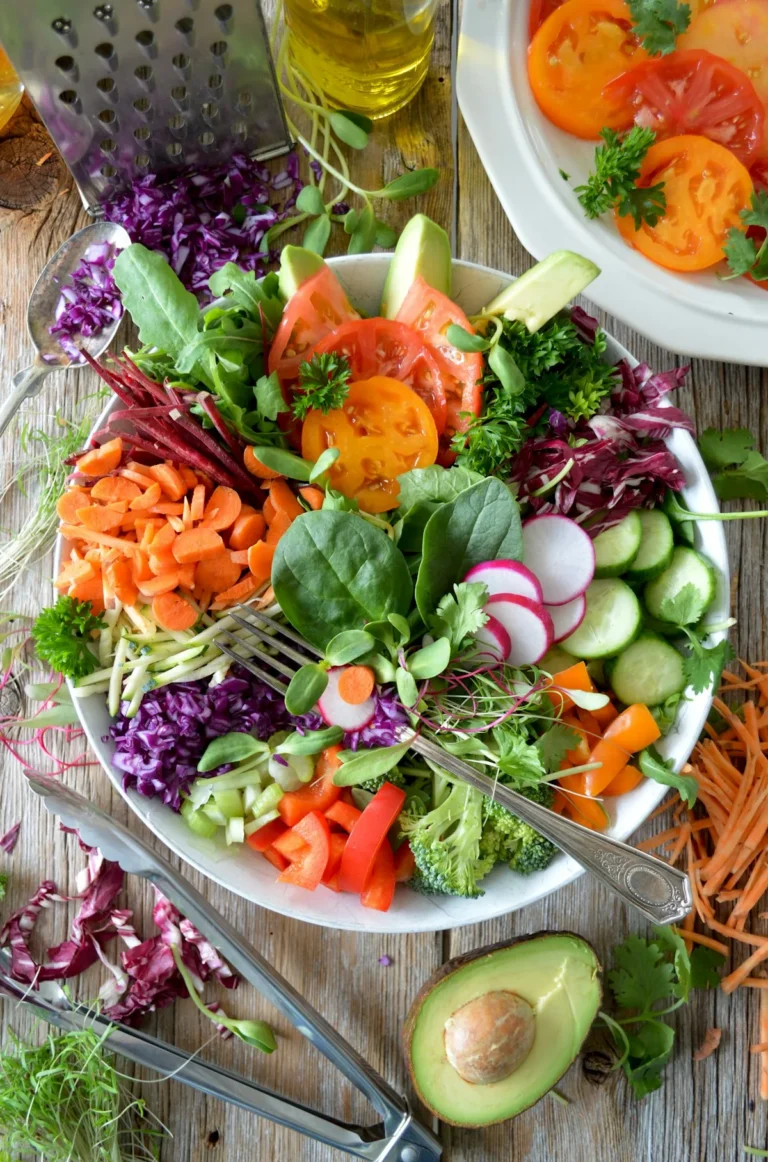
- Half the plate: vegetables and salad
- One quarter: dal, sabzi, or protein (paneer, eggs, chicken, fish)
- One quarter: rice or roti
This simple shift — often called the “Indian plate method” — helps control blood sugar spikes and keeps you fuller for longer without cutting out staple foods.
2. Choose the Right Cooking Oil and Reduce Quantity
Most Indian households use more oil than necessary. Tips to fix this:
- Switch between mustard oil, groundnut oil, and cold-pressed sesame oil instead of using one oil for everything
- Use a measuring spoon while cooking instead of pouring directly from the bottle
- Prefer steaming, roasting, or air-frying for snacks like tikkis, cutlets, and pakoras
- Avoid reheating oil multiple times (common in deep-frying) — it produces harmful compounds
3. Rethink Your Roti and Rice Choices
Small swaps go a long way:
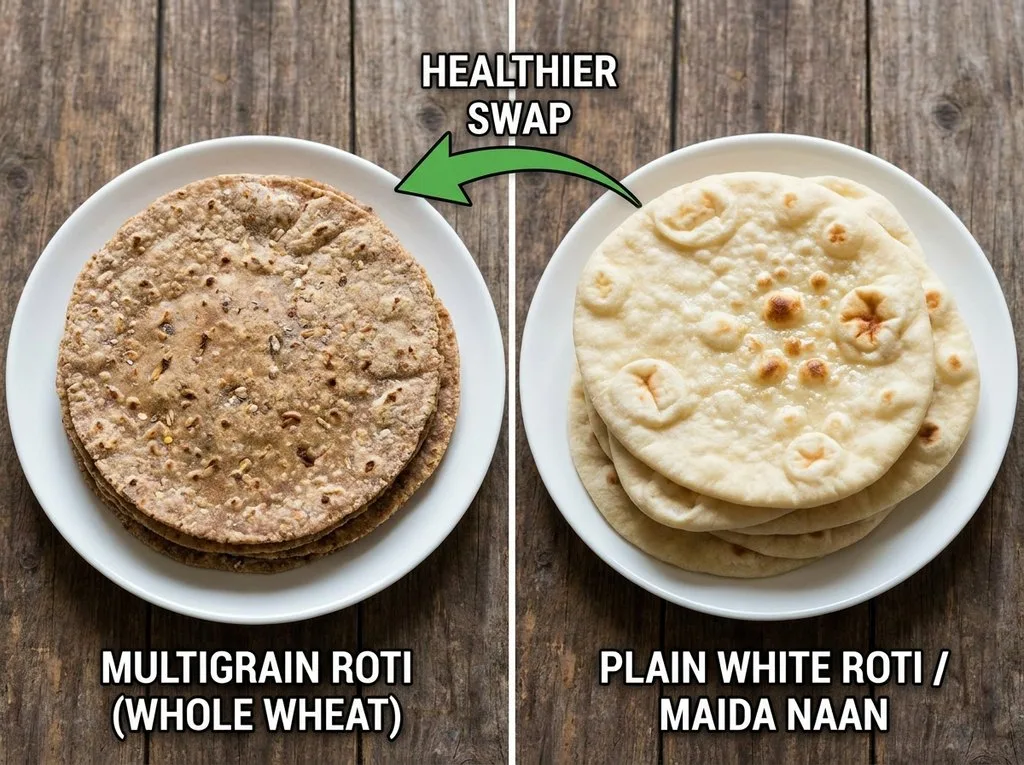
- Mix wheat flour with bajra, jowar, or ragi flour for multigrain rotis
- Choose brown rice or hand-pounded rice occasionally instead of only polished white rice
- Avoid maida-based items (naan, bhature, white bread) on a daily basis — save them for occasional treats
4. Control Sugar and Salt Without Losing Taste
Indian cooking naturally uses sugar and salt generously — in chai, pickles, papad, and sweets. Ways to cut back:
- Reduce sugar in chai gradually (half spoon less every week)
- Replace refined sugar with jaggery (gud) in moderation — it’s still sugar, but with trace minerals
- Limit packaged namkeen, papad, and pickle intake — they’re high in sodium
- Use lemon, tamarind, or amchur for tang instead of extra salt
5. Time Your Meals Right
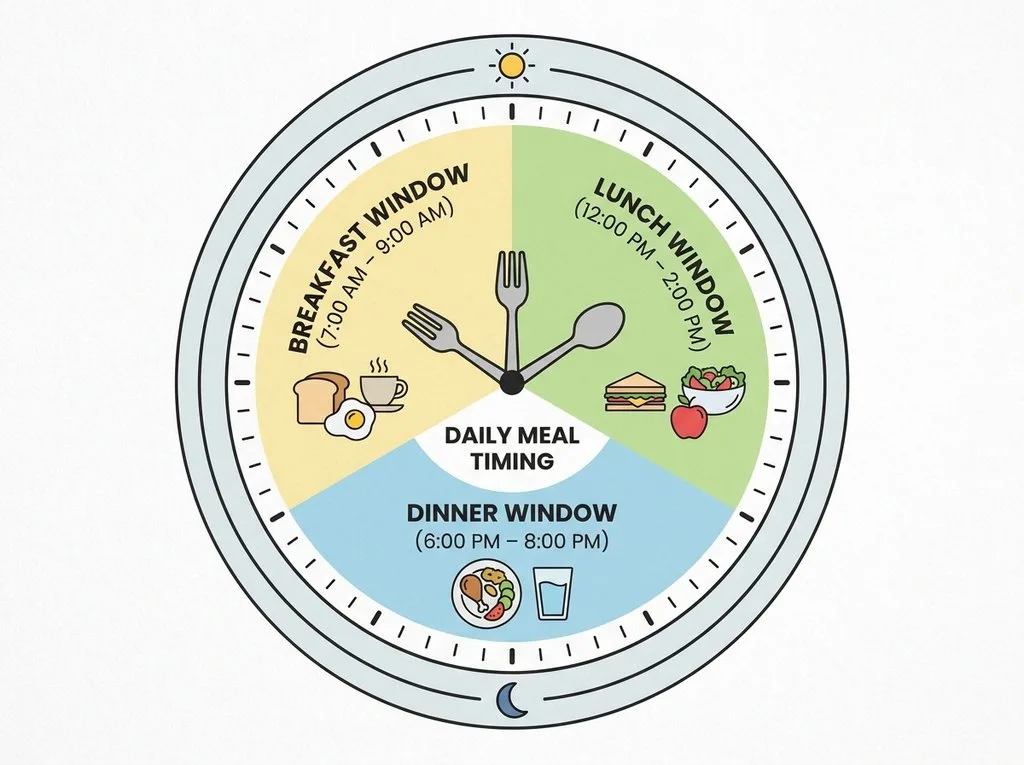
Meal timing matters as much as meal content:
- Eat dinner at least 2-3 hours before sleeping
- Don’t skip breakfast — a protein-rich breakfast (poha with peanuts, moong dal chilla, egg bhurji) keeps cravings in check later
- Avoid heavy, oily food late at night, especially restaurant-style curries
6. Stay Hydrated the Indian Way
Water alone isn’t the only option:
- Start the day with warm water and a pinch of ajwain or jeera for digestion
- Include buttermilk (chaas) in summer lunches instead of sugary drinks
- Herbal options like jeera water, saunf water, and tulsi tea support hydration and digestion
- Limit tea/coffee to 2-3 cups a day; excess caffeine affects sleep and iron absorption
7. Add Movement That Fits Indian Routines
You don’t need a gym membership to stay active:
- A 20-30 minute walk after dinner aids digestion and blood sugar control
- Traditional practices like yoga and surya namaskar are low-cost and effective
- Household chores, gardening, and taking stairs count as activity too
- Weekend outdoor games (badminton, cycling) are great for families

8. Manage Stress — It’s Part of a Healthy Lifestyle Too
Diet and exercise alone aren’t enough. Indian lifestyles often involve high work stress and joint-family responsibilities:
- Practice 10 minutes of daily meditation or deep breathing (pranayama)
- Maintain consistent sleep timing — 7-8 hours is essential for metabolism
- Limit screen time before bed, especially social media scrolling
- Make time for hobbies or family time without work distractions
9. Practical Weekly Meal Planning Tips
- Plan dal and sabzi combinations in advance to avoid last-minute oily takeout
- Batch-cook and freeze rotis or parathas for busy weekdays
- Keep healthy snacks like roasted chana, makhana, or fruits handy instead of chips
- Limit outside food to once or twice a week, not daily
Final Thoughts
A healthy lifestyle with an Indian diet isn’t about restriction — it’s about balance, portion control, and smarter choices within the food culture you already know. Small, consistent changes to your plate, cooking oil, meal timing, and daily movement can lead to lasting results without giving up the flavors you love.
Start with one or two tips from this list, build the habit, then move to the next. Sustainable change beats a strict diet every time.
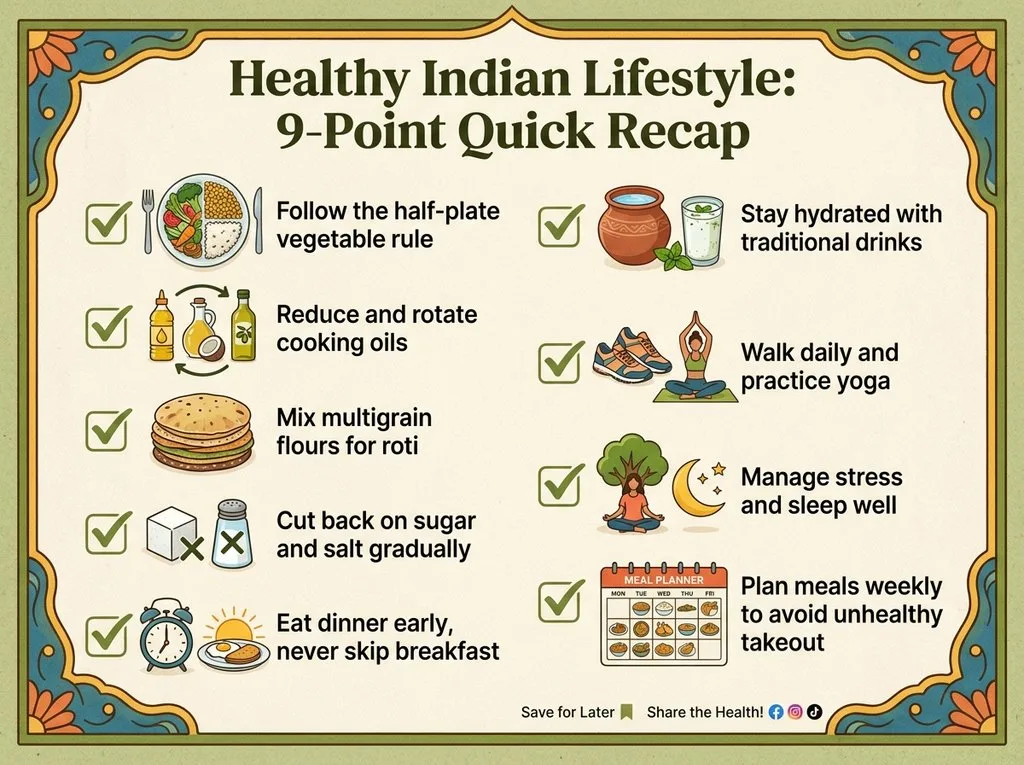
Quick Recap: Healthy Lifestyle Tips for Indian Diet
- Follow the half-plate vegetable rule
- Reduce and rotate cooking oils
- Mix multigrain flours for roti
- Cut back on sugar and salt gradually
- Eat dinner early, never skip breakfast
- Stay hydrated with traditional drinks
- Walk daily and practice yoga
- Manage stress and sleep well
- Plan meals weekly to avoid unhealthy takeout