Ginger (Adrak) for Digestion and Immunity: Ayurvedic Benefits and Uses
Ginger, known as adrak in Hindi and ardraka in Sanskrit, is one of the most widely used spices and remedies in Ayurveda. Referred to in classical texts as vishvabhesaja — “the universal medicine” — ginger is prized as a warming spice that kindles agni, the digestive fire. In the Ayurvedic view, weak digestion is the root of many imbalances, and ginger’s sharp, warming nature makes it a go-to herb for sluggish digestion, gas, and cold-related discomfort.
Modern science has taken an interest in ginger too, with studies suggesting it may help with nausea, motion sickness, and mild digestive discomfort. Whether you use it fresh in your kitchen or sip it as tea, ginger is one of the easiest Ayurvedic herbs to bring into daily life.
What Ginger Is in Ayurveda
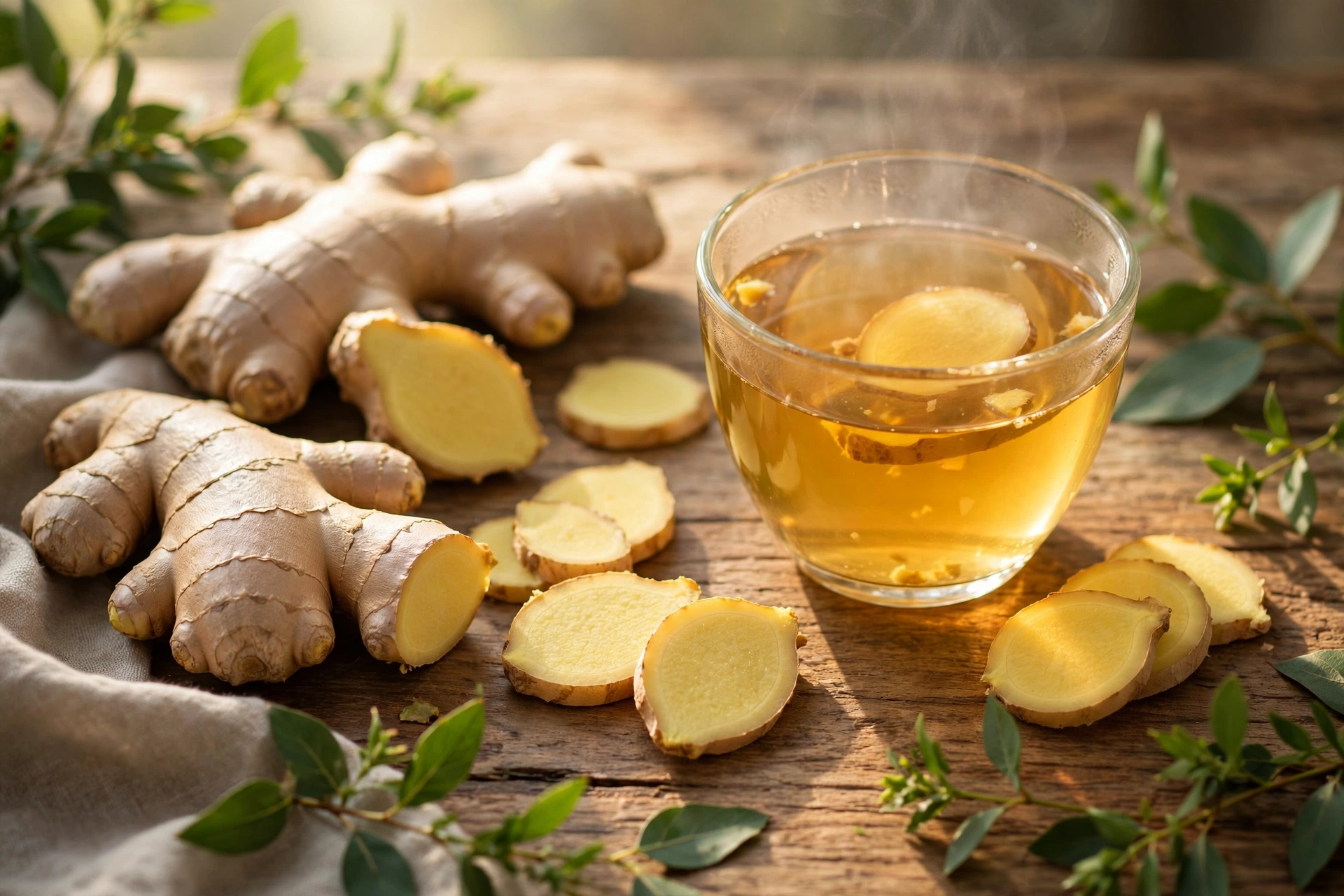
In Ayurveda, fresh ginger (adrak) and dry ginger (sonth) are considered slightly different medicines. Fresh ginger is warming and mildly pungent, used mainly for digestion and respiratory issues. Dried ginger powder is considered even warmer and more penetrating, used for deeper imbalances like chronic gas, joint stiffness, and congestion.
Ginger is described as having a pungent taste (katu rasa), a heating energy (ushna virya), and a sweet post-digestive effect (madhura vipaka). This combination makes it especially balancing for vata and kapha doshas, while people with high pitta should use it in moderation because of its heat.
Key Ayurvedic Benefits of Ginger
1. Supports Healthy Digestion
Ginger’s most celebrated role is as a digestive aid. It is traditionally used to stimulate digestive enzymes, ease heaviness after meals, and relieve gas and bloating. Ayurvedic practitioners often recommend chewing a thin slice of fresh ginger with a pinch of rock salt about 15 minutes before meals to wake up the appetite and prepare the stomach for food.
2. Relieves Gas and Bloating
Ginger is a classic carminative — a herb that helps expel gas from the digestive tract. For post-meal bloating or abdominal discomfort, a cup of warm ginger tea is a time-tested home remedy. Dry ginger powder (sonth) mixed with a little warm water is considered stronger for persistent gas.
3. Supports Immunity
Because of its warming and antimicrobial reputation, ginger is traditionally used to support the body’s defenses, especially during seasonal changes. It is a common ingredient in Ayurvedic decoctions (kadha) meant to keep the respiratory system strong.
4. Soothes Colds and Coughs
For a scratchy throat, congestion, or a mild cold, ginger tea with honey is one of Ayurveda’s best-known home remedies. Ginger’s warmth is said to loosen congestion (kapha) in the chest and soothe the throat. Studies suggest ginger may help ease throat irritation and nausea, though more research is still needed.
5. Promotes Healthy Circulation
Ginger’s heating quality is believed to improve circulation and help dispel the feeling of cold in the hands and feet. It is traditionally added to warming winter recipes and teas for this reason.
Forms of Ginger and How to Use Them
Fresh Ginger (Adrak)
- Ginger tea: Simmer 1-2 inches of crushed fresh ginger in 2 cups of water for 5-10 minutes. Strain and sip warm, optionally with honey.
- Before meals: Chew a thin slice of fresh ginger with a pinch of rock salt and a few drops of lemon juice about 15 minutes before eating to stimulate digestion.
- In cooking: Add grated ginger to dals, soups, and vegetable dishes — a daily dose that adds both flavor and digestive support.
Dry Ginger Powder (Sonth)
- With warm water: Mix 1/4 to 1/2 teaspoon of dry ginger powder in warm water, often with a little honey, for gas, bloating, or cold symptoms.
- In milk or herbal blends: Dry ginger is a common ingredient in spiced milk and traditional churna (herbal powder) blends.
Ginger with Honey
A paste of fresh ginger juice and honey is a classic Ayurvedic remedy for cough and throat irritation. Honey should only be added to warm (not boiling) preparations, as Ayurveda advises against heating honey to high temperatures.
Dosage Guidance
For general wellness use, Ayurvedic sources commonly suggest:
- Fresh ginger: about 1-2 grams (a 1-inch piece) per day, often in tea or food.
- Dry ginger powder: about 1-2 grams per day, divided into two doses with warm water.
- Ginger juice: 5-10 ml mixed with honey, once or twice daily for cough.
These are traditional guidelines for otherwise healthy adults. Ginger is a food-grade spice, so moderate culinary use is generally safe. If you are considering higher doses or long-term therapeutic use, speak with an Ayurvedic practitioner or doctor first.
Safety: Who Should Be Careful with Ginger
- Pregnancy: Small culinary amounts are usually fine, but concentrated ginger supplements during pregnancy should only be used with a doctor’s guidance.
- Blood-thinning or diabetes medication: Ginger may interact with blood thinners and blood-sugar-lowering drugs, so check with your doctor.
- High pitta conditions: People prone to acidity, heartburn, mouth ulcers, or skin rashes may find excess ginger aggravating and should keep quantities small.
- Before surgery: Stop concentrated ginger supplements at least a week before any scheduled surgery, as a precaution.
Frequently Asked Questions
Is fresh ginger better than dry ginger powder?
They serve slightly different purposes. Fresh ginger is gentler and preferred for everyday digestive support and colds. Dry ginger powder is considered warmer and stronger, better suited for persistent gas, congestion, and winter use.
Can I drink ginger tea every day?
Yes — one to two cups of mild ginger tea daily is a common Ayurvedic habit and is generally safe for healthy adults. If you notice acidity or heartburn, reduce the strength or frequency.
Does ginger help with weight management?
Ginger is traditionally believed to support metabolism by kindling digestive fire, and some small studies suggest it may help with feelings of fullness. However, it is not a weight-loss solution on its own; balanced diet and activity matter far more.
Can children take ginger?
Small amounts of ginger in food are fine for children. For medicinal doses, consult a pediatrician or Ayurvedic practitioner, especially for children under five.
When is the best time to take ginger?
For digestion, before or after meals. For colds, sip tea throughout the day. Ayurveda generally advises taking ginger with warm water or food rather than on a completely empty stomach if you are prone to acidity.
Ginger is one of those rare remedies that is as practical as it is traditional — affordable, easy to find, and simple to use. A daily cup of ginger tea or a slice of fresh ginger before meals is a small habit with genuinely useful benefits for digestion, comfort, and seasonal wellness. As with any herb, use it thoughtfully: respect its heating nature, keep doses moderate, and consult a doctor if you have a medical condition, are pregnant, or take medication.