Moringa Benefits for Energy and Nutrition: The Ayurvedic Superfood
Moringa, known in India as the drumstick tree and in Ayurveda as shigru, has earned the nickname “miracle tree” — and unusually, the nutrition backs up the hype. Its leaves are packed with vitamins, minerals, and plant protein, making moringa one of the most nutrient-dense foods you can add to your diet. In Ayurvedic tradition, moringa has been used for centuries to support strength, vitality, and balanced digestion.
Today moringa powder is sold worldwide as a green superfood, but it remains at heart a simple, affordable leafy vegetable with deep roots in Indian kitchens and Ayurvedic practice. Here’s what it offers and how to use it.
What Moringa Is
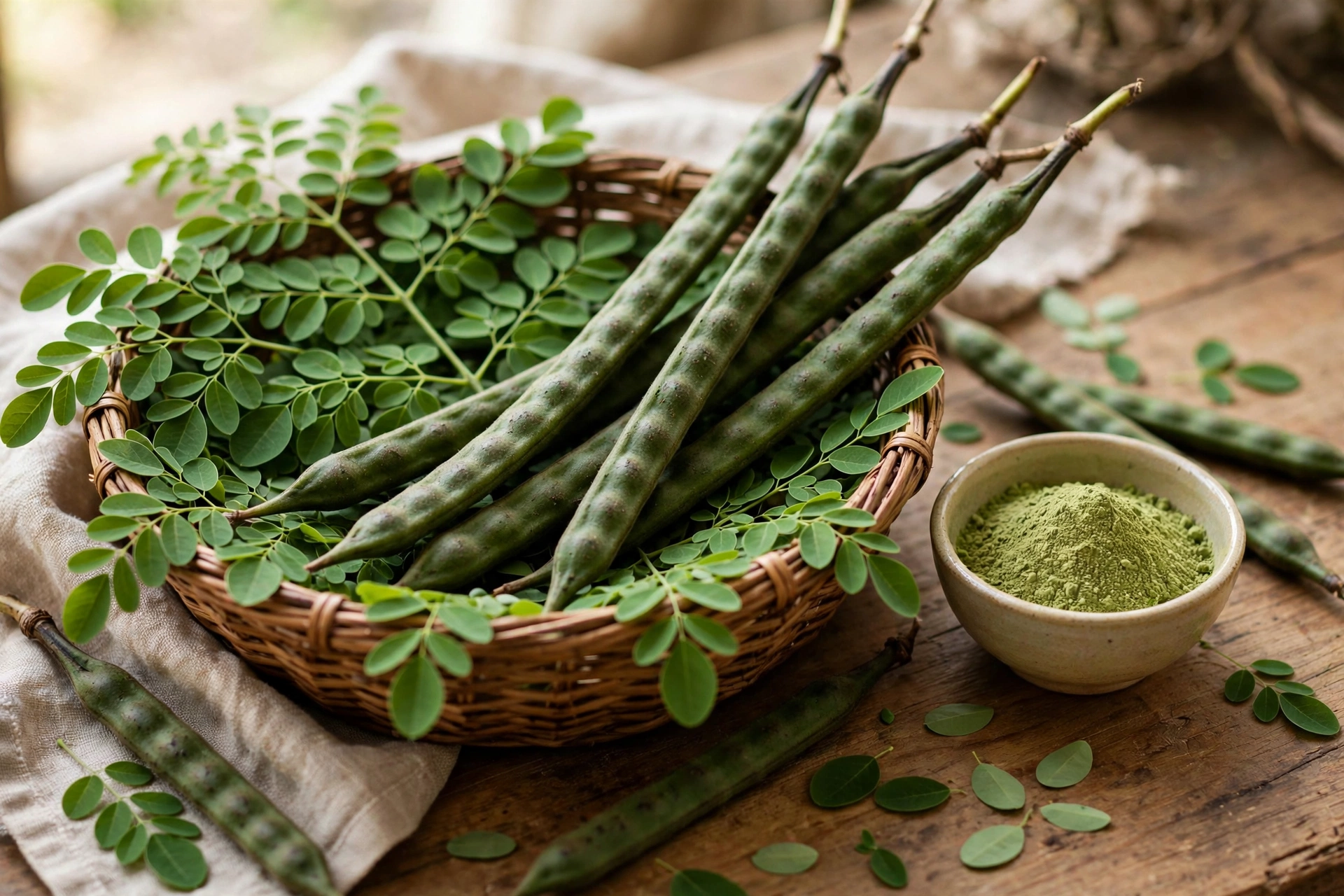
Moringa oleifera is a fast-growing tree native to the Indian subcontinent. Nearly every part is used — the long drumstick pods (sahjan) are a staple vegetable in South Indian cooking, the flowers are eaten in some regions, and the leaves are dried and ground into the green powder most people know as a supplement.
In Ayurveda, moringa (shigru) is described as pungent and bitter in taste with a heating energy. It is traditionally used to balance kapha and vata doshas, support digestion, and promote strength. Classical texts mention its use for healthy joints, clear skin, and general vitality.
Moringa’s Nutrient Profile
Dried moringa leaf powder is remarkably rich for a plant food:
- Vitamins: good amounts of vitamin A (as beta-carotene), vitamin C, vitamin E, and several B vitamins including folate.
- Minerals: calcium, iron, magnesium, potassium, and zinc.
- Protein: roughly 25-30% protein by weight in dried leaves, including all essential amino acids — unusual for a leafy green.
- Antioxidants: quercetin, chlorogenic acid, and other plant compounds that help protect cells from oxidative stress.
Exact values vary with soil, season, and drying method, but gram for gram, moringa leaves are frequently cited as containing more vitamin C than oranges, more calcium than milk, and more potassium than bananas when compared in dried form.
Key Benefits of Moringa
1. Natural Energy Without Caffeine
Moringa does not contain caffeine, yet many people report steadier energy after adding it to their routine. The likely explanation is nutritional: B vitamins, iron, and magnesium all play roles in normal energy metabolism, and moringa supplies them together in a whole-food form.
2. Supports Immunity
With its vitamin C, vitamin A, zinc, and antioxidant content, moringa is traditionally and nutritionally a sensible ally for the immune system. It is often included in Ayurvedic regimens aimed at building general resistance (vyadhikshamatva).
3. May Help Maintain Healthy Blood Sugar
Some small human and animal studies suggest moringa leaf may help support healthy blood sugar levels already in the normal range, possibly due to compounds like chlorogenic acid and isothiocyanates. This is a promising area but not yet conclusive — and moringa is not a substitute for diabetes medication. Anyone with diabetes should consult their doctor before using it regularly.
4. Supports Skin and Hair Health
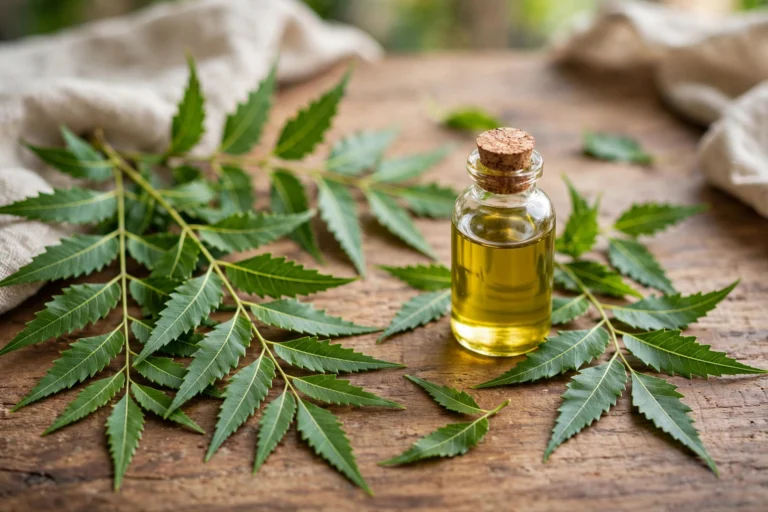
Vitamins A, C, and E are all involved in collagen formation and skin repair, and moringa’s antioxidant load helps counter the oxidative stress that contributes to premature aging. Moringa seed oil is also used traditionally as a light, nourishing oil for skin and hair.
5. Iron and Nutrition for Everyday Diets
Moringa’s iron and folate content make it a valuable addition for people whose diets run low on these nutrients, including vegetarians. Vitamin C in the leaves also helps the body absorb plant-based iron more efficiently.
How to Use Moringa
Moringa Powder
The most common form. Stir 1-2 teaspoons into smoothies, buttermilk, soups, or warm water with lemon. It has an earthy, mildly bitter taste that blends well with fruit or honey. Avoid adding it to boiling liquids — excessive heat can degrade some nutrients.
Moringa Capsules
A convenient option for those who dislike the taste. Follow the dosage on the label, typically 1-2 capsules once or twice daily with food.
Fresh or Dried Leaves in Cooking
In South India, fresh moringa leaves are cooked into dals, poriyals, and soups, and drumstick pods go into sambar. This traditional culinary use is arguably the best way to consume moringa — as food, not just a supplement.
Moringa Tea
Steep a teaspoon of dried leaves or a tea bag in hot (not boiling) water for 3-5 minutes. It makes a mild, grassy infusion, often blended with tulsi or ginger.
Dosage Guidance
- Moringa leaf powder: 1-2 teaspoons (about 3-6 grams) daily is the commonly suggested range for general wellness.
- Capsules: follow the manufacturer’s label, usually 500-1000 mg per day.
- Fresh leaves: a small handful cooked as a vegetable, a few times a week.
Start with a small amount (half a teaspoon of powder) for the first few days to let your digestion adjust, then build up gradually.
Safety and Precautions
- Pregnancy and breastfeeding: Moringa leaf in food amounts is traditionally considered fine, but concentrated extracts, and especially moringa root, bark, or flower preparations, should be avoided in pregnancy. Consult a doctor before using supplements while pregnant or nursing.
- Blood sugar and blood pressure medication: Because moringa may influence blood sugar and blood pressure, monitor levels and talk to your doctor if you take medication for either.
- Digestive adjustment: Large doses can cause loose stools or stomach upset in some people — start small.
- Quality matters: Buy from reputable sources; poorly dried or stored powder can lose nutrients or carry contaminants.
Frequently Asked Questions
Is moringa really a superfood?
“Superfood” is a marketing term, but moringa genuinely stands out: few plant foods combine this level of protein, vitamins, minerals, and antioxidants in one package. Think of it as a very nutritious leafy green rather than a miracle cure.
Can moringa replace a multivitamin?
Moringa is nutrient-dense but not a complete substitute for a balanced diet or a prescribed supplement. It complements good nutrition; it doesn’t replace it.
Does moringa help with weight loss?
There is no strong evidence that moringa directly causes weight loss. Its fiber and nutrient density may support satiety as part of a healthy diet, but that is a modest, indirect effect.
When will I feel the effects of moringa?
Nutritional benefits build gradually. Most people who notice a difference in energy or digestion report it after 2-4 weeks of consistent daily use.
Can I give moringa to children?
Small amounts of moringa in cooked food are traditionally given to children in India. For powder or capsules, consult a pediatrician for appropriate dosing.
Moringa earns its reputation the honest way: not through exotic claims, but by being one of the most nutrient-packed plants you can eat. Whether you stir the powder into a morning smoothie or cook the fresh leaves into dal, it is a simple, affordable way to fill common nutritional gaps. Use it consistently, buy good quality, and keep expectations realistic — and as always, check with a doctor if you are pregnant, nursing, or managing a medical condition or medication.