Arjuna Bark Benefits for Heart Health: Ayurvedic Uses and Dosage
Among the hundreds of herbs in the Ayurvedic pharmacopoeia, one stands alone in its reputation for the heart: arjuna. The bark of the Terminalia arjuna tree has been used in India for over three thousand years as a cardiac tonic — so central to heart care in classical texts that the great physician Vagbhata called it the foremost herb for the heart. Modern researchers are now studying its effects on cholesterol, blood pressure, and heart function. Here is what tradition says, what science is finding, and the safety rules you must know before considering it.
What Is Arjuna Bark?
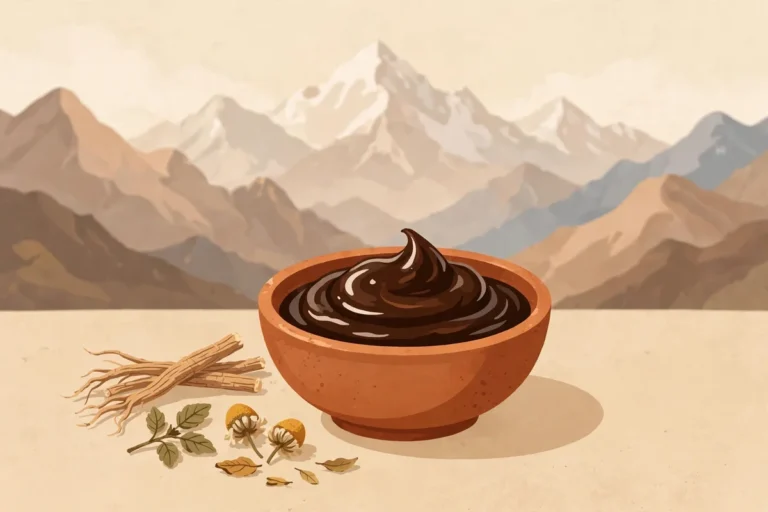
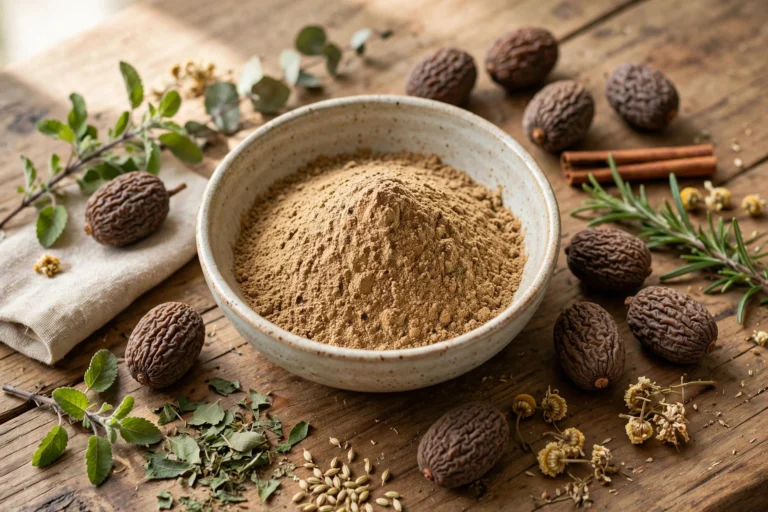
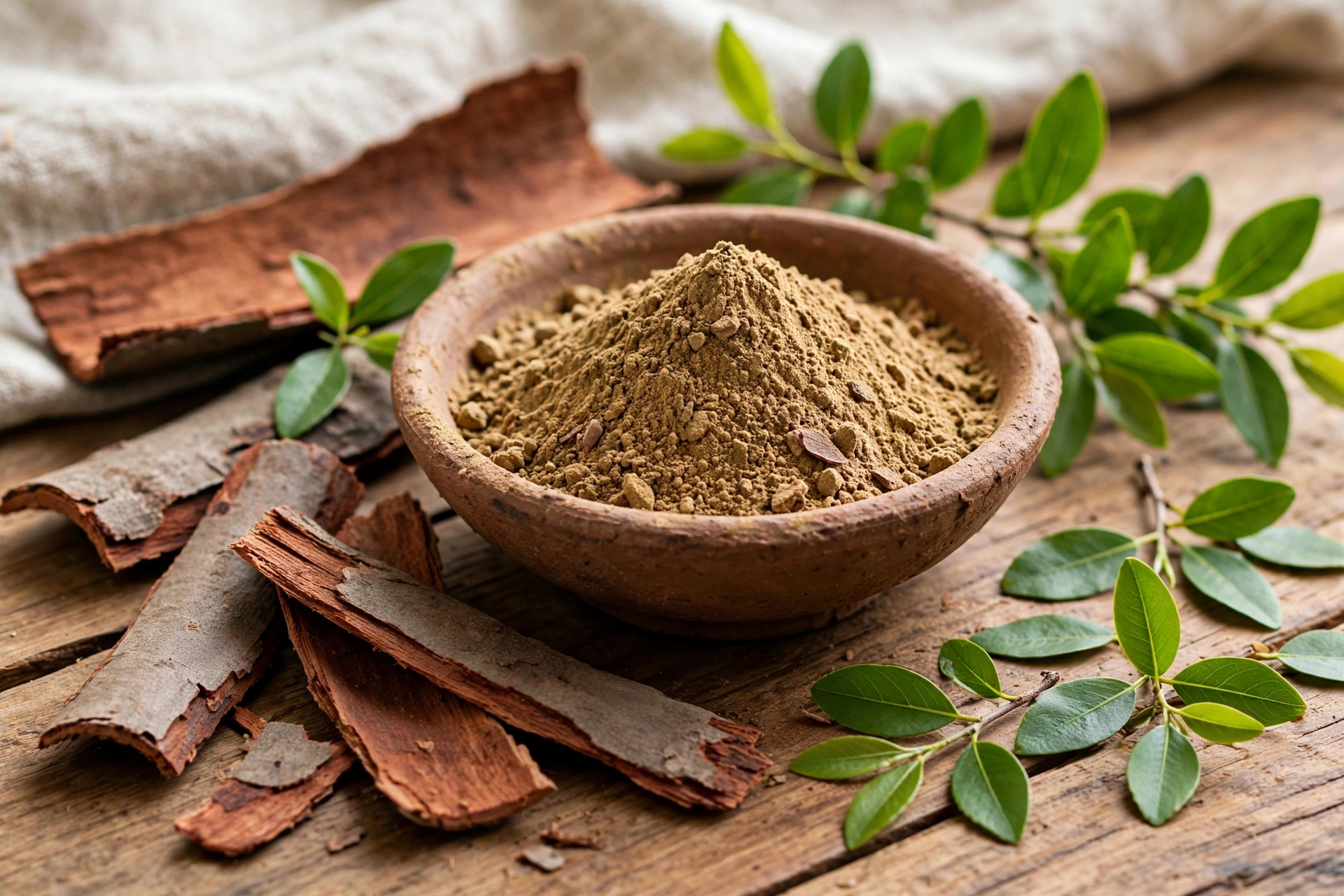
Arjuna is a large evergreen tree (Terminalia arjuna) native to India, growing along riverbanks and in deciduous forests. Its thick, pinkish-grey bark is harvested, dried, and powdered for medicinal use. The bark contains bioactive compounds — including arjunolic acid, flavonoids, and tannins — that researchers believe drive its cardiovascular effects.
In Ayurveda, arjuna is classified as hridaya — literally “that which is good for the heart” — with an astringent taste, cooling energy, and a special affinity for the heart and circulatory system.
Arjuna in Classical Ayurveda: The Heart Tonic
Classical Ayurvedic texts traditionally recommend arjuna bark for supporting the strength and function of the heart. It appears in formulations for occasional palpitations, chest heaviness, and cardiac weakness following illness or exhaustion. Traditional practitioners also value it for maintaining healthy circulation.
Ayurveda sees the heart as the seat of ojas (vital energy), closely tied to emotional well-being — and arjuna is traditionally believed to strengthen both the physical and emotional heart.
For a complementary adaptogenic perspective on stress and the heart, see our tulsi (holy basil) benefits guide.
Traditional Uses for Heart Strength
The cornerstone preparation is arjuna kwath — a decoction of the bark simmered in water, traditionally taken with warm milk. Ayurvedic practitioners have long used it to support people recovering from cardiac strain and to maintain heart strength with aging. The classical arjuna + milk combination is believed to make the bark’s active compounds more available while softening its astringency.
Tradition also values arjuna for:
- Healthy circulation — traditionally used to support the tone and function of blood vessels.
- Post-exertion recovery — used in rejuvenative routines for rebuilding stamina.
- Emotional steadiness — traditionally given during grief or emotional shock, when the “heart” needs support in every sense.
What Modern Research Suggests
Cholesterol and Lipid Levels
Several small clinical studies — mostly conducted in India — have explored arjuna bark extract and blood lipid profiles. Some trials reported modest improvements in total and LDL cholesterol, along with favorable shifts in HDL cholesterol, over 4–12 weeks. Researchers attribute these effects to the bark’s saponins and flavonoids. The studies are small and short-term, so larger trials are needed before firm conclusions can be drawn.
Blood Pressure
Animal studies suggest arjuna bark may have mild blood-pressure-lowering effects, possibly through vasodilation and antioxidant action on blood vessels. This is exactly why the safety section below matters: anything that may influence blood pressure can interact with medication.
Heart Function
The most striking preliminary research involves small trials exploring arjuna as an add-on to standard care in cases of angina and heart failure, with some reporting improved exercise tolerance. These are early, small-scale findings — exciting, but not a basis for self-treatment. Arjuna must never replace prescribed cardiac medication.
For general nutrition that supports the heart, you may also enjoy our moringa benefits guide for energy and nutrition.
How to Use Arjuna Bark
Arjuna Kwath (Decoction)
Simmer 1 teaspoon (about 3 grams) of bark powder in 2 cups of water until reduced by half. Strain and drink warm, traditionally mixed with an equal amount of warm milk, once or twice daily.
Arjuna Tea
A lighter version: steep ½ teaspoon of bark powder in hot water for 10 minutes, strain, and sip. Add a pinch of cardamom or a teaspoon of honey to soften the astringent taste.
Powder with Warm Milk or Water
Simply stir 1–3 grams of arjuna bark powder into warm milk or water and drink. Warm milk is the traditional vehicle (anupana), believed to enhance absorption and gentleness on the stomach.
Dosage Guidance
- Bark powder: 1–3 grams, once or twice daily with warm milk or water.
- Decoction (kwath): 30–60 ml of the prepared decoction, once or twice daily.
- Standardized extracts/capsules: Follow the product label; typical studied doses range from 500 mg to 1 gram daily — but use these only under a practitioner’s supervision.
Arjuna is traditionally used in courses of several weeks to months rather than indefinitely. Because it acts on the cardiovascular system, professional guidance is strongly recommended — this is not an herb to self-prescribe casually.
Safety Notes and Cautions
Arjuna bark is generally well tolerated in traditional doses, but its cardiovascular activity demands respect:
- Heart and blood-pressure medication: Arjuna may add to the effects of drugs for blood pressure, heart failure, or blood thinning, potentially causing blood pressure to drop too low or increasing bleeding risk. Consult your cardiologist before use — this is the single most important caution.
- Surgery: Stop arjuna at least 2 weeks before any scheduled surgery because of its possible effects on blood pressure and clotting.
- Pregnancy and breastfeeding: Safety has not been established; avoid use during pregnancy and while nursing.
- Low blood pressure: People with naturally low blood pressure should use arjuna only with medical supervision.
- Side effects: Mild digestive discomfort, headache, or dizziness have been reported occasionally. Discontinue and seek advice if these occur.
Disclaimer: This article is educational only, not medical advice. Arjuna bark is a traditional supplement with preliminary research — not a proven treatment for any heart condition. Never stop or change prescribed cardiac medication, and consult your cardiologist before adding arjuna to your routine.
Frequently Asked Questions
Can arjuna cure heart disease?
No. Arjuna is a traditional supportive herb with early-stage research suggesting possible cardiovascular benefits. It cannot cure heart disease and must never replace prescribed treatment, lifestyle changes, or your doctor’s care plan.
How long does arjuna take to show effects?
Traditional use and small studies suggest 4–12 weeks before changes might be observed. It is a slow, gentle-acting herb — not a quick fix.
Can I take arjuna with my blood pressure tablets?
Only with your doctor’s approval — arjuna may enhance blood-pressure medication and lower pressure too much. Closer monitoring may be needed.
Is arjuna bark safe for daily long-term use?
Traditional practice uses it in courses of weeks to months, often with breaks. Long-term daily use should be supervised by a qualified practitioner, with periodic review of whether it is still needed.
Can women take arjuna bark?
Non-pregnant, non-nursing women can use it under the same guidance as anyone else, with a doctor’s approval if taking medication. For women’s-health-specific herbs, see our shatavari guide for women’s health.
Conclusion
Arjuna bark carries one of the most distinguished reputations in Ayurveda — three millennia as the heart’s herbal ally, now backed by intriguing early research on cholesterol, blood pressure, and cardiac function. That promise comes with responsibility: because it acts on the cardiovascular system, arjuna belongs in a supervised plan, not a self-prescribed experiment. If your cardiologist gives the green light, this ancient bark may become a meaningful part of a heart-conscious lifestyle.