Vetiver (Khus) Benefits: Ayurvedic Cooling Herb for Skin, Sleep and Stress
Few herbs capture the Indian summer like vetiver — known as khus, khus-khus or ushira in Ayurveda. Its fragrant roots are woven into cooling window screens (khus tattis), stirred into summer drinks, and distilled into a deep, earthy essential oil. In Ayurvedic terms, vetiver is the classic sheetala (cooling) herb: traditionally used to calm excess heat, soothe the skin, quiet a restless mind and support restful sleep.
What Is Vetiver (Khus) in Ayurveda?
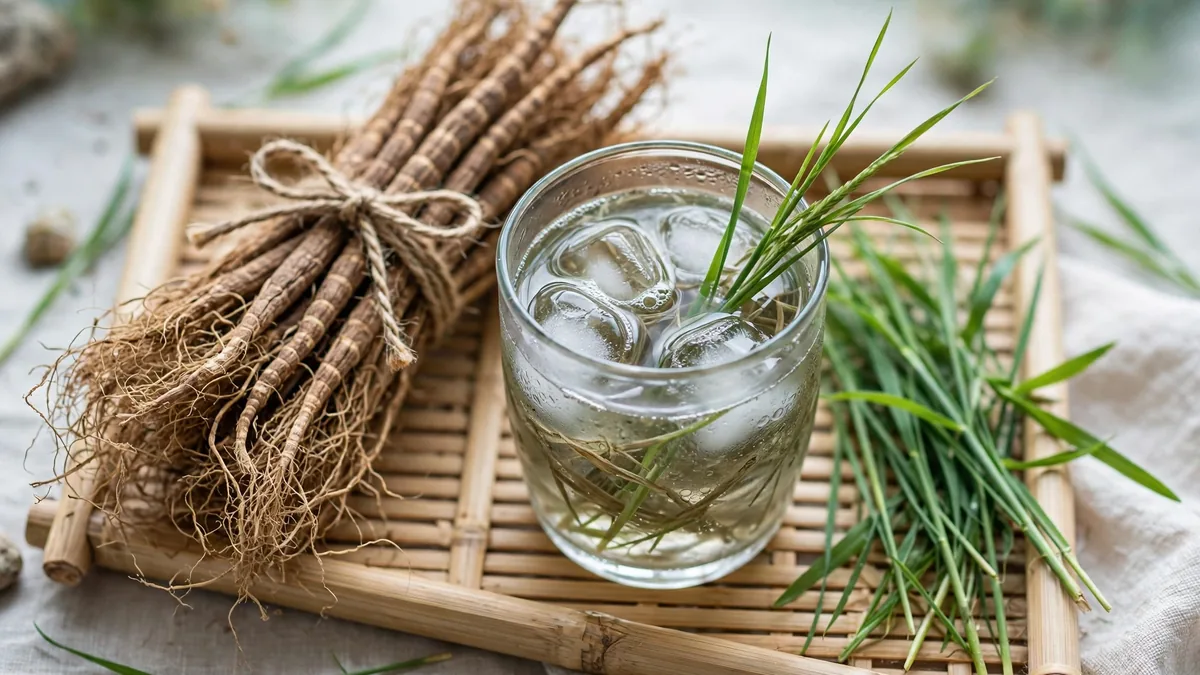
Vetiver (Chrysopogon zizanioides) is a tall, clumping grass native to India. The magic is underground: its dense, aromatic root system is harvested, dried and used in medicine, perfumery and cooling crafts. Classical Ayurvedic texts describe ushira as cooling, bitter-sweet and tridoshic — balancing all three doshas, but especially pitta, the dosha of heat and intensity.
Vetiver as Ayurveda’s Classic Cooling Herb
When Ayurveda wants to cool the system down, vetiver is often the first herb mentioned.
- May soothe burning sensations: Classical texts recommend vetiver preparations for occasional burning sensations linked to excess pitta.
- Supports comfortable digestion in heat: A cool vetiver infusion after meals is a traditional way to settle heat-related digestive discomfort.
To make it, add a small bundle of cleaned, dried vetiver roots to a jug of drinking water for a few hours, then strain.
Vetiver Benefits for Skin
Vetiver’s cooling and calming nature extends to the skin, where it has a long traditional record.
- Traditionally calms heat-related skin irritation: Vetiver water or a cooled decoction is used as a face rinse or compress for skin that feels hot or prickly in summer.
- May support clear-looking skin: Ayurvedic skin routines sometimes include vetiver for its traditional cleansing action on oily, heat-aggravated skin. Evidence is anecdotal and traditional rather than clinical.
- Gentle aromatic toner: Vetiver hydrosol (khus water) is a popular natural facial mist — cooling, lightly fragrant and suitable for most skin types.
For a broader Ayurvedic skin routine, vetiver pairs well with soothing herbs like mulethi (licorice), traditionally used for skin brightness and calm.
Vetiver for Sleep and Stress
This is where vetiver’s reputation is strongest in the modern wellness world — and it has genuine traditional roots.
- Traditionally calming for the mind: Ayurveda describes vetiver as medhya-adjacent in effect — settling restlessness and supporting mental steadiness. The deep, earthy aroma is traditionally considered grounding for an overactive mind.
- May support restful sleep: A few drops of vetiver essential oil in a diffuser 30 minutes before bed is a traditional wind-down ritual. Small aromatherapy studies suggest vetiver scent may support relaxation, though strong clinical proof is still lacking.
- Everyday stress support: Inhaling vetiver oil from a tissue or using it diluted in a carrier oil on the wrists is a simple grounding practice during tense days — a calming ritual rather than a treatment for anxiety disorders.
People exploring Ayurvedic approaches to mental calm may also be interested in nasya therapy, the traditional nasal-oil practice for sinuses and mental clarity.
Other Traditional Uses of Vetiver
- Natural cooling for rooms: Khus tattis (vetiver root screens) sprinkled with water cool incoming air — a centuries-old, electricity-free air conditioner still used in parts of India.
- Fragrance and perfumery: Vetiver oil (“oil of tranquility”) is a base note in fine perfumery and traditional attars.
- Hair rinses: Cooled vetiver decoction is traditionally used as a final hair rinse for a fresh, fragrant scalp in summer.
How to Use Vetiver: Forms and Practical Guidance
- Vetiver-infused water: A small bundle of cleaned roots in 1–2 liters of drinking water for 4–8 hours; strain and sip through hot days. Replace the bundle every 3–4 days.
- Powder (ushira churna): Traditional texts mention 1–3 grams with water or as part of compound formulas — best taken under practitioner guidance rather than self-prescribed.
- Essential oil (aromatherapy): 3–5 drops in a diffuser, or diluted to 1–2% in a carrier oil (like coconut or sesame) for topical use. Never ingest essential oils.
- Hydrosol (khus water): Mist directly on face and body as a cooling skin spray; also used as a pillow mist before sleep.
- Bath: Add a few drops of diluted vetiver oil or a muslin bag of roots to a lukewarm bath for an evening wind-down.
For internal use, the infused water is the gentlest home method; powders and compound formulas belong under a practitioner’s supervision.
Safety, Side Effects and Precautions
- Essential oil safety: Always dilute vetiver oil before skin application; undiluted use can irritate sensitive skin. Do a patch test first.
- Pregnancy and breastfeeding: Normal room diffusion is generally considered low-risk, but internal or concentrated use should be avoided without professional guidance.
- Children and pets: Keep diffusers in ventilated rooms and out of reach; some essential oils are unsafe for small children and cats in particular.
- Not a sedative: Vetiver supports relaxation rituals; it is not a treatment for insomnia, anxiety disorders or depression. Persistent sleep or mood problems deserve professional care.
- Root cleanliness: If making infused water, buy food-grade dried vetiver roots from a reputable source and rinse them well before use.
As always, consult a qualified practitioner before using vetiver medicinally — especially internally or alongside medication.
Frequently Asked Questions
What is khus, and is it the same as vetiver?
Yes — khus (khus-khus) is the Indian name for vetiver, and ushira its Sanskrit name; all refer to the same plant and its fragrant roots.
How do you make khus water at home?
Rinse a small bundle of dried vetiver roots, place them in a jug of clean drinking water, and let it infuse for 4–8 hours. Strain and drink cool through the day. One bundle typically lasts 3–4 days of infusions.
Is vetiver good for sleep?
Vetiver has a long traditional reputation as a calming, grounding scent, and small aromatherapy studies suggest it may support relaxation. Many people find a vetiver diffuser or pillow mist helpful as part of a bedtime routine — a supportive ritual, not a proven insomnia treatment.
Can vetiver oil be applied directly to skin?
No — like all essential oils, vetiver oil should be diluted in a carrier oil (1–2%) before skin application, and patch-tested first. The hydrosol (khus water), on the other hand, is gentle enough to mist directly on skin.
Does vetiver really cool the body?
In Ayurvedic terms, vetiver is classified as cooling (sheetala), and generations of use as a summer drink and cooling screen support that reputation. Either way, it is a refreshing summer habit.
Where can I buy vetiver roots?
Dried vetiver roots are sold by Ayurvedic pharmacies, herbal shops and online herb sellers — look for clean, fragrant, food-grade roots. Vetiver essential oil and hydrosol are available from aromatherapy suppliers; choose brands that list the botanical name.
Conclusion
Vetiver (khus) is Ayurveda’s answer to excess heat — a cooling root that flavors summer water, calms irritated skin and lends its deep, earthy scent to bedtime wind-down rituals. The traditional evidence is strongest for its cooling and calming uses; modern research is still catching up. Start with the simplest preparation — a jug of khus-infused water on a hot day — and let this humble grass root earn its place in your seasonal routine.