
Shirodhara Therapy: Ayurvedic Benefits for Stress, Sleep and Headaches
Shirodhara is one of the most recognisable therapies in Ayurveda: a slow, steady stream of warm oil poured over the forehead, usually for 30 to 60 minutes, while you lie still and listen to the gentle sound of the oil. It is deeply relaxing, and in Ayurveda it is traditionally used to calm the mind, support restful sleep, and ease tension-related headaches.
What Is Shirodhara?
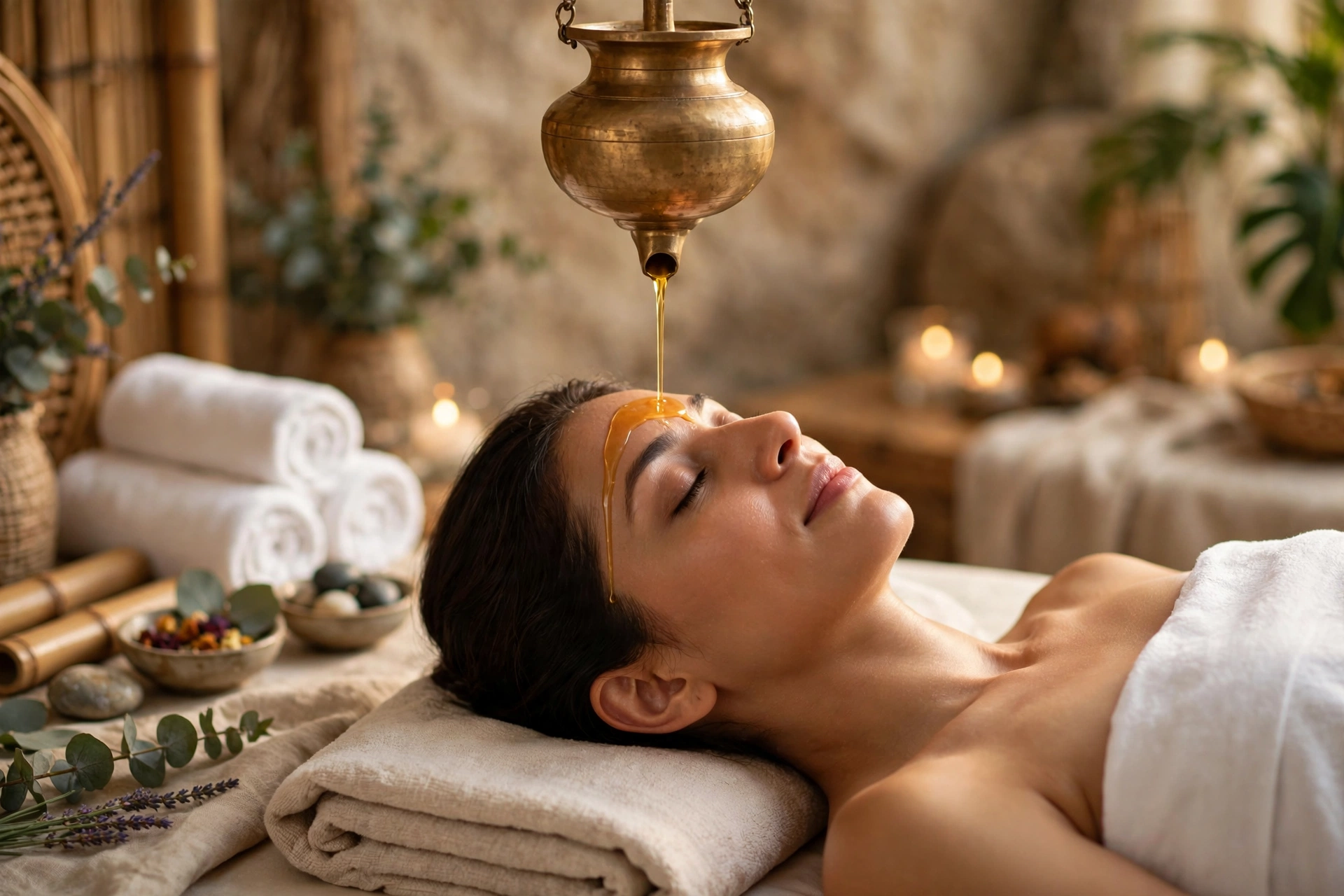
The word Shirodhara comes from two Sanskrit words: shiro, meaning head, and dhara, meaning a continuous flow. Warm herbal oil, medicated milk, or buttermilk is poured in a thin, unbroken stream onto the forehead, traditionally over the area between the eyebrows, from a vessel suspended above the head.
Shirodhara is part of Panchakarma and related Ayurvedic therapies, though it is also offered on its own as a relaxation treatment. The steady rhythm, warmth, and quiet are all considered part of the treatment, and many people describe deep calm during a session; some fall asleep. Sesame oil infused with herbs such as brahmi or jatamansi is common, while other options include coconut oil, medicated milk, or takra (buttermilk). The liquid, temperature, and duration are traditionally decided by a practitioner. Shirodhara is a traditional wellness therapy, not a proven medical treatment for neurological or psychiatric conditions, and it should not replace medical care for serious symptoms.
Shirodhara Benefits in Ayurveda
Classical texts describe Shirodhara as calming for Vata and Pitta, the doshas associated with movement, worry, and heat. The benefits below reflect that traditional understanding and the experiences commonly reported by people who receive the therapy.
1. Stress and Mental Calm
Stress is the most common reason people seek Shirodhara. The combination of warmth, rhythm, stillness, and quiet helps many people switch off from racing thoughts. In Ayurvedic terms, it is said to calm aggravated Vata, linked to restlessness and overthinking. People often feel calmer and clearer afterwards, for hours or days. It works best as part of a wider routine — breathing practices, regular sleep, gentle exercise, and dietary changes — not as a single fix for a stressful lifestyle.
2. Sleep Support
Difficulty falling or staying asleep is another traditional indication. In Ayurveda, disturbed sleep is often linked to excess Vata and an overactive mind, especially late in the evening. A session in the late afternoon or evening is traditionally thought to prepare the body for rest, and many people report sleeping more deeply that night. Long-standing, severe, or breathing-related sleep problems should be assessed by a doctor. Shirodhara may support a healthy sleep routine, but it is not a treatment for sleep disorders on its own.
3. Headaches and Head Tension
Shirodhara is traditionally used for tension-related headaches, heaviness in the head, and discomfort linked to stress, eye strain, and poor sleep. The warm oil, the gentle pressure of the stream, and the relaxation of the scalp, neck, and shoulders are thought to contribute. This applies mainly to occasional tension-type headaches. Sudden severe headaches, headaches after injury, or headaches with vision changes, weakness, confusion, or fever need urgent medical attention, and migraine needs proper diagnosis.
4. Relaxation of the Nervous System and Senses
In Ayurvedic theory, the forehead is a sensitive area where the senses and the mind meet. A steady stream of warm liquid over this area is believed to soothe the nervous system and calm the senses. Breathing often slows, shoulders drop, and muscle tension eases during a session. For that reason, Shirodhara is sometimes recommended during periods of mental overwork, such as exams or demanding work projects, as a way to give the mind a genuine break.
What Happens During a Shirodhara Session?
A session begins with a short consultation about your health, sleep, stress, and medical conditions, and the practitioner chooses the liquid accordingly. You lie on a treatment table, usually with a cloth protecting your eyes and hair gathered away from the face. A gentle head, neck, and shoulder massage often comes first. Then the vessel is positioned above the forehead and the warm liquid flows in a slow, steady stream, moved gently from side to side so it covers the forehead evenly. The liquid is collected, rewarmed, and poured again, keeping the flow continuous.
Sessions usually last 30 to 60 minutes, although a first session may be shorter. Afterwards, rest for 10 to 15 minutes before sitting up slowly. The oil is left on the scalp until you wash your hair later that day or the next morning. You may feel sleepy or slightly light-headed, so avoid driving straight away. A course of three to seven sessions over one to two weeks is often recommended. Drinking warm water, eating lightly, and avoiding screens afterwards help most people get the best from a session.
How to Prepare and What to Expect After
Wear comfortable clothing you do not mind getting a little oily, avoid heavy meals just before the session, and arrive a little early. Tell the therapist about allergies, skin conditions, recent illness, or medicines. Afterwards, plan a quiet evening, avoid cold exposure, and keep your head covered in cold or windy weather. Mild headache or tiredness after the first session usually passes with rest and fluids. Choose a reputable centre with trained therapists, clean equipment, and fresh, properly stored oils.
Safety and Precautions: Who Should Avoid Shirodhara?
Shirodhara is gentle, but not suitable for everyone. Avoid it, or seek medical clearance first, if you are pregnant, have low blood pressure, a fever or acute infection, a head injury, scalp wound or infection, or recent head or neck surgery. People with severe anxiety, depression, epilepsy, or other neurological or psychiatric conditions should discuss it with their doctor and an experienced practitioner first. Lying still with eyes covered and oil on the forehead can feel uncomfortable for some people; you should always be able to stop at any time. Raise allergies to sesame, coconut, or specific herbs at the consultation, and ask for a patch test if your skin is very sensitive. Do not book Shirodhara when intoxicated, just after a large meal, or when unwell.
Frequently Asked Questions
How many Shirodhara sessions do I need?
Many centres suggest three to seven sessions, but the right number depends on your reason for treatment and how you respond. A single session can be deeply relaxing, while a course is traditionally recommended for sleep and stress concerns.
Is Shirodhara painful?
No. It should feel warm, rhythmic, and relaxing. If the oil feels too hot or cold, or you feel uncomfortable, dizzy, or anxious, tell the therapist straight away so the temperature or position can be adjusted or the session stopped.
Can Shirodhara cure insomnia or migraine?
No therapy should be described as a cure for these conditions. Shirodhara is traditionally used to support relaxation and sleep, and some people find it helps as part of a wider plan. Persistent insomnia, migraine, or severe headaches need medical diagnosis and treatment.
What should I do after Shirodhara?
Rest, keep warm, drink warm fluids, eat lightly, and avoid screens and strenuous activity for the rest of the day. Wash your hair when your therapist advises, usually later the same day or the next morning.