
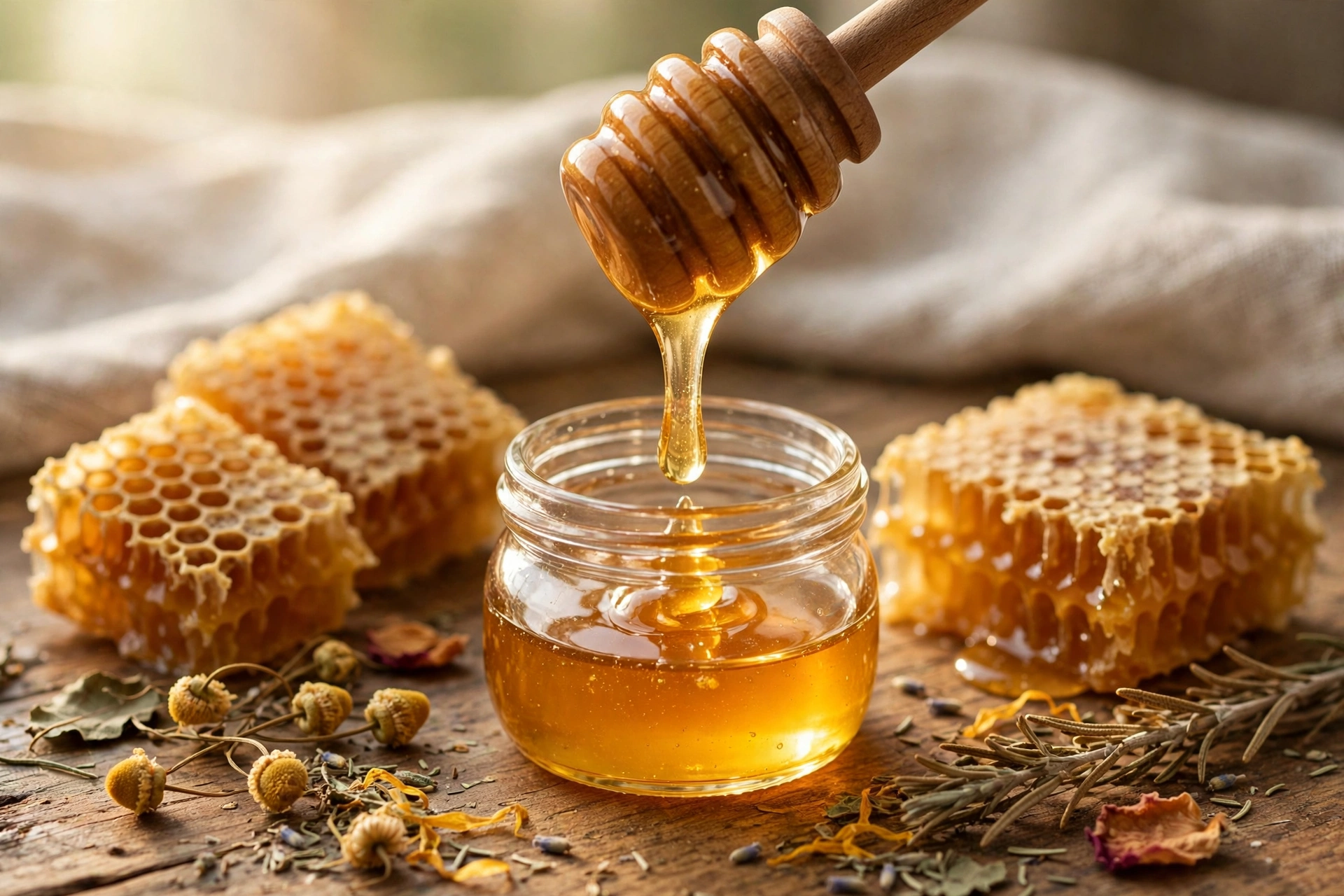
Honey (Shahad) Benefits: Ayurvedic Uses for Health, Skin & Immunity
In Ayurveda, honey is far more than a sweetener. Known as Madhu, it has been used for over 3,000 years as food, medicine, and a carrier that boosts the power of other herbs. Ancient texts praise it for scraping away toxins, balancing the doshas, and promoting long life — and modern research is now catching up with many of these claims.
But not all honey is equal, and Ayurveda has very specific rules about how to use it — including one famous warning: never heat honey. This guide covers honey’s Ayurvedic benefits, the right ways to use it, and the precautions you should know.
What Ayurveda Says About Honey (Madhu)
Ayurveda describes honey with these properties:
- Rasa (taste): primarily sweet (Madhura) with an astringent (Kashaya) undertone
- Guna (qualities): light (Laghu) and dry (Ruksha)
- Effect on doshas: balances Kapha and Pitta; in excess it can aggravate Vata
- Special action: Lekhana — it “scrapes” excess fat, mucus, and toxins from the body’s channels
Honey is also a Yogavahi — a substance that carries the properties of whatever it is mixed with deep into the tissues, enhancing the effect of herbs like turmeric, ginger, and Triphala. This is why so many Ayurvedic home remedies pair herbs with a spoonful of honey.
Types of Honey in Ayurveda
Classical texts describe eight types of honey based on the bees that make it. Of these, Makshika (from small honeybees) is considered the best for medicinal use — light, dry, and excellent for respiratory and metabolic issues. For everyday use, choose raw, unprocessed, preferably local honey over heavily processed commercial varieties, which lose many of honey’s active compounds.
9 Ayurvedic Benefits of Honey
1. Strengthens Immunity
Honey is rich in antioxidants, enzymes, and trace minerals. Ayurveda considers it an Ojas-building food — Ojas being the essence of immunity and vitality. A daily spoon of raw honey helps the body resist seasonal infections.
2. Soothes Cough and Throat Irritation
This is one of honey’s most proven uses. Its thick texture coats the throat while its antimicrobial compounds calm irritation. The classic remedy — warm water with honey and ginger — remains a first-line treatment for dry cough in Ayurvedic households.
3. Supports Digestion
Taken in small amounts, honey kindles Agni (digestive fire) and helps clear Ama (toxic buildup) from the gut. A teaspoon in warm — not hot — water in the morning is the traditional digestive tonic.
4. Aids Weight Management
Honey’s Lekhana (scraping) action helps reduce excess Kapha and meda (fat tissue). Warm water with honey and lemon each morning is Ayurveda’s best-known weight-management drink — effective only alongside proper diet and exercise, of course.
5. Heals Wounds and Burns
Applied externally, honey’s antibacterial and moisture-retaining properties speed wound healing — a use now validated by modern medicine (medical-grade Manuka honey is used in hospitals). Ayurveda has applied honey to cuts, burns, and ulcers for millennia.
6. Nourishes Skin
Honey is a natural humectant: it draws moisture into the skin. Mixed with turmeric or sandalwood, it makes an excellent face pack for dull, dry, or blemish-prone skin, calming inflammation and adding glow.
7. Boosts Energy Naturally
Honey’s natural sugars (fructose and glucose) are absorbed quickly yet steadily, making it an ideal pre-workout or mid-day energy food — far better than refined sugar, which spikes and crashes.
8. Improves Sleep Quality
A warm cup of milk with a teaspoon of honey before bed is a classic Ayurvedic sleep remedy. Honey gently raises insulin, which helps tryptophan reach the brain and convert to sleep-promoting serotonin and melatonin.
9. Eases Seasonal Allergies
Local, raw honey contains trace pollen from your area. Regular small doses are traditionally believed to desensitize the body to local allergens — a folk practice many allergy sufferers swear by.
How to Use Honey the Ayurvedic Way
- Morning tonic: 1 teaspoon raw honey in a glass of lukewarm water (with lemon for weight management)
- For cough: 1 teaspoon honey mixed with fresh ginger juice, twice daily
- With turmeric: a pinch of turmeric in honey as an immunity paste during seasonal change
- For skin: honey + turmeric face pack, 15 minutes, twice a week
- As Yogavahi: mix powdered herbs (like Triphala or ginger) into honey for better absorption
Important Precautions
Never Heat Honey
This is Ayurveda’s most famous honey rule: heated honey is said to become Ama — toxic and clogging to the body’s channels. Never add honey to boiling water, tea, or hot milk; always let liquids cool to a drinkable (lukewarm) temperature first. Interestingly, modern science agrees that overheating honey destroys its enzymes and creates a compound called HMF, which is undesirable in large amounts.
Not for Infants Under One Year
Honey can contain Clostridium botulinum spores, harmless to adults but dangerous for babies under 12 months. Never give honey to infants.
Diabetics and Dosage
Honey still raises blood sugar — diabetics should use it only under medical guidance. For everyone else, Ayurveda recommends moderation: 1–2 teaspoons daily is plenty. More is not better; excess honey aggravates Vata and can cause heaviness.
Frequently Asked Questions
Is honey good for weight loss?
In lukewarm water each morning, honey supports fat metabolism through its Lekhana action — but it works only with proper diet and exercise, not as a magic fix.
Can I put honey in hot tea?
No. Let the tea cool to lukewarm first. Boiling-hot liquids destroy honey’s beneficial enzymes — and Ayurveda considers heated honey toxic.
Which honey is best?
Raw, unprocessed, and ideally local honey. Makshika (small-bee) honey is rated highest in classical texts for medicinal use.
How much honey per day is safe?
1–2 teaspoons daily is the traditional moderate dose for a healthy adult.



3 Comments
Comments are closed.