Saffron (Kesar) Benefits: Ayurvedic Uses for Skin, Mood and Digestion
Saffron (Kesar) Benefits: Ayurvedic Uses for Skin, Mood and Digestion
Saffron — known as kesar in Hindi — is the world’s most expensive spice, hand-harvested from the stigmas of the Crocus sativus flower. In Ayurveda it is classified as a warming, rejuvenating (rasayana) substance, traditionally used to brighten the complexion, lift the mood, and strengthen digestion. Modern research is beginning to catch up with some of these claims, though much remains preliminary. Here is a balanced look at what Saffron offers, how to use it, and when to be careful.
What Is Saffron?
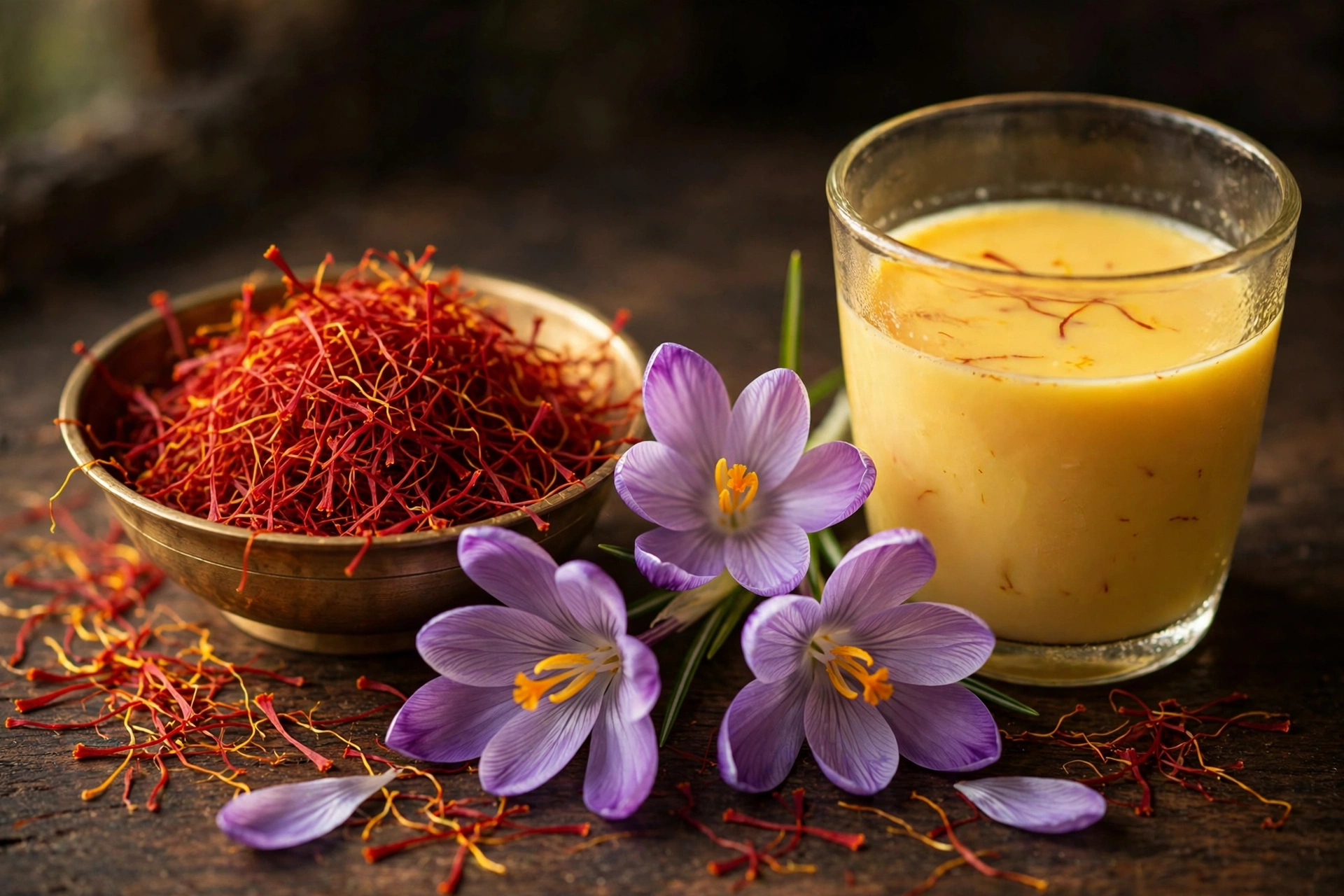
It takes roughly 150,000 flowers to produce one kilogram of saffron threads, which explains its price. Each thread is a dried stigma, rich in the compounds crocin (colour), safranal (aroma), and picrocrocin (flavour). In Ayurveda, Saffron is considered ushna (heating) and is traditionally used in tiny amounts — a few strands at a time — in milk, sweets, and herbal formulas. High-quality kesar, such as Pampore (Kashmiri) or Iranian saffron, has deep red threads with a strong, honey-like scent.
Traditional Ayurvedic Benefits of Saffron
1. Skin Glow and Complexion
This is Saffron’s most famous traditional use. Ayurvedic texts and beauty formulations (like kumkumadi tailam) use kesar to brighten dull skin and even out the complexion. Its antioxidant compounds may help protect skin from everyday oxidative stress. A few small human studies have found that saffron-containing creams improved skin moisture and tone — promising but preliminary, so treat it as a traditional skincare support rather than a guaranteed fairness cure.
2. Mood and Mental Well-being
Interestingly, this is where modern research is strongest. Several small randomised trials have found that saffron extract (typically 30 mg/day) eased symptoms of mild-to-moderate depression about as well as some standard treatments over 6–8 weeks. Ayurveda has long described kesar as a mood-lifter. That said, these trials were small and short, and saffron is not a substitute for professional mental-health treatment or prescribed medication.
3. Digestion and Appetite
Ayurveda describes Saffron as deepana — kindling the digestive fire (agni). A pinch of saffron in warm milk is the classic home remedy for sluggish digestion, mild bloating, and poor appetite. Its warming nature is believed to ease Vata-related digestive discomfort.
4. Reproductive and General Vitality
Classical texts list Saffron as a vajikarana (vitality-supporting) herb, traditionally used in small amounts for reproductive health and overall stamina in both men and women. Evidence here is entirely traditional.
How to Use Saffron: Traditional Methods
Kesar Doodh (Saffron Milk)
- Take 4–5 strands of saffron and soak them in 1 tablespoon of warm milk for 10–15 minutes until the milk turns golden.
- Stir this into a glass of warm milk (about 200 ml).
- Add a pinch of cardamom and a teaspoon of honey or sugar if you like.
- Drink once a day, preferably in the evening or morning.
Other Traditional Uses
- Face pack: Soak 4–5 strands in 2 teaspoons of milk or rose water for an hour, mix into a paste with sandalwood powder or besan, apply for 15 minutes, then rinse. Patch-test first.
- In cooking: A pinch of saffron in rice, kheer, or desserts gives colour, aroma, and a mild digestive lift.
Traditional Dosage
Ayurvedic texts suggest very small amounts: roughly 10–15 strands (about 30 mg) per day in food or milk. More is not better with saffron — large doses (grams, not milligrams) are toxic and must be avoided.
Safety and Side Effects
- Small culinary amounts are safe for most adults.
- Pregnancy warning: High doses of saffron have traditionally been used to stimulate the uterus, and large amounts could risk miscarriage. Pregnant women should avoid saffron supplements and keep food amounts minimal — consult a doctor.
- Overdose risk: Doses above about 5 grams in one sitting can cause nausea, dizziness, and vomiting; very high doses are dangerous. Never take saffron by the spoonful — count strands.
- Medication interactions: Saffron may lower blood pressure and affect mood; if you take blood-pressure medicine, antidepressants, or blood thinners, check with your doctor first.
- Fake saffron: The market is full of dyed corn silk and artificial colour. Buy from trusted sources; real saffron turns milk golden-yellow slowly (not instantly bright red) and each thread is trumpet-shaped.
Frequently Asked Questions
How many saffron strands should I use daily?
The traditional culinary dose is about 10–15 strands (roughly 30 mg) per day — for example, 4–5 strands in a glass of milk. This is far below any risky amount.
Does saffron really improve skin?
Traditionally it is one of Ayurveda’s top complexion herbs, and early small studies on saffron skincare are encouraging. It can support a healthy glow, but it will not dramatically change your natural skin tone.
Can saffron help with depression or low mood?
Small clinical trials suggest saffron extract may ease mild-to-moderate depressive symptoms, but the evidence is early. Never replace prescribed treatment with saffron, and talk to a professional for persistent low mood.
Is saffron safe during pregnancy?
Tiny culinary amounts are generally considered fine, but large amounts or supplements are not safe in pregnancy because high doses may stimulate uterine contractions. When pregnant, discuss even small use with your doctor.
How do I know my saffron is real?
Real saffron threads are deep red, trumpet-shaped, and release colour slowly in warm milk, turning it golden. Fake saffron bleeds bright red colour instantly and often tastes oddly sweet or chemical.
Can I apply saffron directly on my face?
Yes, in the diluted forms described above (soaked in milk or rose water). Always patch-test on your jawline first, and avoid the eye area.
Conclusion
Saffron lives up to much of its golden reputation: a pinch in warm milk supports digestion, traditional skincare loves it for glow, and early research backs its mood-lifting potential. The golden rule with kesar is dosage — a few strands a day is plenty, and large amounts are genuinely unsafe. Buy genuine saffron, use it sparingly, and enjoy one of Ayurveda’s most treasured spices.