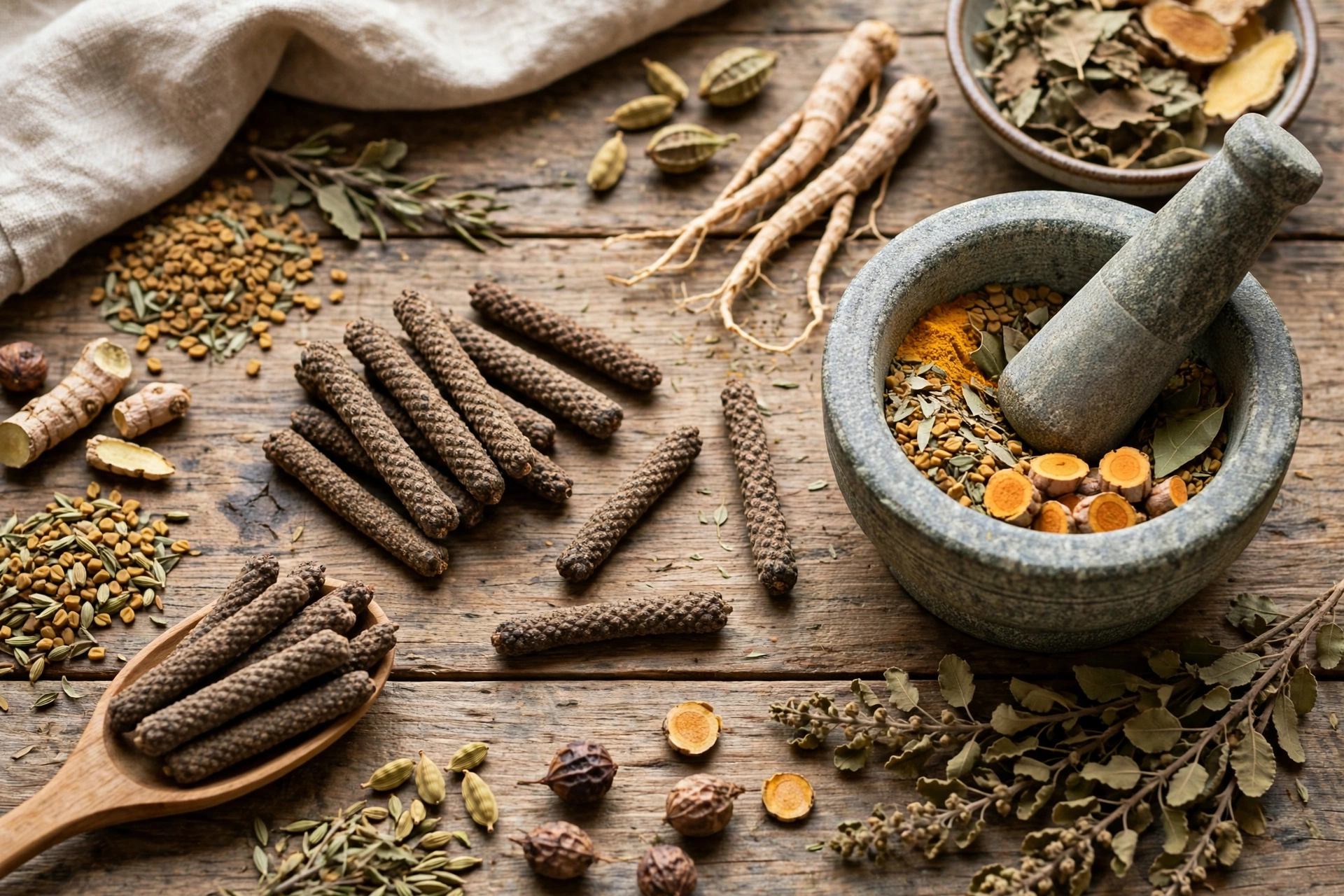
Long Pepper (Pippali) Benefits: Ayurvedic Uses for Respiratory Health and Digestion
In Ayurveda, few herbs are as widely respected as pippali, known in English as long pepper (Piper longum). It is a classic warming spice that has been used for thousands of years to support respiratory health, kindle digestive fire, and enhance the effect of other herbs in compound formulations. This guide explains the traditional Ayurvedic uses of pippali, how it is commonly consumed, and what precautions to keep in mind.
What Is Pippali in Ayurveda?
Pippali is the dried fruit spike of the Piper longum plant, a slender climber native to India and Southeast Asia. In Ayurvedic pharmacology it is classified as katu rasa (pungent taste) with a heating potency (ushna virya) and a sweet post-digestive effect (madhura vipaka). This combination makes it unique: it warms the body while nourishing tissues over time.
Classical texts such as the Charaka Samhita describe pippali as a rasayana — a rejuvenating herb that supports vitality, longevity, and overall strength. It is one of the three ingredients of trikatu, the famous three-pungent formula, alongside black pepper (maricha) and dry ginger (shunthi).
Traditional Uses of Pippali for Respiratory Health
In Ayurveda, respiratory discomfort is often linked to an accumulation of kapha dosha — the qualities of heaviness, coldness, and mucus. Pippali’s warming, drying nature is traditionally used to balance these qualities, which is why it appears in so many classical cough and cold preparations.
Cough and Throat Support
Pippali churna (powder) mixed with honey is one of the oldest home remedies in the Ayurvedic tradition for a scratchy throat and productive cough. The honey soothes the throat while the pungent pepper helps the body clear excess mucus. A common traditional preparation is a quarter to half teaspoon of pippali powder with a teaspoon of raw honey, taken twice daily.
Seasonal Respiratory Comfort
During cold, damp seasons when respiratory sluggishness is common, Ayurvedic practitioners traditionally recommend warming herbs like pippali to keep the channels (srotas) clear. Pippali is a key ingredient in formulations such as Sitopaladi churna and Talisadi churna, both traditionally used to support comfortable breathing during seasonal changes.
Pippali for Digestion and Agni
Agni — the digestive fire — is a central concept in Ayurveda. When agni is weak, food is not digested properly, leading to heaviness, gas, and the formation of ama (metabolic waste). Pippali is considered one of the best deepana (appetite-kindling) herbs.
Stimulating Digestive Fire
A pinch of pippali powder taken with warm water or ghee before meals is traditionally used to awaken appetite and prepare the stomach for digestion. It is especially valued for people who feel heavy or sluggish after eating.
Reducing Bloating and Gas
The pungent quality of pippali is traditionally believed to dispel trapped wind (vata) in the digestive tract. Trikatu — the three-pungent blend — is the classic post-meal digestive: a small amount with warm water after heavy meals is a time-honored practice for easing bloating.
Metabolism and Bioavailability
One of the most interesting traditional roles of pippali is as a yogavahi — a carrier or enhancer that increases the bioavailability of other herbs and nutrients taken alongside it. This is why pippali is added to so many compound formulations: it is believed to help the body absorb and use the other ingredients more effectively. Modern research has investigated piperine (found in both black and long pepper) for its effect on nutrient absorption, echoing this ancient concept.
Traditionally, pippali is also used in vardhamana pippali rasayana, a graduated-dose rejuvenation protocol in which the number of pippali fruits consumed is slowly increased and then decreased over several weeks. This classical practice is meant to be done only under the guidance of a qualified Ayurvedic practitioner.
How to Use Pippali: Dosage Forms
- Pippali churna (powder): The most common form. Traditionally 250–500 mg (about a quarter teaspoon) twice daily with honey, warm water, or ghee.
- Trikatu churna: Equal parts pippali, black pepper, and dry ginger powder. Traditionally 500 mg–1 g after meals with warm water for digestion.
- Pippali in milk: A traditional bedtime drink — a pinch of pippali powder simmered in warm milk, often with turmeric, traditionally used to support restful sleep and clear the chest.
- Capsules/tablets: Available commercially; follow the manufacturer’s label and a practitioner’s advice.
Always start with a small amount. Pippali is heating, and more is not better — traditional Ayurvedic dosing is deliberately modest.
Precautions and Who Should Be Careful
- Pitta aggravation: Because pippali is heating, people with excess heat (acidity, heartburn, skin rashes) should use it cautiously and in small amounts.
- Pregnancy and breastfeeding: Traditional texts advise caution; consult a qualified practitioner before use.
- Medication interactions: Since pippali may influence how the body absorbs other substances, anyone taking prescription medicines should check with their doctor first.
- Children: Use only in age-appropriate doses recommended by a practitioner.
FAQs About Pippali
What is the difference between pippali and black pepper?
Both come from the Piper family and contain warming pungent compounds, but pippali (Piper longum) is the long, spike-shaped fruit while black pepper (Piper nigrum) is the round peppercorn. In Ayurveda, pippali is considered milder, sweeter in its post-digestive effect, and more rejuvenating (rasayana) than black pepper.
Can I take pippali daily?
Traditionally, small daily amounts of pippali — for example as part of trikatu after meals — are common in Ayurvedic practice. However, because it is a heating herb, daily use is best discussed with an Ayurvedic practitioner, especially if you have acidity or heat-related conditions.
What is trikatu and how is pippali used in it?
Trikatu means “three pungents”: equal parts pippali (long pepper), maricha (black pepper), and shunthi (dry ginger). It is the classic Ayurvedic digestive formula, traditionally used to kindle agni, reduce ama, and support comfortable digestion after meals.
Is pippali safe during pregnancy?
Ayurvedic tradition advises caution with heating herbs during pregnancy. Pippali should only be used during pregnancy or breastfeeding under the direct guidance of a qualified practitioner.
Disclaimer: This article is for general wellness information only and is not medical advice. Pippali is a potent herb; consult a qualified Ayurvedic practitioner or healthcare professional before using it, especially if you are pregnant, breastfeeding, or taking medication.