Abhyanga: The Ancient Ayurvedic Self-Massage Ritual for Deep Relaxation and Glowing Skin
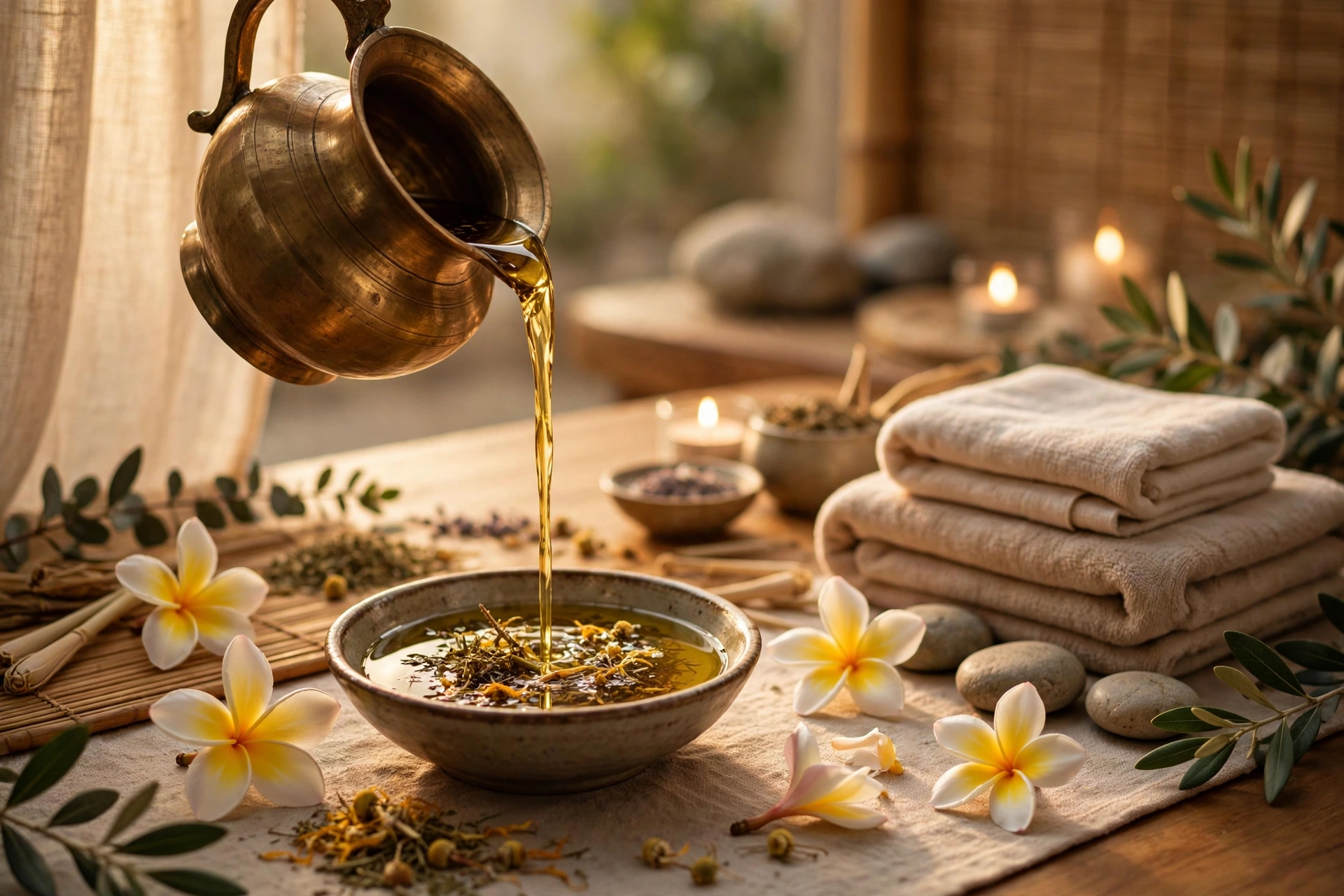
Imagine starting every day with a warm oil massage that melts away stress, nourishes your skin, and calms your nervous system. In Ayurveda, this isn’t a luxury — it’s Abhyanga, a cornerstone of Dinacharya (the daily routine), practiced for thousands of years. “Abhyanga” comes from “Abhi” (towards) and “Anga” (movement) — loving, rhythmic movement of warm oil over the body.
Why Abhyanga Works
Ayurveda teaches that the skin is deeply connected to the nervous system. Warm oil massage pacifies aggravated Vata (the dosha behind anxiety, dryness, and restlessness), nourishes all seven tissue layers (dhatus), and moves lymph — your body’s natural detox fluid.
7 Benefits of Daily Abhyanga
1. Melts Stress and Anxiety
Rhythmic massage with warm oil activates the parasympathetic nervous system, lowering cortisol and quieting mental chatter. Many practitioners report dramatically better sleep within a week.
2. Deeply Nourishes Skin
Unlike lotions that sit on the surface, warm herbal oils penetrate deeply, relieving dryness and giving skin a lasting natural glow.
3. Improves Blood Circulation
Massage strokes boost circulation, delivering oxygen and nutrients to tissues while carrying away metabolic waste.
4. Supports Lymphatic Drainage
Gentle strokes toward the heart encourage lymph flow, supporting immunity and reducing puffiness.
5. Eases Joint Stiffness and Muscle Tension
Regular Abhyanga lubricates joints and relaxes tight muscles — especially valuable as we age or sit for long hours.
6. Promotes Better Sleep
An evening foot massage with warm oil is a classic Ayurvedic remedy for insomnia.
7. Grounds Scattered Energy
Ayurveda says Abhyanga creates a protective energetic shield, leaving you feeling stable, calm, and resilient through the day.
Choosing the Right Oil for Your Dosha
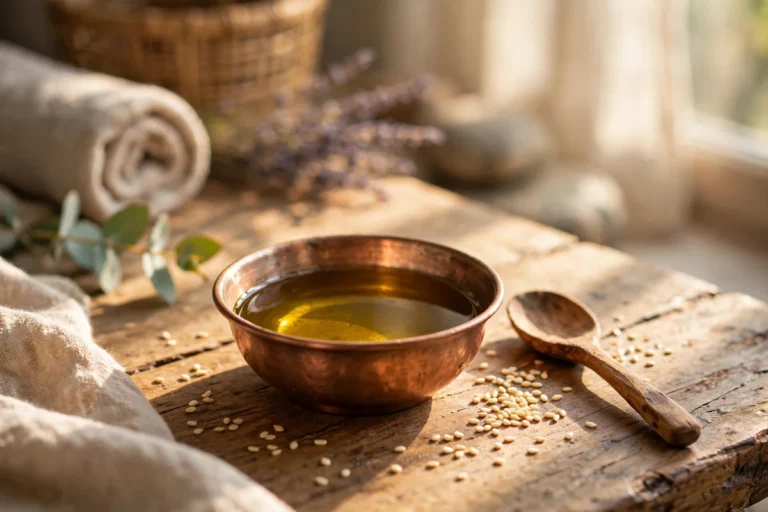
- Vata (dry, anxious): Warm sesame oil — grounding and nourishing.
- Pitta (intense, prone to heat): Coconut or sunflower oil — cooling.
- Kapha (sluggish, oily skin): Mustard oil or light sesame — stimulating.
- Unsure? Plain warm sesame oil suits most people in cooler months; coconut in summer.
How to Do Abhyanga: Step by Step
- Warm 1/4 cup of oil (place the bottle in hot water — never microwave).
- Begin at the scalp, massaging in small circles. Then move to the ears, face, and neck.
- Massage each arm with long strokes on limbs and circular motions on joints (shoulders, elbows, wrists).
- Use circular clockwise motions on the chest and abdomen.
- Massage the legs the same way as the arms, spending extra time on the feet — the soles have vital marma points.
- Continue for 15–20 minutes total, using firm but loving pressure.
- Rest 5–10 minutes, then take a warm (not hot) shower. Leave a thin layer of oil on the skin.
When and How Often
Morning Abhyanga, before bathing, is ideal — it energizes the day. Even 2–3 times a week brings noticeable benefits; daily practice is the gold standard.
Precautions
Avoid Abhyanga during fever, acute indigestion, or skin infections. Pregnant women should consult an Ayurvedic practitioner first. Informational purposes only, not medical advice.