Haritaki Benefits: Ayurvedic Uses for Digestion, Detox and Eye Health
Haritaki Benefits: Ayurvedic Uses for Digestion, Detox and Eye Health
Haritaki (Terminalia chebula), known as the “king of medicines” in Ayurveda, is one of the three fruits of the famous Triphala formula — alongside Amalaki and Bibhitaki. Classical texts praise it so highly that one verse says a physician’s medicine box is incomplete without it. With a unique taste profile that includes five of the six Ayurvedic tastes (everything except salty), haritaki is traditionally considered tridoshic — suitable for balancing Vata, Pitta, and Kapha.
In this guide, we look at haritaki’s traditional Ayurvedic uses for digestion and gut health, detoxification, and eye health — including the well-known triphala eye-wash tradition — plus how to take haritaki churna and the precautions worth knowing.
Haritaki and Triphala: The Connection
Haritaki is the mild laxative and “scraping” (lekhana) component of Triphala, the most widely used Ayurvedic bowel-tonic formula. While Triphala combines three fruits for balanced action, haritaki on its own is considered the strongest of the three for cleansing the colon and supporting regular elimination. Many of Triphala’s famous benefits trace back to haritaki’s contribution.
Haritaki Benefits for Digestion and Gut Health
Digestive support is haritaki’s best-known traditional role.
1. Supports regular bowel movements
Haritaki is traditionally classified as anulomana — it encourages the natural downward movement of Vata that governs elimination. Taken with warm water at bedtime, haritaki churna is a classic Ayurvedic remedy for occasional constipation and sluggish bowels. Unlike harsh purgatives, it is traditionally considered gentle enough for regular use in appropriate doses.
2. Eases bloating and gas
Its carminative (Vata-balancing) qualities are traditionally used to relieve abdominal heaviness, bloating, and gas after heavy meals. A small dose of haritaki powder with warm water after dinner is a common household practice.
3. Supports healthy digestion (agni)
Ayurveda holds that haritaki kindles digestive fire without aggravating Pitta excessively. It is traditionally taken before meals in small amounts to prepare the digestive system, and after meals to support comfortable digestion.
4. Traditional gut cleanse
Because of its mild scraping action on the colon, haritaki is a staple of traditional Ayurvedic seasonal cleanses (ritucharya), where short courses are used to clear accumulated ama (metabolic waste) from the digestive tract.
Haritaki for Detox
In Ayurveda, “detox” means supporting the body’s own channels of elimination — and haritaki works on several of them:
- Colon cleansing: Its primary detox action is through promoting complete, regular elimination.
- Liver and blood tradition: Classical texts describe haritaki as supporting the liver and helping purify the blood (raktashodhak), which is why it appears in many traditional skin-clarity formulations too.
- Respiratory comfort: Haritaki is traditionally used to help clear excess Kapha (mucus) from the respiratory channels, especially in seasonal transitions.
Haritaki for Eye Health: The Triphala Eye-Wash Tradition
One of haritaki’s most distinctive traditional uses is for the eyes. Ayurveda considers haritaki (and Triphala) chakshushya — beneficial for vision.
The traditional eye wash (netra prakshalana)
The classical method: soak 1 teaspoon of Triphala or haritaki powder in a glass of clean water overnight, strain it carefully through a fine cloth in the morning, and use the clear liquid to gently rinse the eyes with an eye cup. This practice is traditionally believed to soothe tired, strained eyes and support eye comfort.
Important safety note
Only use this with finely strained, particle-free liquid — any grit can irritate the eyes. If you have an eye infection, injury, or condition like glaucoma, skip home eye washes and see an eye doctor. This traditional practice is for general eye comfort, not a treatment for eye disease.
Internal use for eyes
Taking haritaki or Triphala internally with ghee or honey is also traditionally recommended in Ayurveda for long-term eye nourishment, based on the principle that eye health reflects liver and digestive health.
How to Take Haritaki Churna
Haritaki is most commonly taken as a powder (churna). Traditional general guidance:
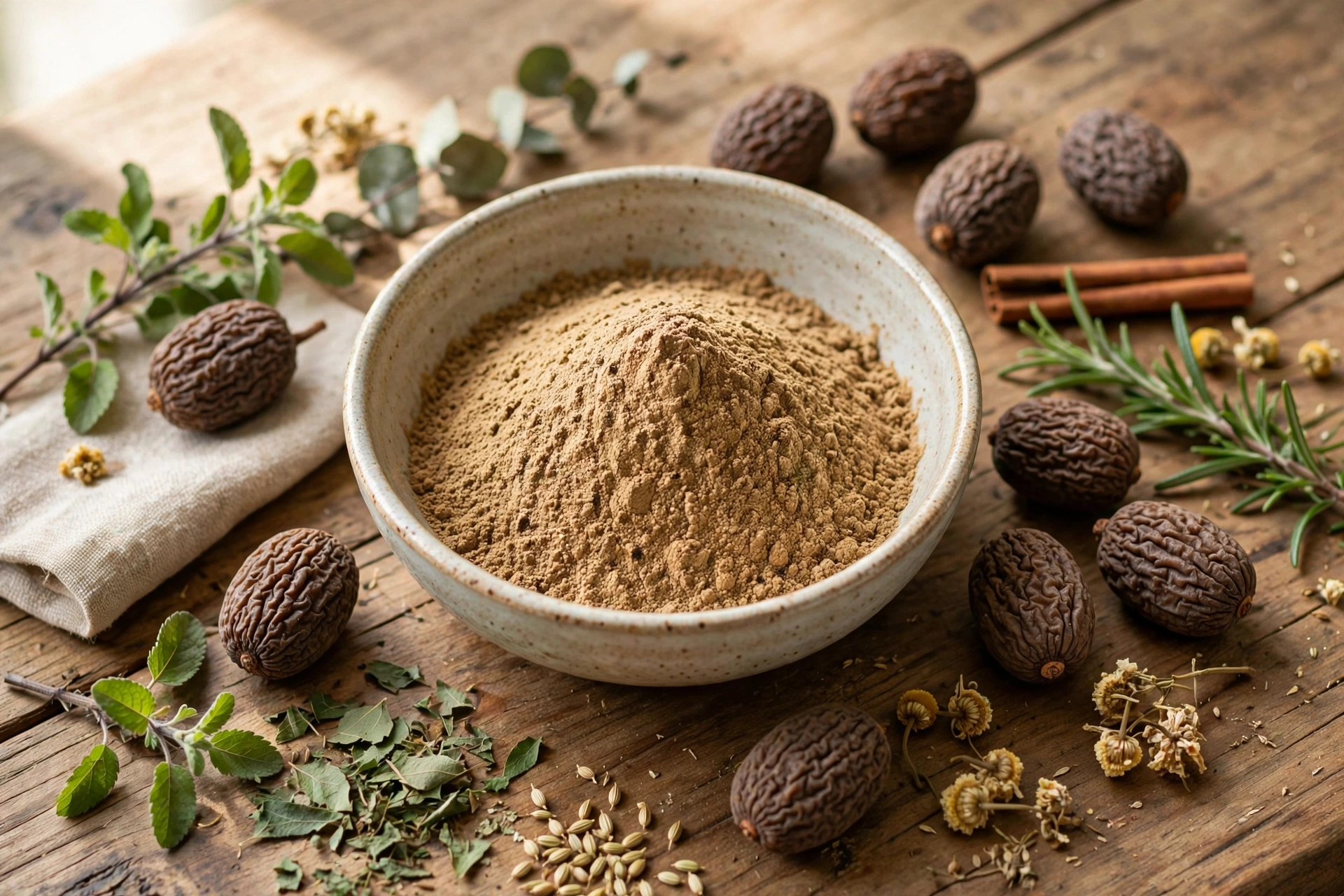
- For digestion/elimination: ½ to 1 teaspoon (2–5 grams) with warm water at bedtime.
- For general wellness: ¼ to ½ teaspoon with warm water or honey in the morning.
- With food timing: Traditional texts suggest haritaki taken before meals supports digestion, with meals supports the body tissues, and after meals supports elimination — but keep doses small and consistent.
- Triphala alternative: If the taste is too strong, Triphala churna or capsules provide haritaki in a balanced blend.
Start with a small dose to see how your body responds, and consult an Ayurvedic practitioner for personalised dosing — especially for courses longer than a few weeks.
Precautions
- Pregnancy and breastfeeding: Avoid haritaki internally during pregnancy unless advised by a qualified practitioner; use caution while nursing.
- Loose stools or diarrhoea: Haritaki promotes bowel movement — skip it during episodes of diarrhoea or very loose stools.
- Dehydration and weakness: People who are dehydrated, very weak, or recovering from illness should use it only under guidance.
- Medication interactions: Because it affects bowel transit, haritaki may alter the absorption of medicines — take it at a different time from prescription drugs and inform your doctor.
- Excessive dose: Too much haritaki can cause cramping and griping; more is not better.
Frequently Asked Questions
What is the difference between haritaki and Triphala?
Haritaki is a single fruit (Terminalia chebula); Triphala is a formula of three fruits — haritaki, amalaki, and bibhitaki. Triphala offers a more balanced, gentler action, while haritaki alone is stronger for cleansing and elimination.
Can I take haritaki daily?
Traditionally, small daily doses are common, but Ayurveda generally recommends periodic breaks or practitioner guidance for continuous long-term use. Start small and observe your body’s response.
When is the best time to take haritaki?
For bowel regularity, bedtime with warm water is the classic timing. For general wellness, morning on an empty stomach is traditional.
Is the Triphala eye wash safe?
When prepared with clean water and strained completely free of particles, it is a long-standing traditional practice for eye comfort. Never use it on infected or injured eyes, and see an eye doctor for any eye condition.
Does haritaki help with weight management?
Haritaki is traditionally valued for clearing ama and supporting healthy metabolism and elimination, which Ayurveda links to healthy weight. It is a supportive herb, not a weight-loss drug, and works best alongside diet and lifestyle measures.
Note: This article describes traditional Ayurvedic uses of haritaki for general wellness information. It is not medical advice. Consult a qualified Ayurvedic practitioner or your doctor before using haritaki, especially if you are pregnant, nursing, managing a health condition, or taking medication.