Ajwain (Carom Seeds) Benefits: Ayurvedic Uses for Digestion and Gas Relief
Ajwain (Carom Seeds) Benefits: Ayurvedic Uses for Digestion and Gas Relief
If there is one spice every Indian grandmother reaches for when the stomach acts up, it is ajwain. These tiny, ridged seeds (Trachyspermum ammi), known as carom seeds in English, taste pungent and slightly bitter with a thyme-like aroma. In Ayurveda, ajwain is a classic deepana-pachana herb — it kindles digestive fire and helps digest ama (undigested residue). This guide covers its traditional benefits for digestion and gas, the best ways to use it, and the safety points to keep in mind.
What Is Ajwain?
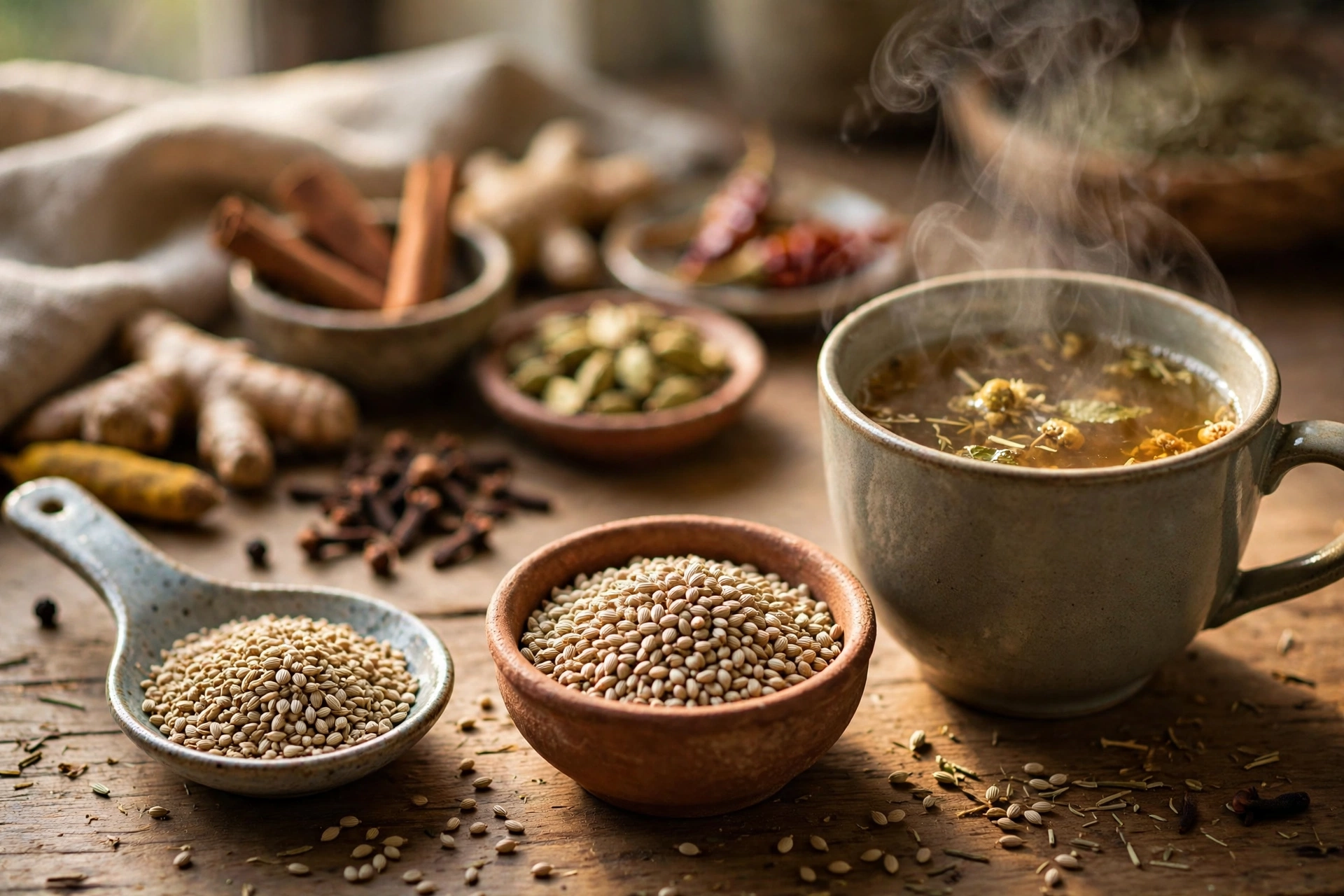
Ajwain seeds come from a plant in the parsley family, related to cumin and caraway. The seeds contain thymol, the same aromatic compound found in thyme, which gives them their sharp, warming character. Ayurveda classifies ajwain as ushna (heating) and katu (pungent), with a special affinity for the digestive system. It is used whole, crushed, roasted, or steeped as a tea, and ajwain oil is also available for external use.
Traditional Ayurvedic Benefits of Ajwain
1. Relief from Gas and Bloating
This is ajwain’s signature use. Ayurvedic practice holds that its heating, carminative nature dispels trapped gas (vata) and eases bloating after heavy meals. A pinch of roasted ajwain with a little black salt, chewed after eating, is the classic remedy — generations of users swear by it, and its thymol content does have documented antispasmodic properties in laboratory studies.
2. Eases Indigestion and Heaviness
When food sits heavy in the stomach, Ayurveda recommends ajwain to “rekindle” digestion. Ajwain water (described below) is the traditional go-to for that overstuffed, sluggish feeling after a rich meal. It is considered especially helpful for Kapha-type heaviness and Vata-type irregular digestion.
3. Supports Appetite
Paradoxically for a digestive herb, ajwain is also used to stimulate a poor appetite. A small amount taken before meals is traditionally believed to wake up digestive secretions — the same “kindling the fire” principle.
4. Traditional Use for Cough and Congestion
Beyond digestion, ajwain steam inhalation (a spoonful of seeds in hot water, towel over the head) is a traditional home remedy for a blocked nose and chest congestion during colds. The warming vapours are believed to loosen mucus. This is folk practice — it offers comfort but does not treat the underlying infection.
5. Mild Antimicrobial Reputation
Thymol, ajwain’s main active compound, has shown antimicrobial activity in lab studies. Ayurvedic tradition uses ajwain water for minor stomach upsets, though it is no substitute for proper treatment of food poisoning or gut infections.
How to Use Ajwain: Traditional Methods
Ajwain Water (Ajwain Ka Pani)
- Add 1 teaspoon of ajwain seeds to 2 cups of water.
- Bring to a boil, then simmer for 5–7 minutes until the water reduces slightly and turns light brown.
- Strain, let it cool to a drinkable warmth, and sip slowly.
- Drink after meals for gas and bloating, or on an empty stomach in the morning for general digestive support.
Roasted Ajwain with Black Salt
Dry-roast 1 teaspoon of ajwain seeds in a pan for 1–2 minutes until fragrant. Mix with a pinch of black salt and chew slowly after meals. This is the quickest traditional fix for post-meal gas.
Ajwain and Jaggery
For a milder taste, chew roasted ajwain with a small piece of jaggery (gur) — a combination traditionally given for stomach ache and mild cramps.
Traditional Dosage
- Seeds: 1–3 grams per day (roughly ½ to 1 teaspoon), divided into 1–2 doses.
- Ajwain water: 1 cup, once or twice daily.
- Ajwain oil (external): Diluted in a carrier oil for abdominal massage; never ingest essential oil undiluted.
Safety and Side Effects
- Generally safe in food amounts for most adults.
- Pregnancy: Ajwain is traditionally cautioned against in pregnancy because high doses may stimulate uterine contractions. Avoid medicinal doses while pregnant; normal culinary use in food is fine.
- Acidity: Because it is heating, excess ajwain can worsen acidity or heartburn in Pitta-dominant people. If you feel a burning sensation, reduce the amount or stop.
- Surgery: Ajwain may slow blood clotting in large amounts — stop medicinal use at least 2 weeks before planned surgery.
- Kidney and liver conditions: People with existing kidney or liver disease should check with a doctor before regular medicinal use.
- Children: Use only tiny amounts (a pinch in warm water) for children, and consult a paediatrician for infants.
Frequently Asked Questions
How quickly does ajwain work for gas?
Traditionally, relief is expected within 30–60 minutes of chewing roasted ajwain or drinking ajwain water. Persistent or severe abdominal pain, however, needs medical attention — not more home remedies.
Can I drink ajwain water daily?
Many people do, especially in the morning. It is generally fine for a few weeks at a time, but take breaks (a week off each month) and stop if you develop acidity or mouth dryness.
Is ajwain good for weight loss?
Ajwain water is popularly claimed to aid weight loss, but there is no solid evidence for this. It may slightly improve digestion, which some people confuse with fat loss. Sustainable weight management needs diet and activity changes.
Can ajwain help with acidity?
It depends — ajwain relieves gas-type discomfort well, but its heating nature can aggravate true acidity (burning in the chest). For acid reflux, cooling remedies are usually more appropriate.
Is ajwain safe during pregnancy?
Small culinary amounts in food are fine, but avoid medicinal doses (ajwain water, large quantities) during pregnancy, as traditional texts warn high doses may affect the uterus. Check with your doctor.
What is the difference between ajwain and cumin?
They are different seeds: ajwain is pungent, thyme-scented, and heating (best for gas), while cumin (jeera) is milder, earthy, and cooling (better for general digestion and acidity). They are often combined in digestive spice mixes.
Conclusion
Ajwain has earned its place in every Indian kitchen as the first response to gas, bloating, and heavy digestion. A teaspoon of seeds, roasted or as a warm tea, is a simple, time-tested remedy — just respect its heating nature, stick to traditional doses, and see a doctor when digestive trouble is severe, recurring, or accompanied by warning signs like blood, unexplained weight loss, or intense pain.